



En savoir plus sur le livre
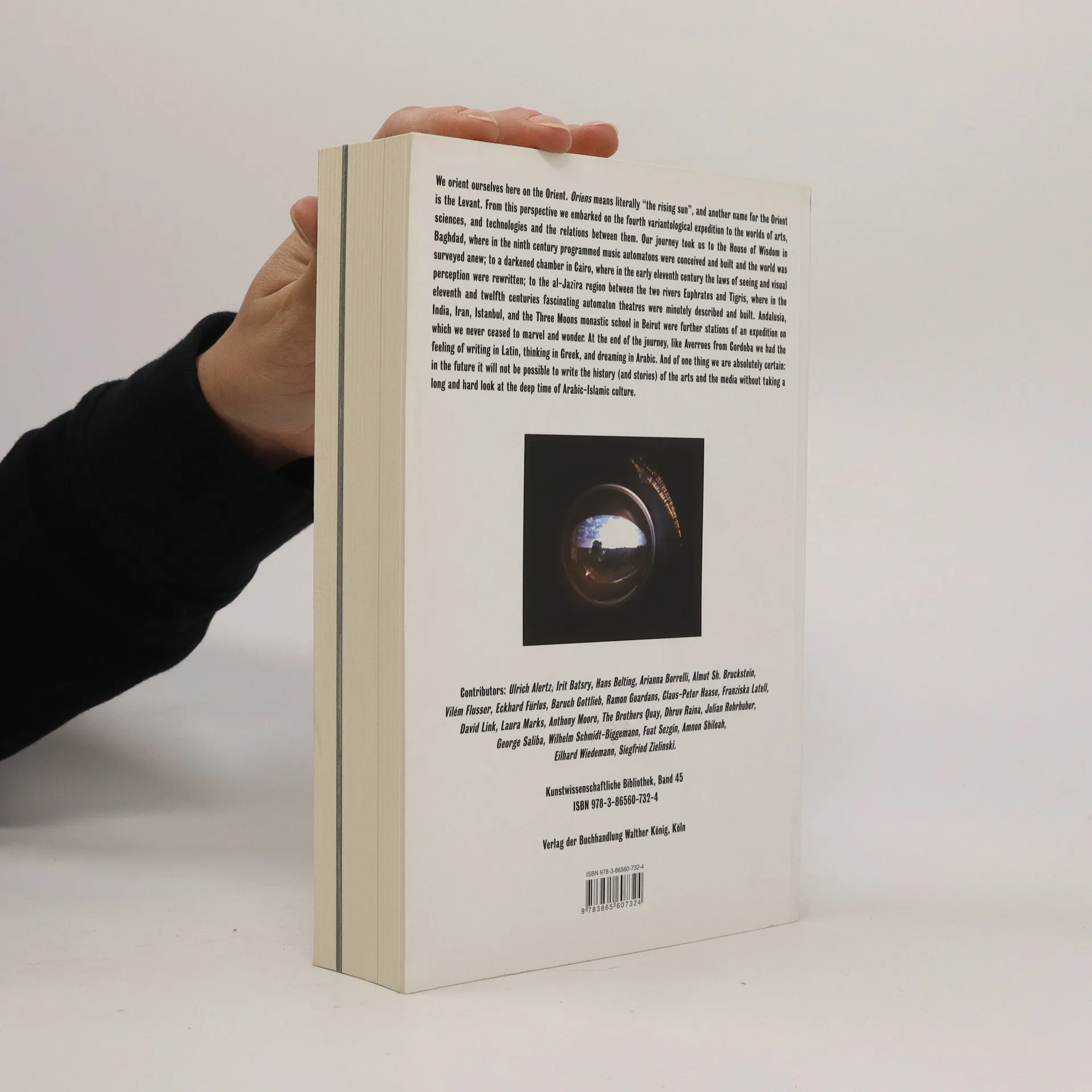
We orient ourselves on the Orient, literally meaning “the rising sun,” also known as the Levant. This perspective guided our fourth variantological expedition exploring the interconnections between arts, sciences, and technologies. Our journey began at the House of Wisdom in Baghdad, where the ninth century saw the creation of programmed music automatons and a new worldview. We then visited a chamber in Cairo, where the early eleventh century redefined the laws of seeing and visual perception. In the al-Jazira region, between the Euphrates and Tigris rivers, we discovered detailed descriptions and constructions of automaton theatres from the eleventh and twelfth centuries. Further stops included Andalusia, India, Iran, Istanbul, and the Three Moons monastic school in Beirut, Syria, each site enriching our sense of wonder. By the journey's end, we felt akin to Averroes of Cordoba, writing in Latin, thinking in Greek, and dreaming in Arabic. We are certain that future histories of arts and media must deeply engage with the profound legacy of Arabic-Islamic culture. Contributors include Ulrich Alertz, Hans Belting, Arianna Borrelli, and many others.
Achat du livre
Variantology, Siegfried Zielinski
- Langue

- Année de publication
- 2010
- Reliure
- (souple)
Modes de paiement
Personne n'a encore évalué .
- Titre
- Variantology
- Langue
- Anglais
- Auteurs
- Siegfried Zielinski
- Éditeur
- König
- Publié
- 2010
- Format
- souple
- Pages
- 518
- ISBN10
- 3865607322
- ISBN13
- 9783865607324
- Séries
- Catégories
- Mots clés
- Description
- We orient ourselves on the Orient, literally meaning “the rising sun,” also known as the Levant. This perspective guided our fourth variantological expedition exploring the interconnections between arts, sciences, and technologies. Our journey began at the House of Wisdom in Baghdad, where the ninth century saw the creation of programmed music automatons and a new worldview. We then visited a chamber in Cairo, where the early eleventh century redefined the laws of seeing and visual perception. In the al-Jazira region, between the Euphrates and Tigris rivers, we discovered detailed descriptions and constructions of automaton theatres from the eleventh and twelfth centuries. Further stops included Andalusia, India, Iran, Istanbul, and the Three Moons monastic school in Beirut, Syria, each site enriching our sense of wonder. By the journey's end, we felt akin to Averroes of Cordoba, writing in Latin, thinking in Greek, and dreaming in Arabic. We are certain that future histories of arts and media must deeply engage with the profound legacy of Arabic-Islamic culture. Contributors include Ulrich Alertz, Hans Belting, Arianna Borrelli, and many others.