

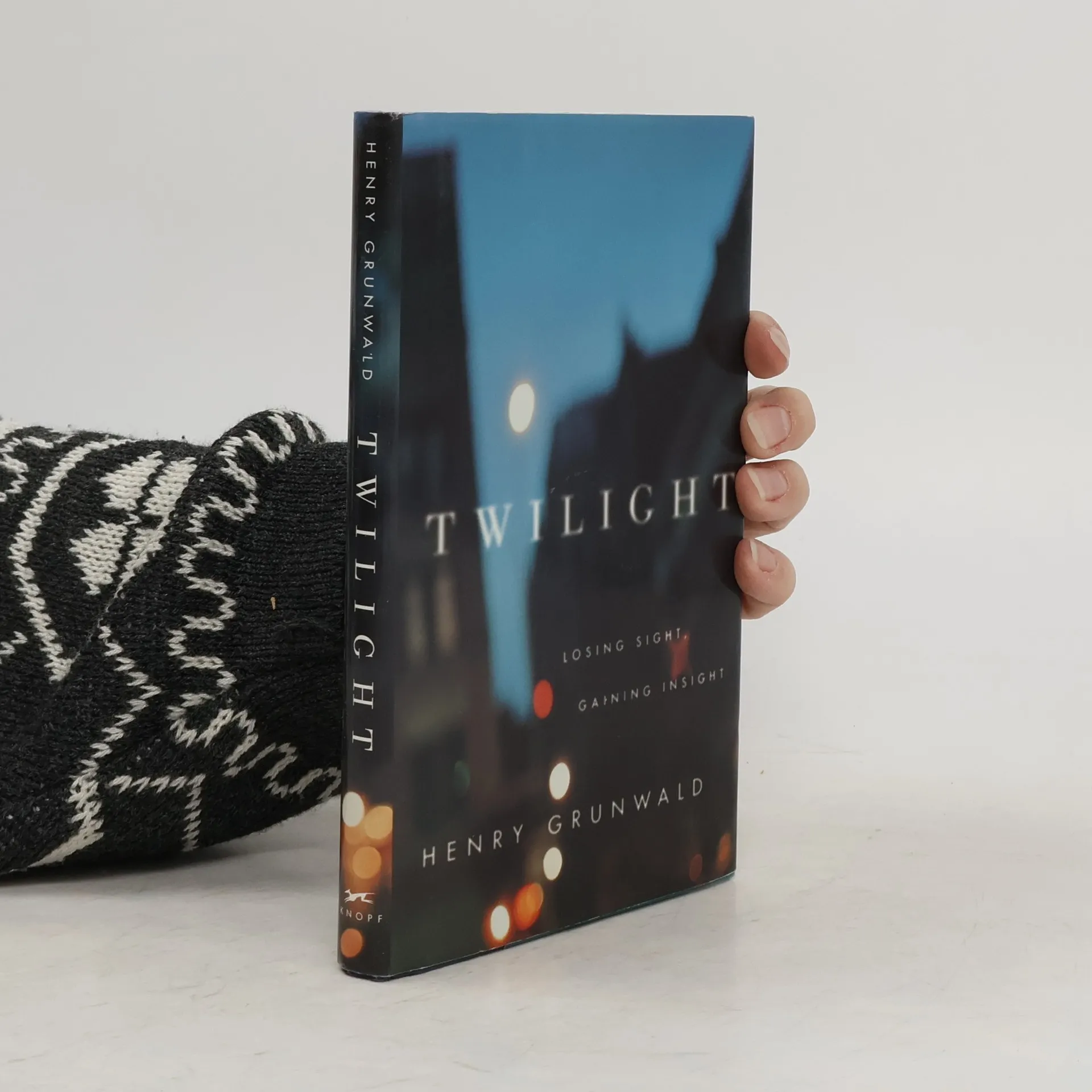


En savoir plus sur le livre
In 1992, when Henry Grunwald missed a glass into which he was pouring water, he assumed that he needed new eyeglasses, not that the incident was a harbinger of darker times. But in fact Grunwald was entering the early stages of macular degeneration -- a gradual loss of sight that affects almost 15 million Americans yet remains poorly understood and is, so far, incurable. Now, in Twilight , Grunwald chronicles his experience of the clouding of his sight, and the daily struggle to overcome its physical and psychological implications; the discovery of what medicine can and cannot do to restore sight; his compulsion to understand how the eye works, its evolution, and its symbolic meaning in culture and art.Grunwald gives us an autobiography of the eye -- his visual awakening as a child and young man, and again as an older man who, facing the loss of sight, feels a growing wonder at the most ordinary acts of seeing. This is a story not merely about seeing but about living; not merely about losing sight but about gaining insight. It is a remarkable meditation.

Achat du livre
Twilight, Henry A. Grunwald
- Langue

- Année de publication
- 1999
- Reliure
- (rigide)
Modes de paiement
Il manque plus que ton avis ici.
- Titre
- Twilight
- Langue
- Anglais
- Auteurs
- Henry A. Grunwald
- Éditeur
- Knopf
- Publié
- 1999
- Format
- rigide
- Pages
- 144
- ISBN10
- 0375404228
- ISBN13
- 9780375404221
- Séries
- Mots clés
- Santé & Médecine, Santé, France, Médecine
- Titre original
- Twilight
- Évaluation
- 3,5 sur 5
- Description
- In 1992, when Henry Grunwald missed a glass into which he was pouring water, he assumed that he needed new eyeglasses, not that the incident was a harbinger of darker times. But in fact Grunwald was entering the early stages of macular degeneration -- a gradual loss of sight that affects almost 15 million Americans yet remains poorly understood and is, so far, incurable. Now, in Twilight , Grunwald chronicles his experience of the clouding of his sight, and the daily struggle to overcome its physical and psychological implications; the discovery of what medicine can and cannot do to restore sight; his compulsion to understand how the eye works, its evolution, and its symbolic meaning in culture and art.Grunwald gives us an autobiography of the eye -- his visual awakening as a child and young man, and again as an older man who, facing the loss of sight, feels a growing wonder at the most ordinary acts of seeing. This is a story not merely about seeing but about living; not merely about losing sight but about gaining insight. It is a remarkable meditation.