




Paramètres
- 400pages
- 14 heures de lecture
En savoir plus sur le livre
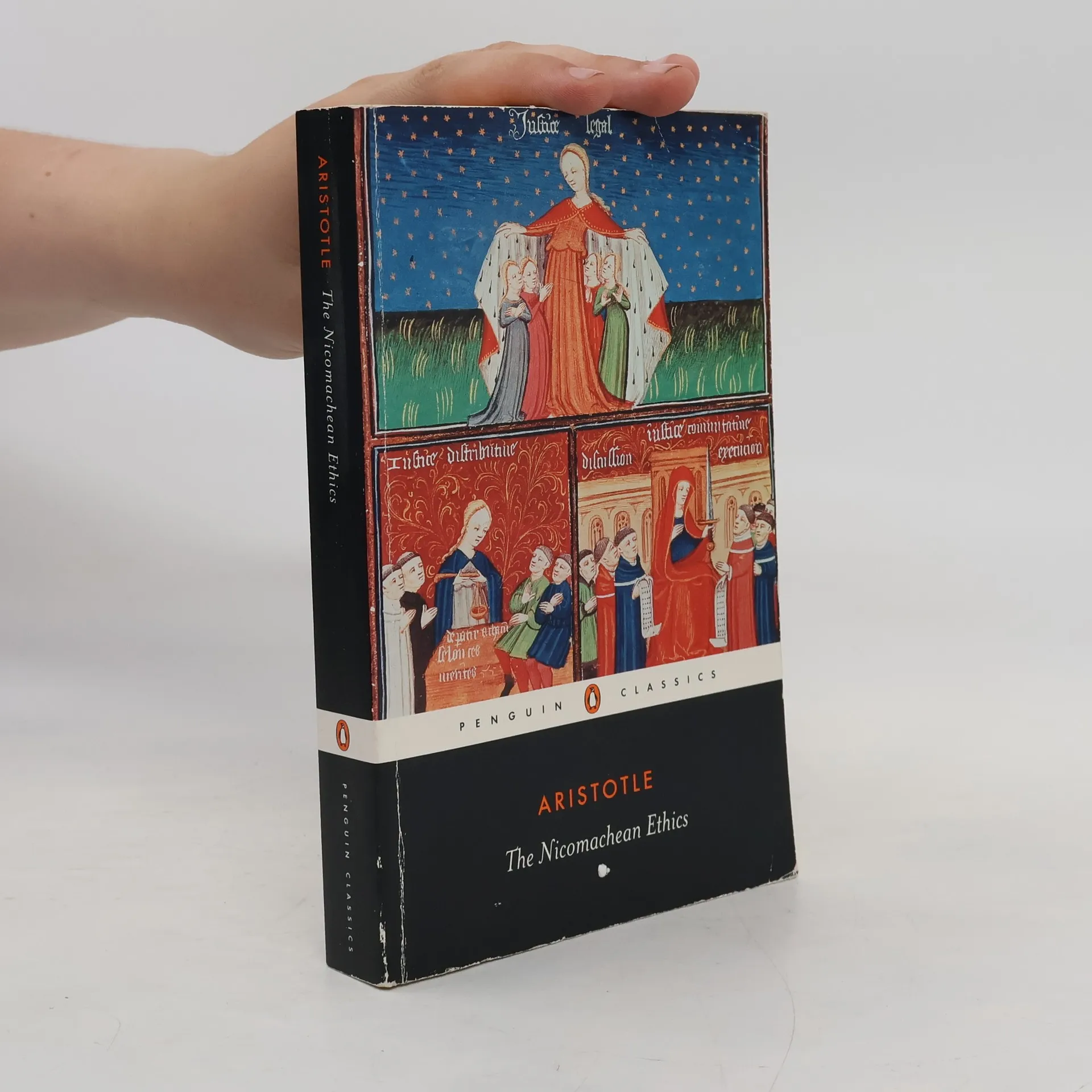
One swallow does not make a summer; neither does one day. Similarly, neither can one day or a brief space of time make a man blessed and happy. Previously published as Ethics, Aristotle's work examines how to live well, originating the concept of cultivating a virtuous character as the foundation of his ethical system. He explores the nature of happiness, arguing it consists in 'activity of the soul in accordance with virtue,' which includes moral virtues like courage, generosity, and justice, as well as intellectual virtues such as knowledge, wisdom, and insight. The text also delves into practical reasoning, the value and objects of pleasure, various forms of friendship, and the relationship between individual virtue, society, and the State. Aristotle's influence on Western ethical thought has been profound and enduring. This Penguin Classics edition is translated from Greek by J.A.K. Thomson, with revisions and notes by Hugh Tredennick, and includes an introduction and bibliography by Jonathan Barnes. For over seventy years, Penguin has been a leading publisher of classic literature, offering authoritative texts enhanced by scholarly introductions and contemporary translations.







Achat du livre
The Nicomachean Ethics, Aristotelés
- Langue

- Année de publication
- 2004
- product-detail.submit-box.info.binding
- (souple),
- État du livre
- Abîmé
- Prix
- 6,92 €
Modes de paiement
Il manque plus que ton avis ici.
- Langue
- Anglais
- Auteurs
- Aristotelés
- Éditeur
- Penguin
- Publié
- 2004
- Format
- souple
- Pages
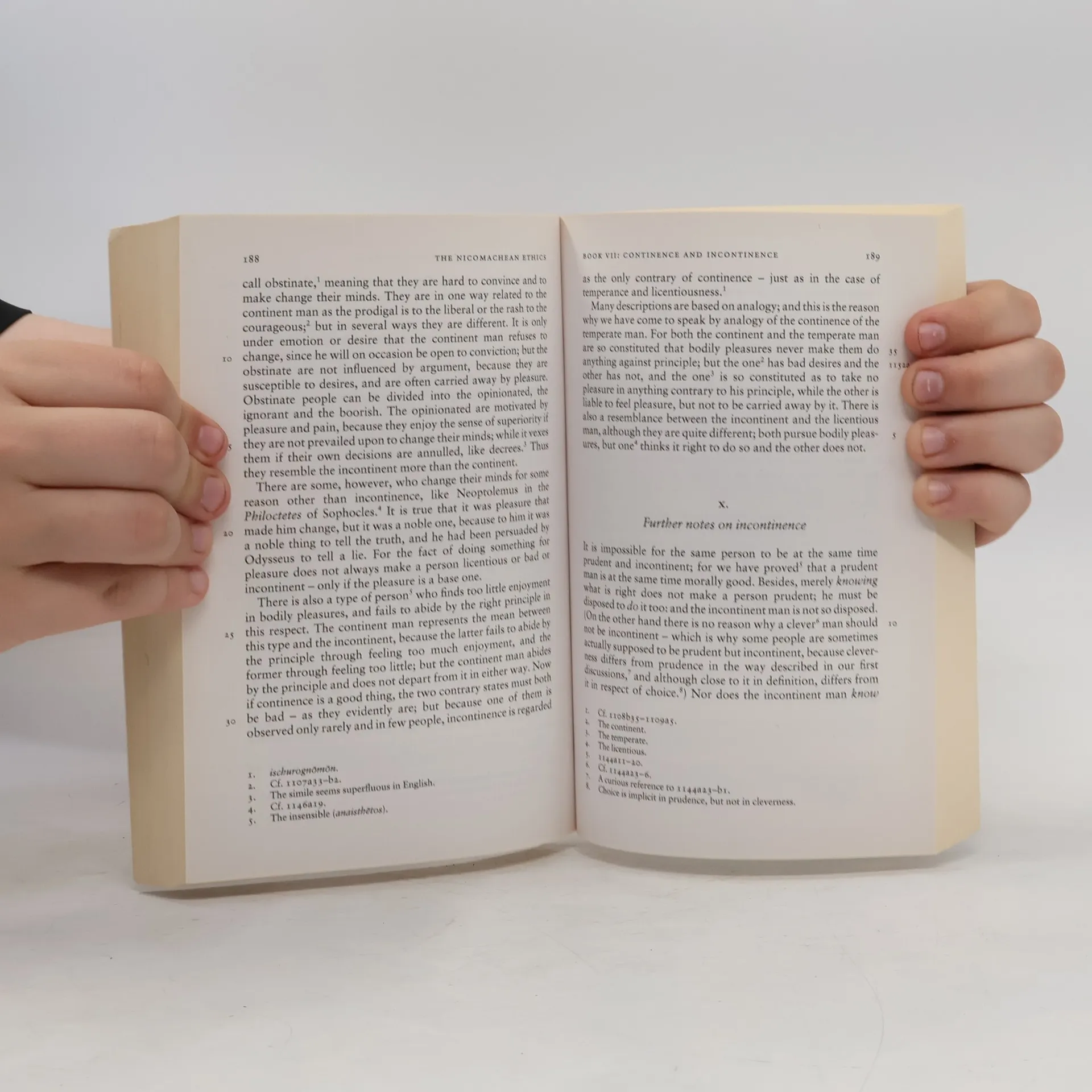
- 400
- ISBN10
- 0140449493
- ISBN13
- 9780140449495
- Séries
- Mots clés
- Nonfiction, Sciences sociales, Thème historique, Histoire, Thématique philosophique, Philosophie, Société, Époque antique, Éthique, Bien, Rationalité, Vertus, Argumentation
- Titre original
- Ethica Nicomachea
- Évaluation
- 4 sur 5
- Description
- One swallow does not make a summer; neither does one day. Similarly, neither can one day or a brief space of time make a man blessed and happy. Previously published as Ethics, Aristotle's work examines how to live well, originating the concept of cultivating a virtuous character as the foundation of his ethical system. He explores the nature of happiness, arguing it consists in 'activity of the soul in accordance with virtue,' which includes moral virtues like courage, generosity, and justice, as well as intellectual virtues such as knowledge, wisdom, and insight. The text also delves into practical reasoning, the value and objects of pleasure, various forms of friendship, and the relationship between individual virtue, society, and the State. Aristotle's influence on Western ethical thought has been profound and enduring. This Penguin Classics edition is translated from Greek by J.A.K. Thomson, with revisions and notes by Hugh Tredennick, and includes an introduction and bibliography by Jonathan Barnes. For over seventy years, Penguin has been a leading publisher of classic literature, offering authoritative texts enhanced by scholarly introductions and contemporary translations.