

Paramètres
- 656pages
- 23 heures de lecture
En savoir plus sur le livre
JavaServer Faces (JSF) is the standard Java EE technology for creating web user interfaces, offering a robust framework for server-side application development that separates visual presentation from application logic. The major upgrade to JSF 2.0 introduces useful features and simplifies the programming model through annotations and a "convention over configuration" approach. The third edition of Core JavaServer(TM) Faces has been thoroughly updated to leverage these enhancements. It includes three new chapters focused on Facelets tags for templating, building composite components, and developing Ajax applications. The book provides guidance on creating robust applications with minimal hand coding, requiring no prior knowledge of servlets or low-level details. It covers the essential building blocks, from standard JSF tags to data tables and input validation, and addresses advanced tasks like event handling and framework extension. Additionally, it offers solutions to common challenges, including debugging tips and implementation details with working code for features absent from JSF. This edition equips programmers with the knowledge to effectively utilize JSF 2.0's powerful features, making it an ideal resource for developing Java EE 6 web applications on Glassfish or other compliant servers, as well as servlet runners like Tomcat 6.


Achat du livre
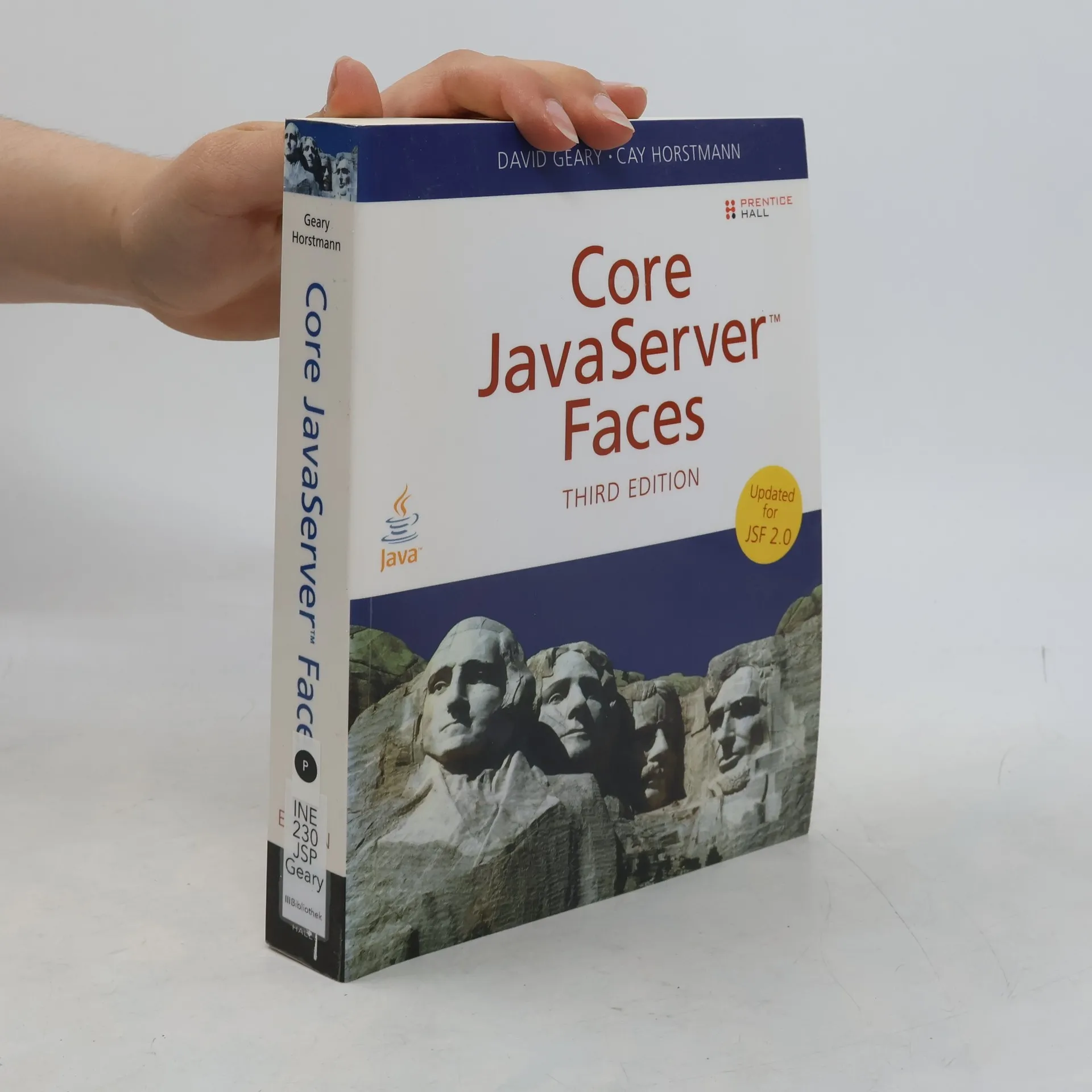
Core JavaServer Faces, David M. Geary, Cay S. Horstmann
- Langue

- Année de publication
- 2010
- product-detail.submit-box.info.binding
- (souple)
Modes de paiement
Il manque plus que ton avis ici.
- Sous-titre
- Third Edition - Updated for JSF 2.0
- Langue
- Anglais
- Auteurs
- David M. Geary, Cay S. Horstmann
- Éditeur
- Prentice Hall
- Publié
- 2010
- Format
- souple
- Pages
- 656
- ISBN10
- 0137012896
- ISBN13
- 9780137012893
- Séries
- Mots clés
- Nonfiction, Technologie & Ingénierie, Manuels et guides, Informatique & Internet, Technologie, Logiciel
- Évaluation
- 3,5 sur 5
- Description
- JavaServer Faces (JSF) is the standard Java EE technology for creating web user interfaces, offering a robust framework for server-side application development that separates visual presentation from application logic. The major upgrade to JSF 2.0 introduces useful features and simplifies the programming model through annotations and a "convention over configuration" approach. The third edition of Core JavaServer(TM) Faces has been thoroughly updated to leverage these enhancements. It includes three new chapters focused on Facelets tags for templating, building composite components, and developing Ajax applications. The book provides guidance on creating robust applications with minimal hand coding, requiring no prior knowledge of servlets or low-level details. It covers the essential building blocks, from standard JSF tags to data tables and input validation, and addresses advanced tasks like event handling and framework extension. Additionally, it offers solutions to common challenges, including debugging tips and implementation details with working code for features absent from JSF. This edition equips programmers with the knowledge to effectively utilize JSF 2.0's powerful features, making it an ideal resource for developing Java EE 6 web applications on Glassfish or other compliant servers, as well as servlet runners like Tomcat 6.