



Paramètres
- 280pages
- 10 heures de lecture
En savoir plus sur le livre
In this work, Christof Koch provides a clear definition of consciousness as any subjective experience, encompassing the feeling of being alive. Psychologists investigate the cognitive operations linked to conscious perception, while neuroscientists explore the brain's neural correlates. Koch questions why consciousness arises in the brain, a mere three-pound organ, rather than in other organs like the liver. He posits that a quantitative theory, beginning with experience and leading to the brain, is essential for understanding these phenomena. Koch presents a theory based on integrated information, which explains various aspects of consciousness neurology and has led to the development of a practical consciousness meter. This theory suggests that consciousness is more prevalent across the animal kingdom than traditionally believed. However, Koch challenges the notion that programmable computers can possess consciousness, asserting that even a perfect software model of the brain lacks true consciousness, as its simulation is merely an imitation. He emphasizes that consciousness is not a unique form of computation but is fundamentally about the experience of being.

Édition

Achat du livre
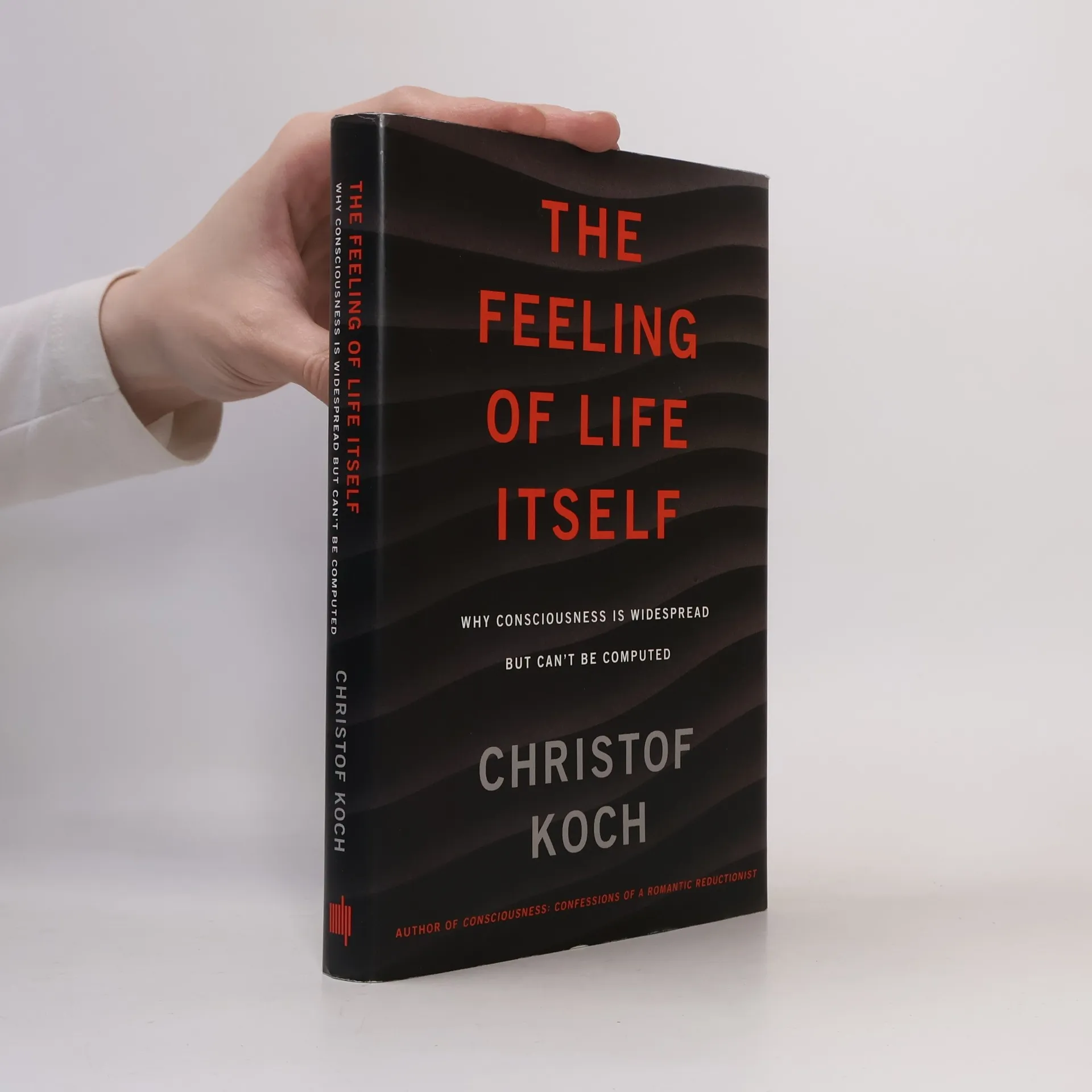
The Feeling of Life Itself, Christof Koch
- Langue

- Année de publication
- 2019
- Reliure
- (rigide)
Modes de paiement
Il manque plus que ton avis ici.
- Titre
- The Feeling of Life Itself
- Langue
- Anglais
- Auteurs
- Christof Koch
- Éditeur
- MIT Press
- Publié
- 2019
- Format
- rigide
- Pages
- 280
- ISBN10
- 0262042819
- ISBN13
- 9780262042819
- Séries
- Catégories
- Mots clés
- Sciences naturelles, Thèmes psychologiques, Thématique philosophique, Science, Intelligence Artificielle, Neurosciences
- Évaluation
- 3,85 sur 5
- Description
- In this work, Christof Koch provides a clear definition of consciousness as any subjective experience, encompassing the feeling of being alive. Psychologists investigate the cognitive operations linked to conscious perception, while neuroscientists explore the brain's neural correlates. Koch questions why consciousness arises in the brain, a mere three-pound organ, rather than in other organs like the liver. He posits that a quantitative theory, beginning with experience and leading to the brain, is essential for understanding these phenomena. Koch presents a theory based on integrated information, which explains various aspects of consciousness neurology and has led to the development of a practical consciousness meter. This theory suggests that consciousness is more prevalent across the animal kingdom than traditionally believed. However, Koch challenges the notion that programmable computers can possess consciousness, asserting that even a perfect software model of the brain lacks true consciousness, as its simulation is merely an imitation. He emphasizes that consciousness is not a unique form of computation but is fundamentally about the experience of being.