



Paramètres
- 148pages
- 6 heures de lecture
En savoir plus sur le livre
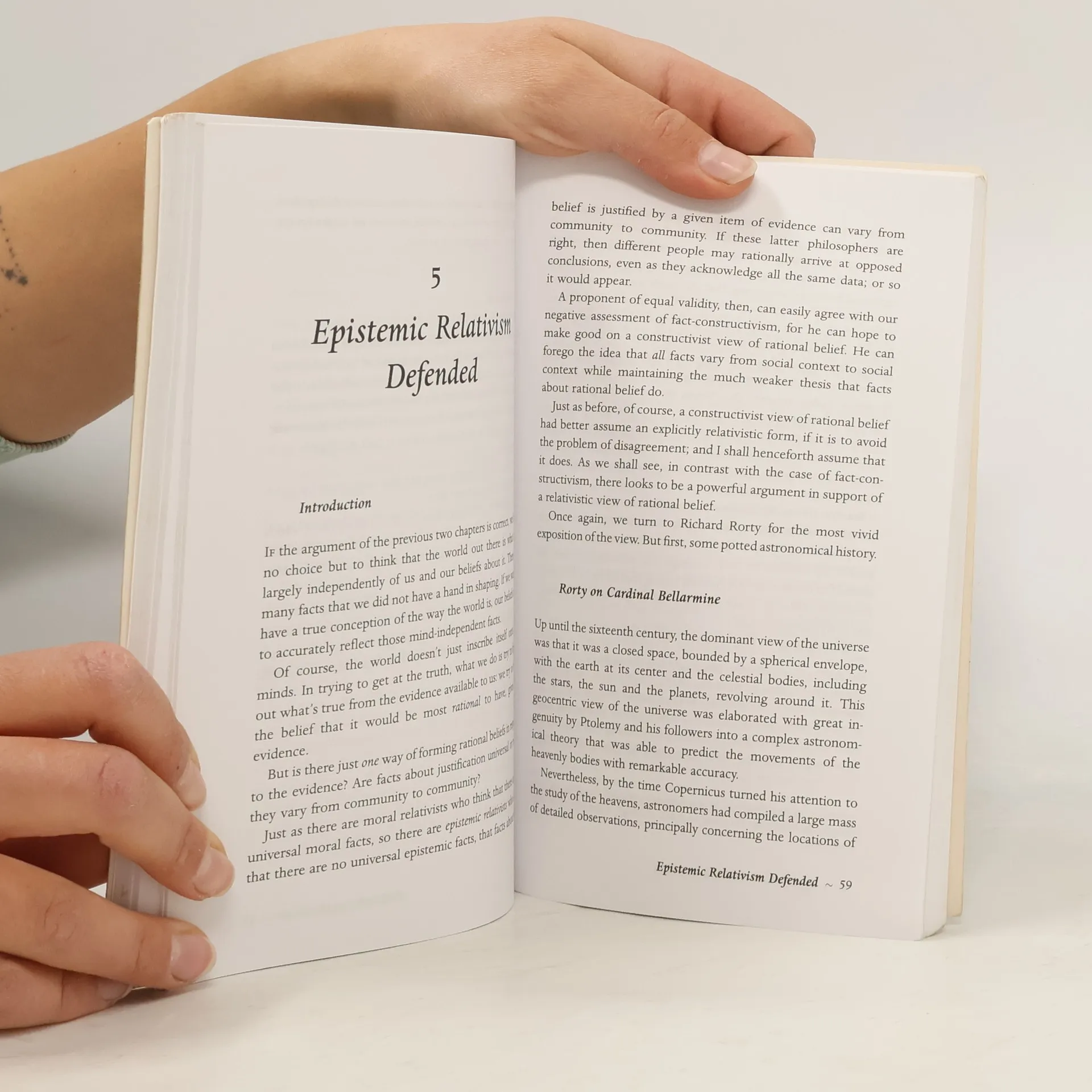
Boghossian critically examines relativist and constructivist conceptions of truth and knowledge, exposing their fundamental flaws. He focuses on three different ways of reading the claim that knowledge is socially constructed--one as a thesis about truth and two about justification. And he rejects all three. Boghossian argues for the intuitive, common-sense view - that the world exists independent of human opinion and that there is a way to arrive at beliefs about the world that are objectively reasonable to anyone capable of appreciating the relevant evidence, regardless of their social or cultural perspective. Difficult as these notions may be, he contends, it is a mistake to think that philosophy has uncovered powerful reasons for rejecting them. Boghossian shows that philosophy provides rock-solid support for common sense against the relativists. --From publisher description


Achat du livre
Fear of Knowledge, Paul Artin Boghossian
- Langue

- Année de publication
- 2007
- Reliure
- (souple)
Modes de paiement
Il manque plus que ton avis ici.
- Titre
- Fear of Knowledge
- Langue
- Anglais
- Auteurs
- Paul Artin Boghossian
- Éditeur
- Oxford University Press
- Publié
- 2007
- Format
- souple
- Pages
- 148
- ISBN10
- 0199230412
- ISBN13
- 9780199230419
- Séries
- Catégories
- Évaluation
- 3,85 sur 5
- Description
- Boghossian critically examines relativist and constructivist conceptions of truth and knowledge, exposing their fundamental flaws. He focuses on three different ways of reading the claim that knowledge is socially constructed--one as a thesis about truth and two about justification. And he rejects all three. Boghossian argues for the intuitive, common-sense view - that the world exists independent of human opinion and that there is a way to arrive at beliefs about the world that are objectively reasonable to anyone capable of appreciating the relevant evidence, regardless of their social or cultural perspective. Difficult as these notions may be, he contends, it is a mistake to think that philosophy has uncovered powerful reasons for rejecting them. Boghossian shows that philosophy provides rock-solid support for common sense against the relativists. --From publisher description