

Paramètres
- 640pages
- 23 heures de lecture
En savoir plus sur le livre
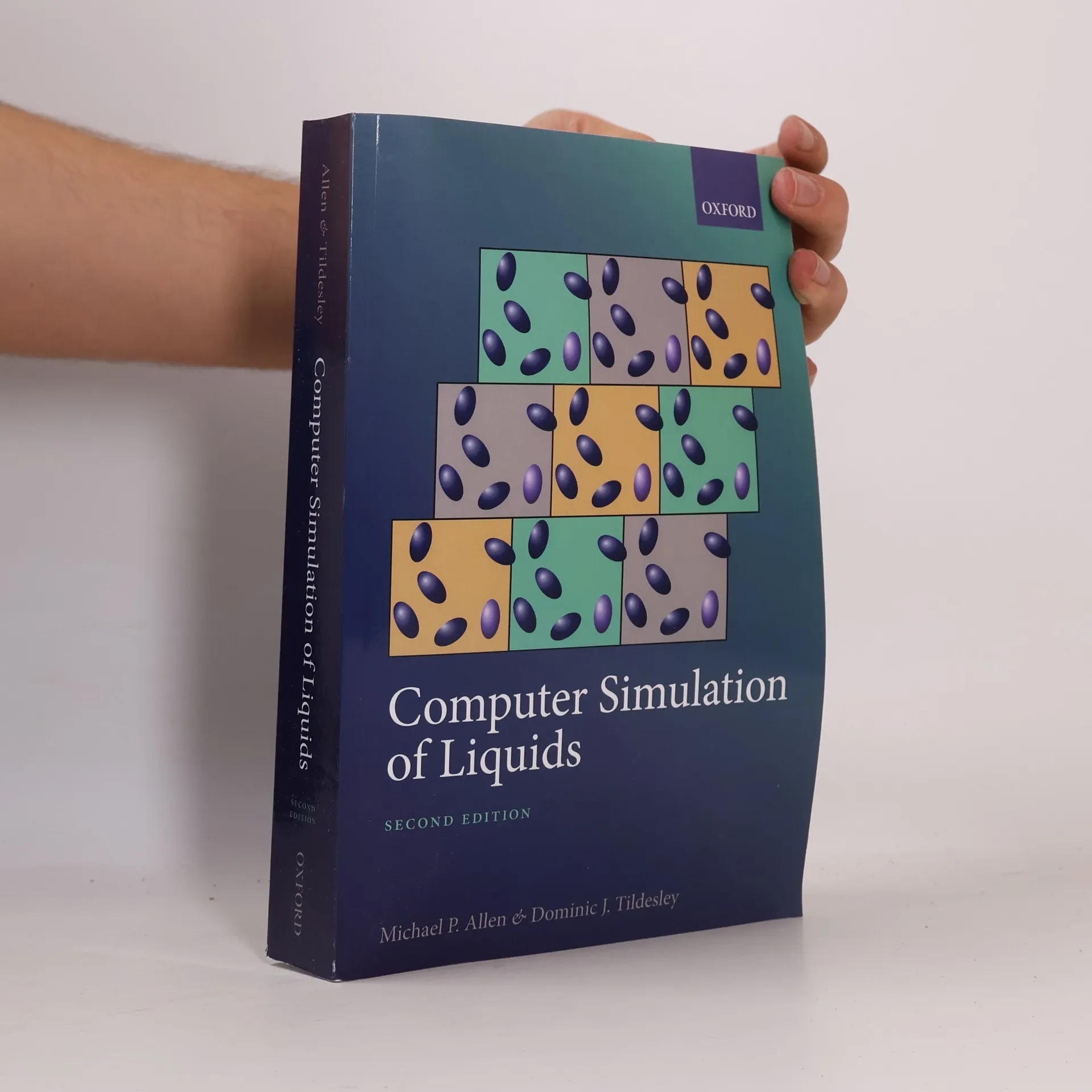
This book provides a practical guide to molecular dynamics and Monte Carlo simulation techniques used in the modelling of simple and complex liquids. Computer simulation is an essential tool in studying the chemistry and physics of condensed matter, complementing and reinforcing both experiment and theory. Simulations provide detailed information about structure and dynamics, essential to understand the many fluid systems that play a key role in our daily lives: polymers, gels, colloidal suspensions, liquid crystals, biological membranes, and glasses. The second edition of this pioneering book aims to explain how simulation programs work, how to use them, and how to interpret the results, with examples of the latest research in this rapidly evolving field. Accompanying programs in Fortran and Python provide practical, hands-on, illustrations of the ideas in the text.


Achat du livre
Computer Simulation of Liquids, Michael P. Allen, D. J. Tildesley
- Langue

- Année de publication
- 2017
- product-detail.submit-box.info.binding
- (souple)
Modes de paiement
Il manque plus que ton avis ici.
- Sous-titre
- Second Edition
- Langue
- Anglais
- Auteurs
- Michael P. Allen, D. J. Tildesley
- Éditeur
- Oxford University Press
- Publié
- 2017
- Format
- souple
- Pages
- 640
- ISBN10
- 0198803206
- ISBN13
- 9780198803201
- Séries
- Mots clés
- Nonfiction, Manuels, Technologie & Ingénierie, Sciences naturelles, Informatique & Internet, Science, Manuels de physique, Manuels de biologie
- Évaluation
- 4,7 sur 5
- Description
- This book provides a practical guide to molecular dynamics and Monte Carlo simulation techniques used in the modelling of simple and complex liquids. Computer simulation is an essential tool in studying the chemistry and physics of condensed matter, complementing and reinforcing both experiment and theory. Simulations provide detailed information about structure and dynamics, essential to understand the many fluid systems that play a key role in our daily lives: polymers, gels, colloidal suspensions, liquid crystals, biological membranes, and glasses. The second edition of this pioneering book aims to explain how simulation programs work, how to use them, and how to interpret the results, with examples of the latest research in this rapidly evolving field. Accompanying programs in Fortran and Python provide practical, hands-on, illustrations of the ideas in the text.