

Séries
En savoir plus sur le livre
The first edition was praised for being delightful, engaging, readable, and well-organized. Now, once again, Arthur Asa Berger continues the tradition of providing students with a clearly written, user-friendly, hands-on guide to media research techniques with the long-awaited second edition of his best-selling classic Media Research Techniques. Leading the reader through a number of specially designed research projects (such as content analysis, surveys, focus groups, and in-depth interviews), he presents an array of interesting and practical assignments. In response to suggestions from faithful users of the first edition, Berger has added new chapters in the following areas: experimentation; historical research; comparative research; and participant observation.


Achat du livre
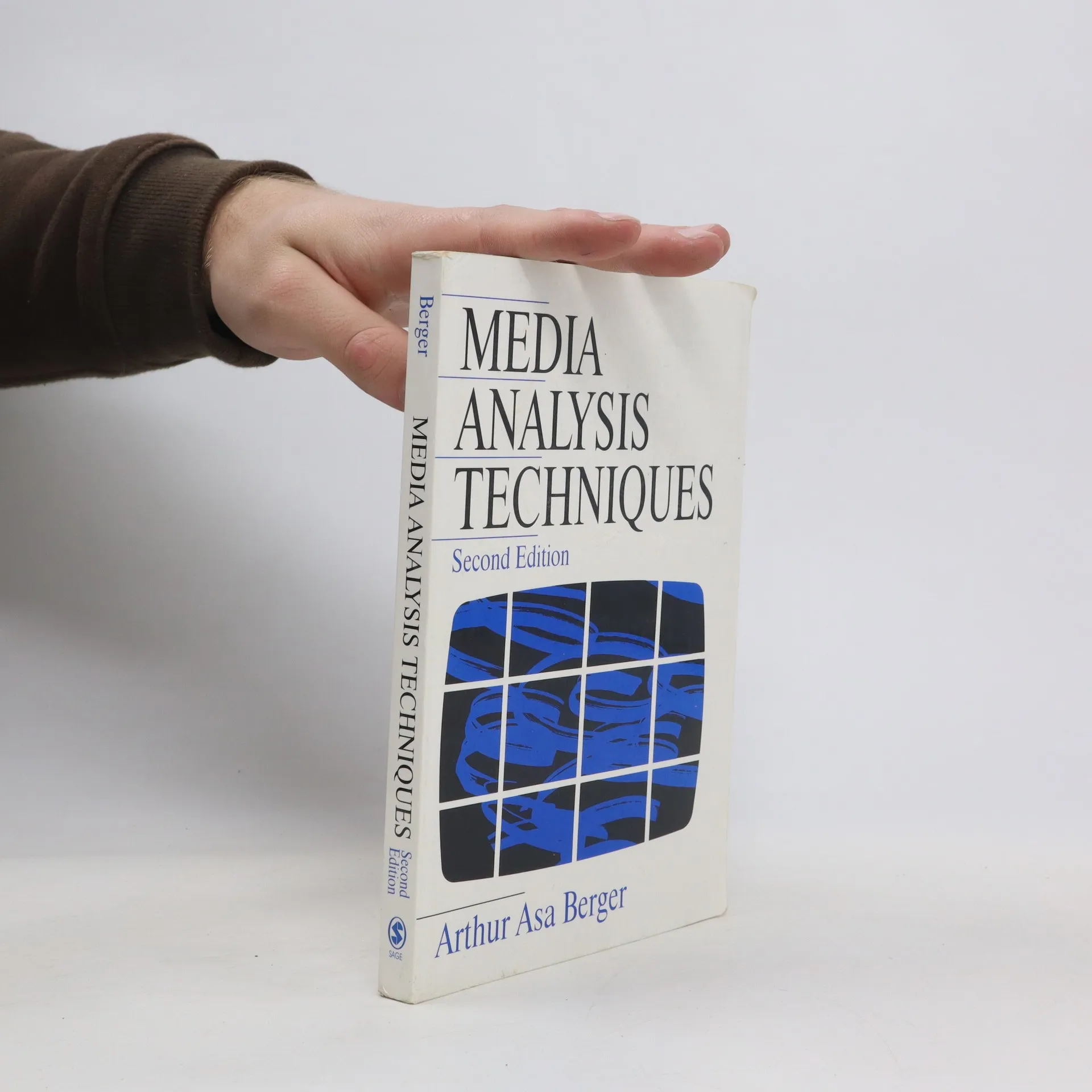
Media Analysis Techniques, Arthur Asa Berger
- Langue

- Année de publication
- 1998
- Reliure
- (souple)
Modes de paiement
Il manque plus que ton avis ici.
- Titre
- Media Analysis Techniques
- Langue
- Anglais
- Auteurs
- Arthur Asa Berger
- Éditeur
- Sage
- Publié
- 1998
- Format
- souple
- Pages
- 240
- ISBN10
- 0761914544
- ISBN13
- 9780761914549
- Séries
- Commtext Series
- Catégories
- Mots clés
- L'école
- Évaluation
- 3,5 sur 5
- Description
- The first edition was praised for being delightful, engaging, readable, and well-organized. Now, once again, Arthur Asa Berger continues the tradition of providing students with a clearly written, user-friendly, hands-on guide to media research techniques with the long-awaited second edition of his best-selling classic Media Research Techniques. Leading the reader through a number of specially designed research projects (such as content analysis, surveys, focus groups, and in-depth interviews), he presents an array of interesting and practical assignments. In response to suggestions from faithful users of the first edition, Berger has added new chapters in the following areas: experimentation; historical research; comparative research; and participant observation.