



En savoir plus sur le livre
This text introduces students and researchers to misfolded proteins, toxic oligomers, and amyloid assemblages, highlighting their connection to neurological diseases. Recent discoveries have reinforced the links between protein quality control failures and disorders such as prion diseases, Alzheimer’s, Parkinson’s, Huntington’s, amyotrophic lateral sclerosis, and frontotemporal lobar degeneration. Beginning with the basics of protein folding and quality control, the reader learns how misfolded proteins contribute to these diseases. The author presents the material in a clear, engaging style, addressing a leading area of science and medicine. Emphasis is placed on groundbreaking biophysical and biochemical methods that facilitate molecular-level exploration and conceptual breakthroughs. Each major disease class is covered in separate chapters, focusing on common factors such as failures in synaptic transmission, mitochondrial control, axonal transport, RNA processing breakdowns, environmental influences, and neuroinflammation effects. This book is suitable for advanced undergraduate and graduate teaching and serves as a comprehensive reference for students and researchers in neuroscience, molecular biology, biological physics, and biomedical engineering.
Achat du livre
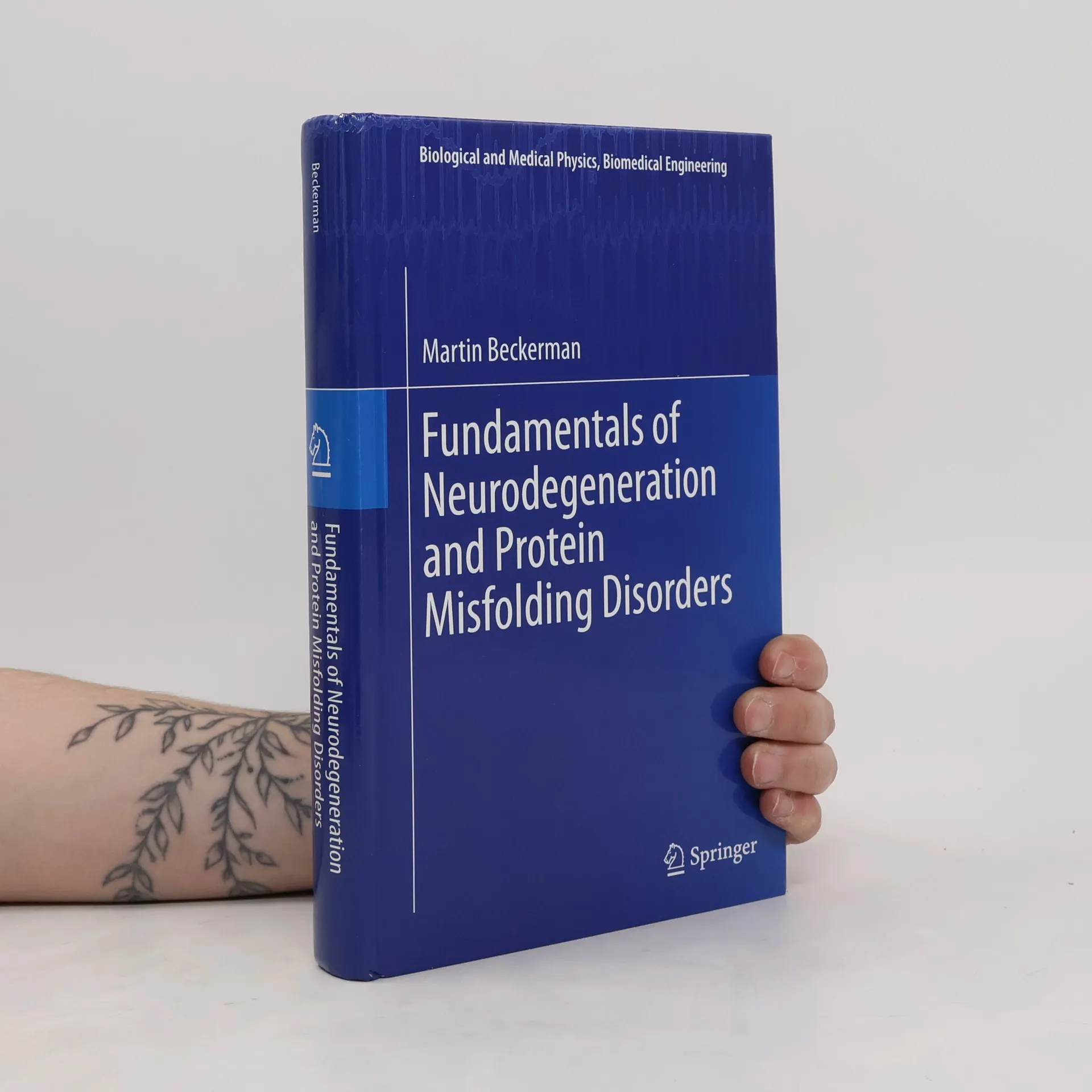
Fundamentals of Neurodegeneration and Protein Misfolding Disorders, Martin Beckerman
- Langue

- Année de publication
- 2015
- Reliure
- (rigide)
Modes de paiement
Il manque plus que ton avis ici.
- Titre
- Fundamentals of Neurodegeneration and Protein Misfolding Disorders
- Langue
- Anglais
- Auteurs
- Martin Beckerman
- Éditeur
- Springer
- Publié
- 2015
- Format
- rigide
- Pages
- 378
- ISBN10
- 3319221167
- ISBN13
- 9783319221168
- Séries
- Mots clés
- Santé & Médecine, Sciences naturelles, Microbiologie
- Évaluation
- 3 sur 5
- Description
- This text introduces students and researchers to misfolded proteins, toxic oligomers, and amyloid assemblages, highlighting their connection to neurological diseases. Recent discoveries have reinforced the links between protein quality control failures and disorders such as prion diseases, Alzheimer’s, Parkinson’s, Huntington’s, amyotrophic lateral sclerosis, and frontotemporal lobar degeneration. Beginning with the basics of protein folding and quality control, the reader learns how misfolded proteins contribute to these diseases. The author presents the material in a clear, engaging style, addressing a leading area of science and medicine. Emphasis is placed on groundbreaking biophysical and biochemical methods that facilitate molecular-level exploration and conceptual breakthroughs. Each major disease class is covered in separate chapters, focusing on common factors such as failures in synaptic transmission, mitochondrial control, axonal transport, RNA processing breakdowns, environmental influences, and neuroinflammation effects. This book is suitable for advanced undergraduate and graduate teaching and serves as a comprehensive reference for students and researchers in neuroscience, molecular biology, biological physics, and biomedical engineering.