

En savoir plus sur le livre
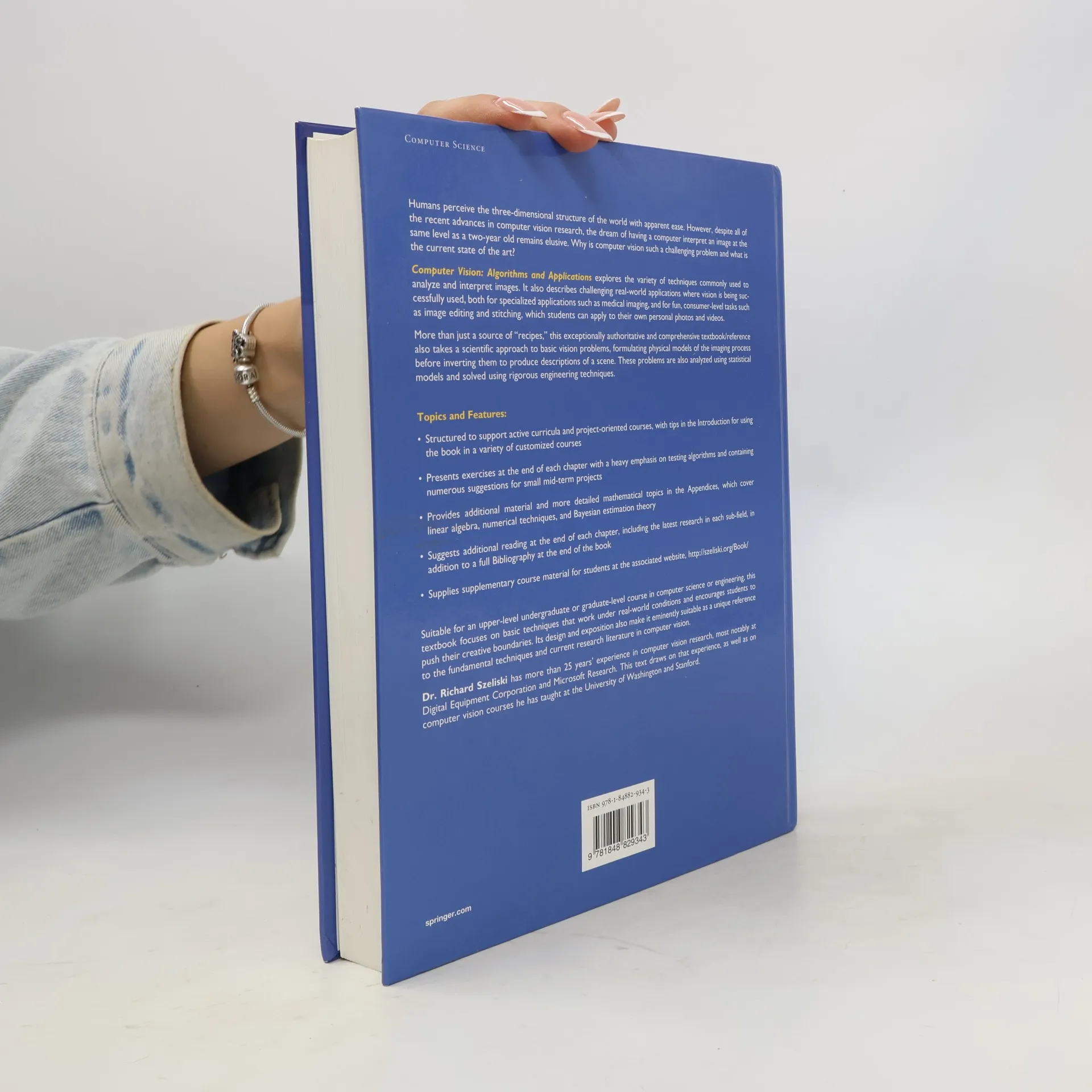
Humans easily perceive the three-dimensional structure of the world, yet despite advances in computer vision, enabling a computer to interpret an image like a two-year-old remains a challenge. This text delves into various techniques for analyzing and interpreting images, highlighting real-world applications ranging from medical imaging to consumer-level tasks like image editing and stitching. It goes beyond mere "recipes," adopting a scientific approach to fundamental vision problems by formulating physical models of the imaging process and inverting them for scene descriptions. Statistical models and rigorous engineering techniques are employed to solve these challenges. The book is structured to support active curricula and project-oriented courses, with guidance in the Introduction for customization. Each chapter includes exercises emphasizing algorithm testing and suggestions for mid-term projects. Additional material on linear algebra, numerical techniques, and Bayesian estimation theory is provided in the Appendices. Each chapter also suggests further reading, including the latest research, and a comprehensive Bibliography is included. Supplementary course materials are available on the associated website. Aimed at upper-level undergraduates and graduate students in computer science or engineering, it focuses on practical techniques and encourages creative exploration, serving as a valuable reference for fundamental t


Achat du livre
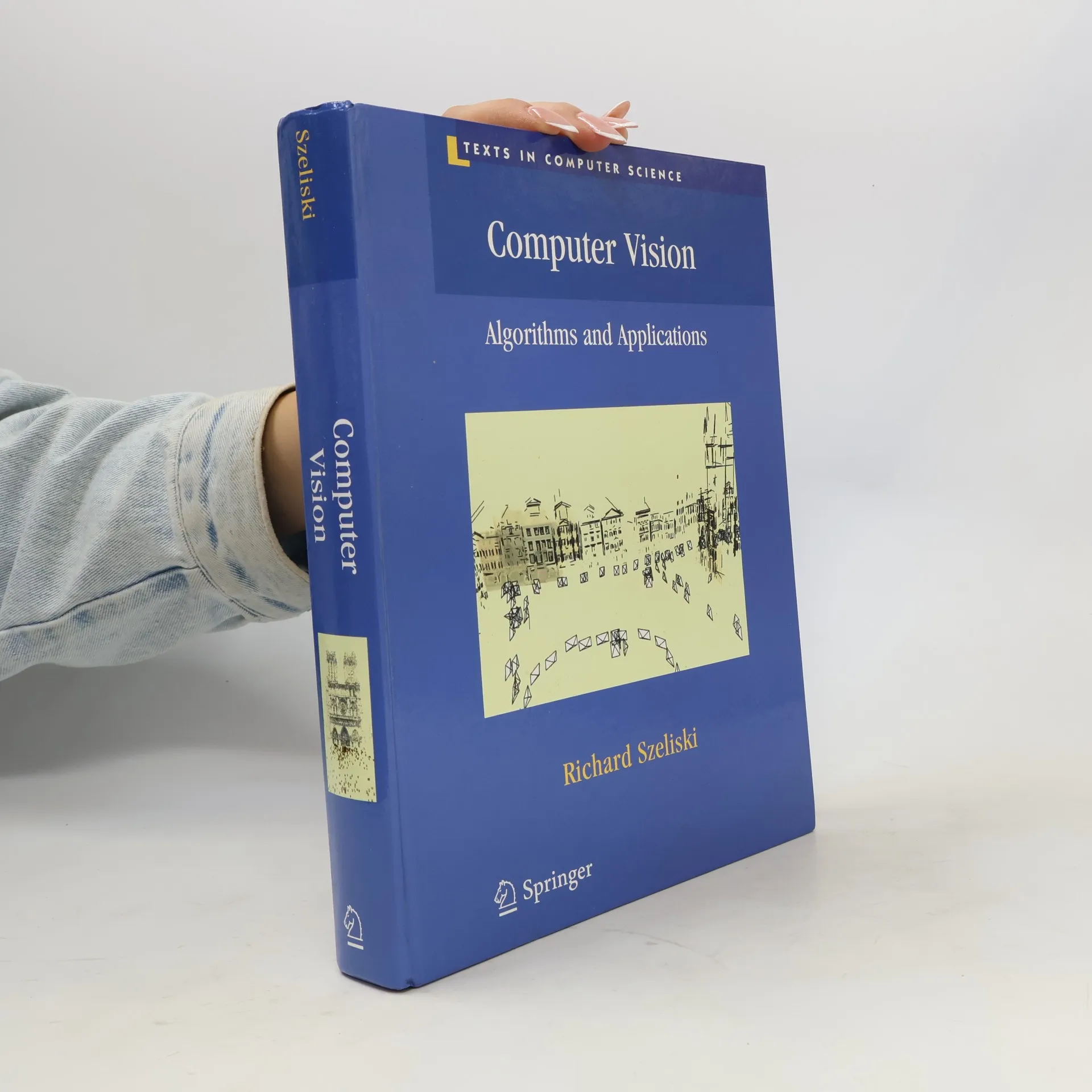
Texts in Computer Science: Computer Vision, Richard Szeliski
- Langue

- Année de publication
- 2010
- Reliure
- (rigide)
Modes de paiement
Il manque plus que ton avis ici.
- Sous-titre
- Algorithms and Applications
- Langue
- Anglais
- Auteurs
- Richard Szeliski
- Éditeur
- Springer Us
- Publié
- 2010
- Format
- rigide
- Pages
- 832
- ISBN10
- 1848829345
- ISBN13
- 9781848829343
- Séries
- Évaluation
- 5 sur 5
- Description
- Humans easily perceive the three-dimensional structure of the world, yet despite advances in computer vision, enabling a computer to interpret an image like a two-year-old remains a challenge. This text delves into various techniques for analyzing and interpreting images, highlighting real-world applications ranging from medical imaging to consumer-level tasks like image editing and stitching. It goes beyond mere "recipes," adopting a scientific approach to fundamental vision problems by formulating physical models of the imaging process and inverting them for scene descriptions. Statistical models and rigorous engineering techniques are employed to solve these challenges. The book is structured to support active curricula and project-oriented courses, with guidance in the Introduction for customization. Each chapter includes exercises emphasizing algorithm testing and suggestions for mid-term projects. Additional material on linear algebra, numerical techniques, and Bayesian estimation theory is provided in the Appendices. Each chapter also suggests further reading, including the latest research, and a comprehensive Bibliography is included. Supplementary course materials are available on the associated website. Aimed at upper-level undergraduates and graduate students in computer science or engineering, it focuses on practical techniques and encourages creative exploration, serving as a valuable reference for fundamental t