




Paramètres
- 249pages
- 9 heures de lecture
En savoir plus sur le livre
In 1903, Henry Ford founded the Ford Motor Company in a small Detroit workshop. Five years later, he introduced the Model T and met with extraordinary commercial success. Between 1910 and 1914, he developed mass production and made the conveyor a symbol of the auto-industrial age. Then, in 1914, Ford acquired an overnight reputation as humanitarian, philanthropist and social reformer; and simultaneously infuriated the business community and stunned social reformers with his announcement of the outrageous Five Dollar Day. More than simply high-wage policy, the Five Dollar Day attempted to solve attitudinal and behavioral problems with an effort to change the worker's domestic environment. Half of the five dollars represented "wages" and the other half was called "profits"--which the worker received only when he met specific standards of efficiency and home life that accorded with the ideal of an American way of life which the company felt was the basis for industrial efficiency. The unique and short-lived Ford program did not succeed, yet its significance as an early managerial strategy goes beyond the boundaries of success or failure. The Ford Motor Company was uniquely situated in the historical evolution of labor management and industrial technology, and this readable study of that evolution, which highlights the Ford workers, is a chapter in the larger history of labor and work in America.
Achat du livre
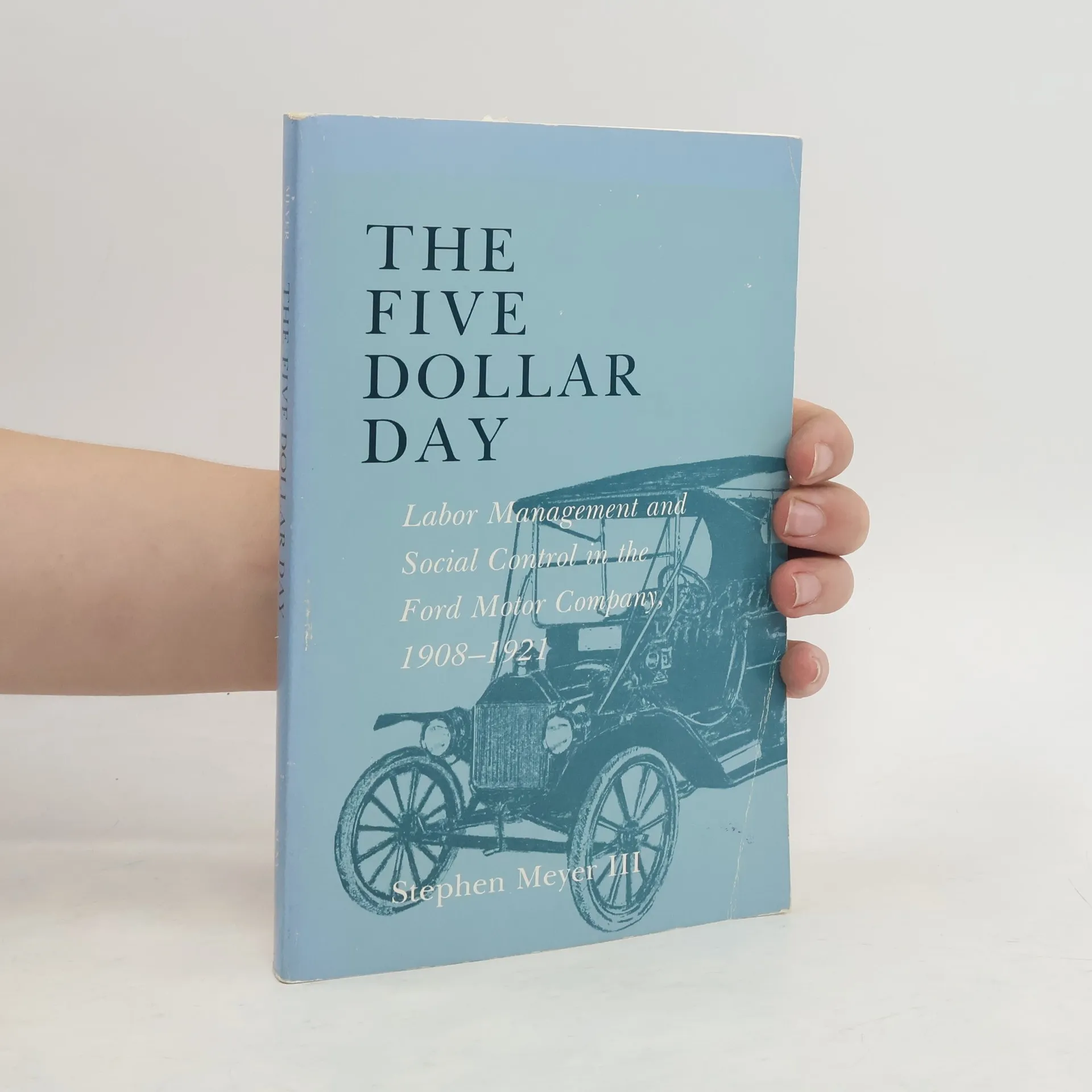
The Five Dollar Day, Stephen Meyer III
- Langue

- Année de publication
- 1981
- product-detail.submit-box.info.binding
- (rigide),
- État du livre
- Abîmé
- Prix
- 0,21 €
Modes de paiement
Personne n'a encore évalué .
- Titre
- The Five Dollar Day
- Sous-titre
- Labor Management and Social Control in the Ford Motor Company, 1908-1921
- Langue
- Anglais
- Auteurs
- Stephen Meyer III
- Éditeur
- State Univ of New York Pr
- Publié
- 1981
- Format
- rigide
- Pages
- 249
- ISBN10
- 0873955080
- ISBN13
- 9780873955089
- Séries
- Mots clés
- Nonfiction
- Description
- In 1903, Henry Ford founded the Ford Motor Company in a small Detroit workshop. Five years later, he introduced the Model T and met with extraordinary commercial success. Between 1910 and 1914, he developed mass production and made the conveyor a symbol of the auto-industrial age. Then, in 1914, Ford acquired an overnight reputation as humanitarian, philanthropist and social reformer; and simultaneously infuriated the business community and stunned social reformers with his announcement of the outrageous Five Dollar Day. More than simply high-wage policy, the Five Dollar Day attempted to solve attitudinal and behavioral problems with an effort to change the worker's domestic environment. Half of the five dollars represented "wages" and the other half was called "profits"--which the worker received only when he met specific standards of efficiency and home life that accorded with the ideal of an American way of life which the company felt was the basis for industrial efficiency. The unique and short-lived Ford program did not succeed, yet its significance as an early managerial strategy goes beyond the boundaries of success or failure. The Ford Motor Company was uniquely situated in the historical evolution of labor management and industrial technology, and this readable study of that evolution, which highlights the Ford workers, is a chapter in the larger history of labor and work in America.