

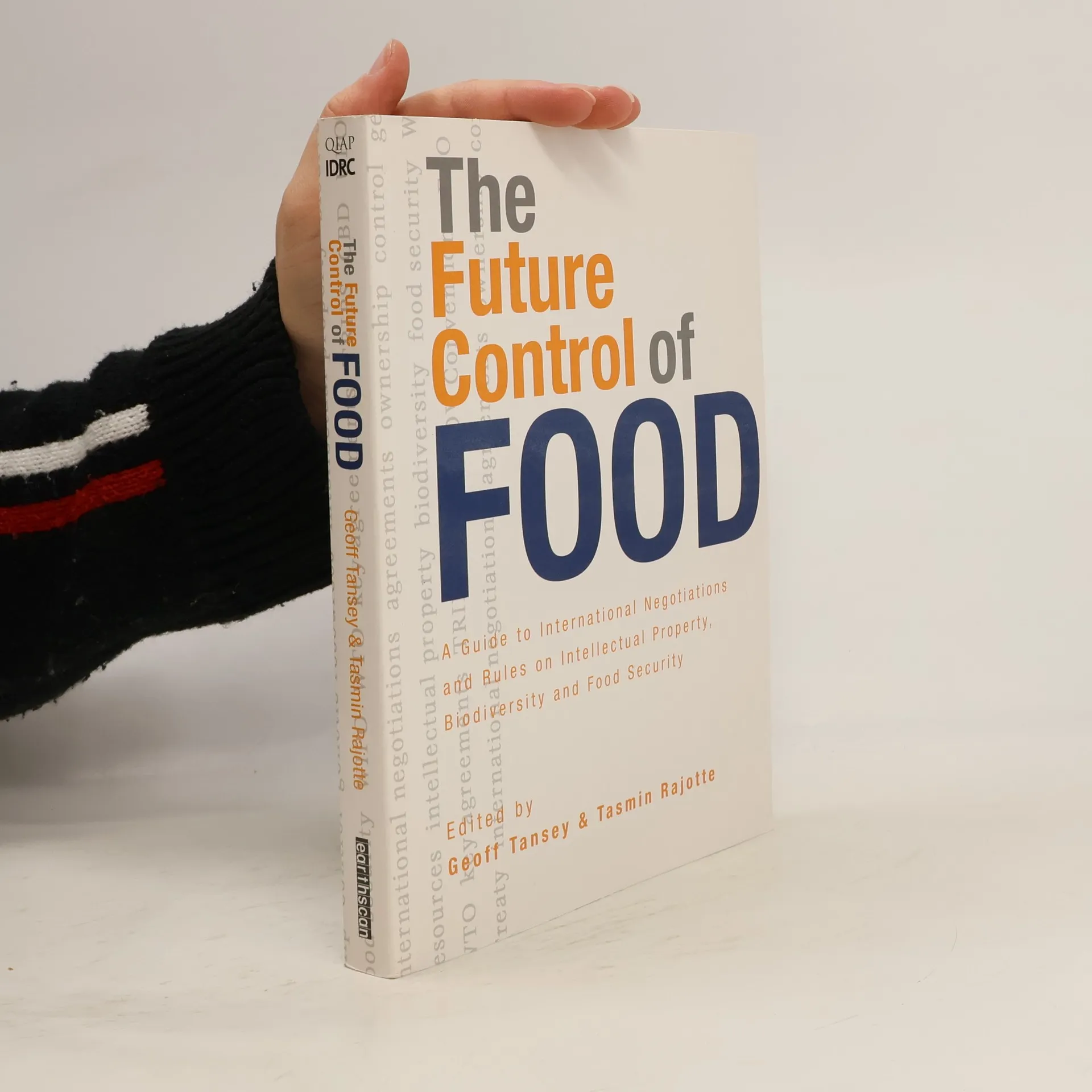


The Future Control of Food
An Essential Guide to International Negotiations and Rules on Intellectual Property, Biodiversity and Food Security
Auteurs
Évaluation du livre
Paramètres
- 288pages
- 11 heures de lecture
En savoir plus sur le livre
This book is the first wide-ranging guide to the key issues of intellectual property and ownership, genetics, biodiversity and food security. Proceeding from an introduction and overview of the issues, comprehensive chapters cover negotiations and instruments in the World Trade Organization, Convention on Biological Diversity, UN Food and Agriculture Organization, World Intellectual Property Organization, the International Union for the Protection of New Varieties of Plants and various other international bodies. The final part discusses the responses of civil society groups to the changing global rules, how these changes affect the direction of research and development, the nature of global negotiation processes and various alternative futures. Published with IDRC and QIAP.
Achat du livre
The Future Control of Food, Geoff Tansey, Tasmin Rajotte
- Langue

- Année de publication
- 2008
- Reliure
- (souple)
Modes de paiement
Il manque plus que ton avis ici.
- Titre
- The Future Control of Food
- Sous-titre
- An Essential Guide to International Negotiations and Rules on Intellectual Property, Biodiversity and Food Security
- Langue
- Anglais
- Auteurs
- Geoff Tansey, Tasmin Rajotte
- Éditeur
- Routledge
- Publié
- 2008
- Format
- souple
- Pages
- 288
- ISBN10
- 1844074293
- ISBN13
- 9781844074297
- Séries
- Catégories
- Mots clés
- Commerce, Thématique juridique, Politique, Technologie, Littérature spécialisée, Théories politiques, Écrits rassemblés, Industrie, Droit civil, Politique économique, Droit international, Théorie du droit, Société civile, Propriété intellectuelle
- Évaluation
- 4,15 sur 5
- Description
- This book is the first wide-ranging guide to the key issues of intellectual property and ownership, genetics, biodiversity and food security. Proceeding from an introduction and overview of the issues, comprehensive chapters cover negotiations and instruments in the World Trade Organization, Convention on Biological Diversity, UN Food and Agriculture Organization, World Intellectual Property Organization, the International Union for the Protection of New Varieties of Plants and various other international bodies. The final part discusses the responses of civil society groups to the changing global rules, how these changes affect the direction of research and development, the nature of global negotiation processes and various alternative futures. Published with IDRC and QIAP.