


En savoir plus sur le livre
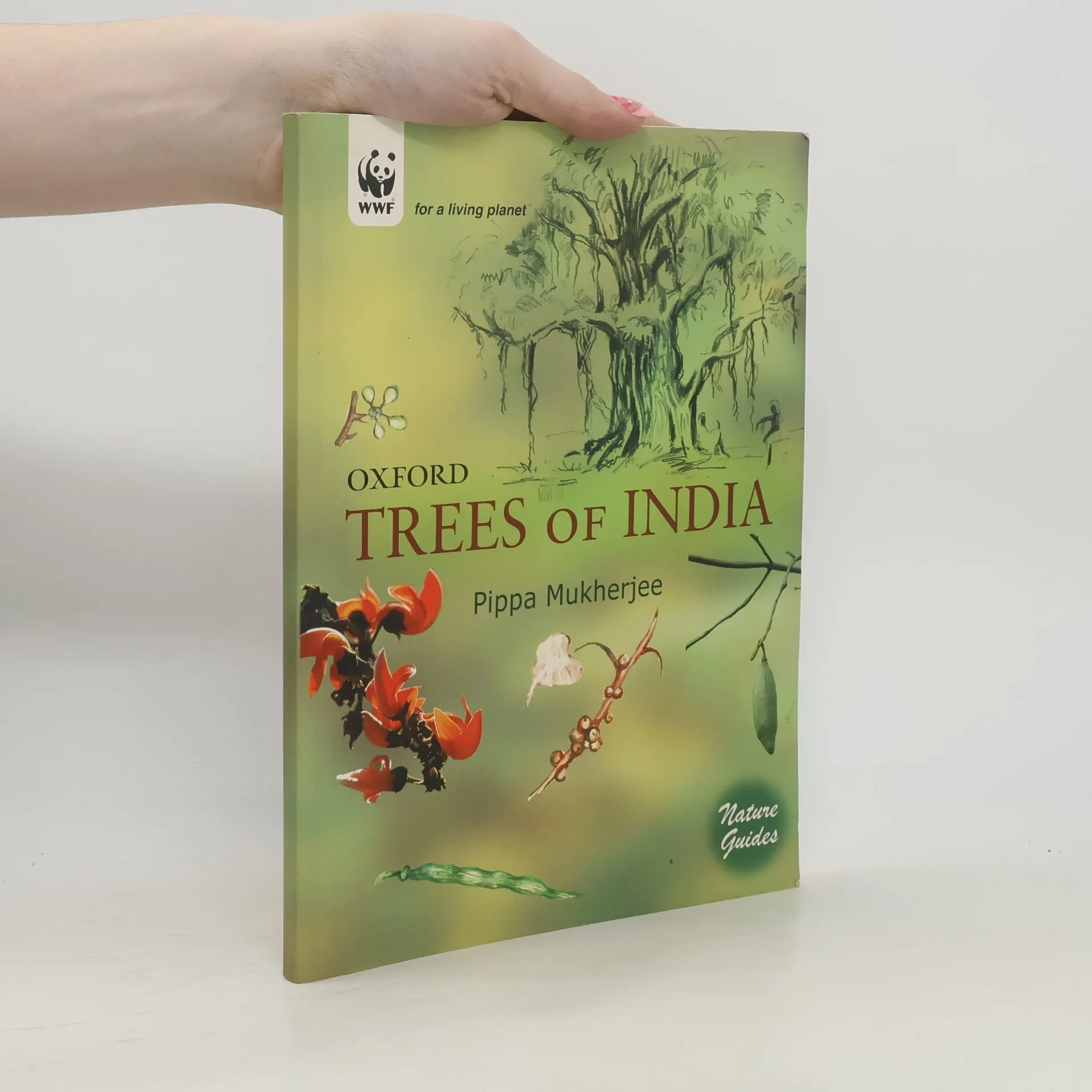
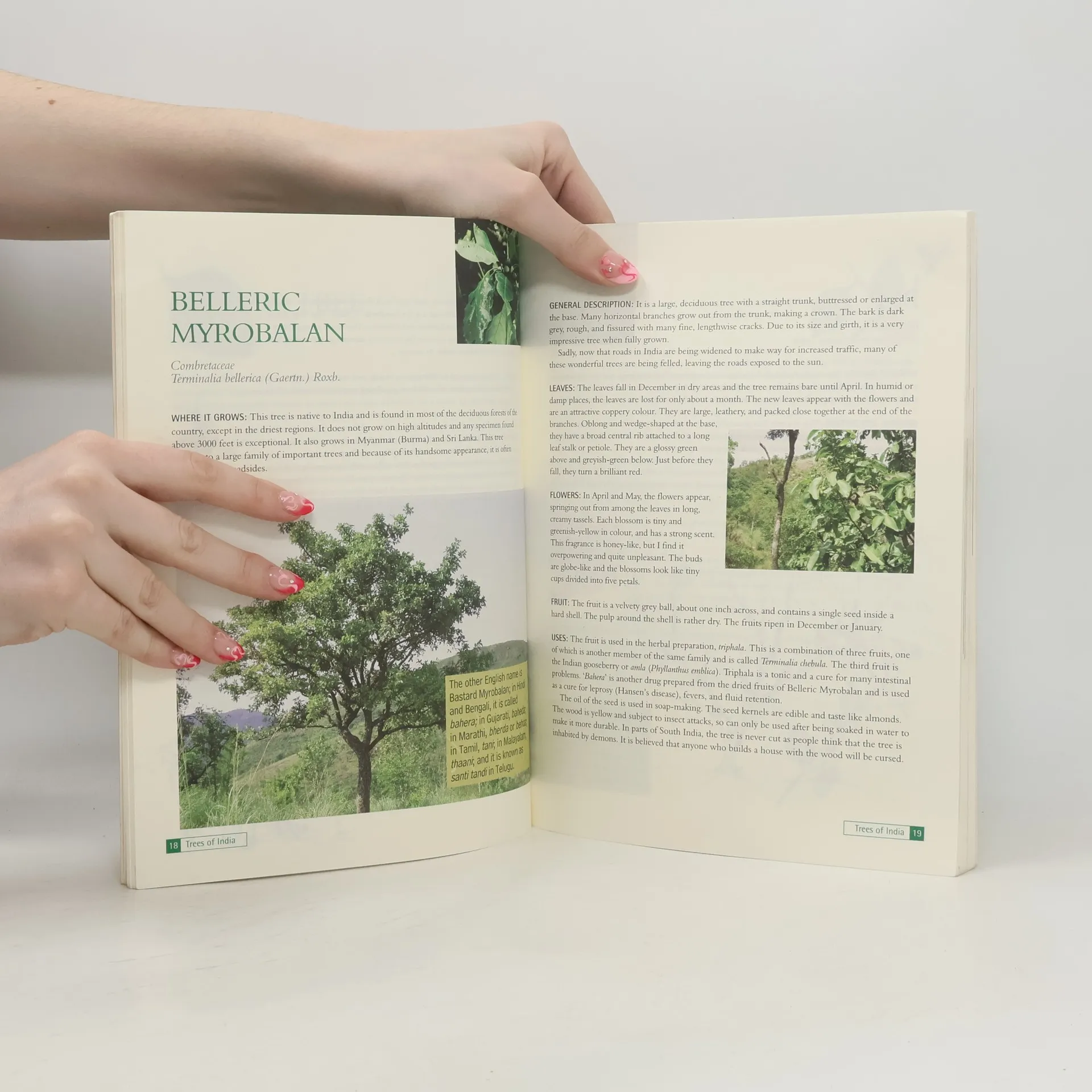
In Trees of India , we can see forty-three tree species, most of which are commonly in India. Detailed descriptions of each, complemented by color photographs of the tree and its leaves, fruits, and flowers, reveal the unique characteristics of a wide variety of trees. Trees of India includesdecriptions and well-known trees like the banyan, the gulmohur, the neem, and the coconut, as well as of lesser-known trees like the baobab and the true kapok tree.The descriptions are alphabetically arranged according to the common names of the trees and incorporate information on their scientific and local names, the places in which specific trees grow, and the characteristics of the leaves, flowers, and fruits of different trees. Significantly, Mukherjeeincludes information on the uses of each tree, including its wood, though she issues a strong warning against tree felling in the Introduction. In addition to the informative Introduction, the book carries a guide to identifying trees, a glossary, and an index of botanical names. Though especiallydesigned with our younger readers in mind, the book will appeal equally to older relatives including parents and teachers, as well as nature lovers.
Achat du livre
Trees of India, Pippa Mukherjee
- Langue

- Année de publication
- 2008
- Reliure
- (souple)
Modes de paiement
Il manque plus que ton avis ici.
- Titre
- Trees of India
- Langue
- Anglais
- Auteurs
- Pippa Mukherjee
- Éditeur
- Oxford University Press
- Publié
- 2008
- Format
- souple
- Pages
- 99
- ISBN10
- 0195687981
- ISBN13
- 9780195687989
- Séries
- Mots clés
- La nature, Sciences naturelles, Manuels et guides, Science, Plantes, Littérature spécialisée, Inde, Forêts, Arbres
- Évaluation
- 3,85 sur 5
- Description
- In Trees of India , we can see forty-three tree species, most of which are commonly in India. Detailed descriptions of each, complemented by color photographs of the tree and its leaves, fruits, and flowers, reveal the unique characteristics of a wide variety of trees. Trees of India includesdecriptions and well-known trees like the banyan, the gulmohur, the neem, and the coconut, as well as of lesser-known trees like the baobab and the true kapok tree.The descriptions are alphabetically arranged according to the common names of the trees and incorporate information on their scientific and local names, the places in which specific trees grow, and the characteristics of the leaves, flowers, and fruits of different trees. Significantly, Mukherjeeincludes information on the uses of each tree, including its wood, though she issues a strong warning against tree felling in the Introduction. In addition to the informative Introduction, the book carries a guide to identifying trees, a glossary, and an index of botanical names. Though especiallydesigned with our younger readers in mind, the book will appeal equally to older relatives including parents and teachers, as well as nature lovers.