



Paramètres
- 336pages
- 12 heures de lecture
En savoir plus sur le livre
A timely complement to John Bruer's Schools for Thought, this work documents eight projects that apply cognitive research to enhance classroom practice. The chapter authors, principal investigators in a significant research initiative on cognitive science and education, collaborate with teachers to improve K-12 learning. Covering subjects like writing, mathematics, history, social science, and physics, these projects illustrate how cognitive science principles can form a science of instruction applicable across the curriculum. The book is organized into three sections: applications of cognitive research to specific content areas; applications for learning across the curriculum; and applications that challenge traditional classroom learning concepts. Chapters explore explicit models of knowledge and corresponding instructional strategies that help learners build on their knowledge, the acquisition of specified knowledge, and the relevance of knowledge in contemporary curricula. Contributors include notable figures such as Kate McGilly, Sharon A. Griffin, Robbie Case, Robert S. Siegler, and Howard Gardner, among others. This collaborative work emphasizes the importance of integrating cognitive science into educational practices for improved teaching and learning outcomes.
Achat du livre
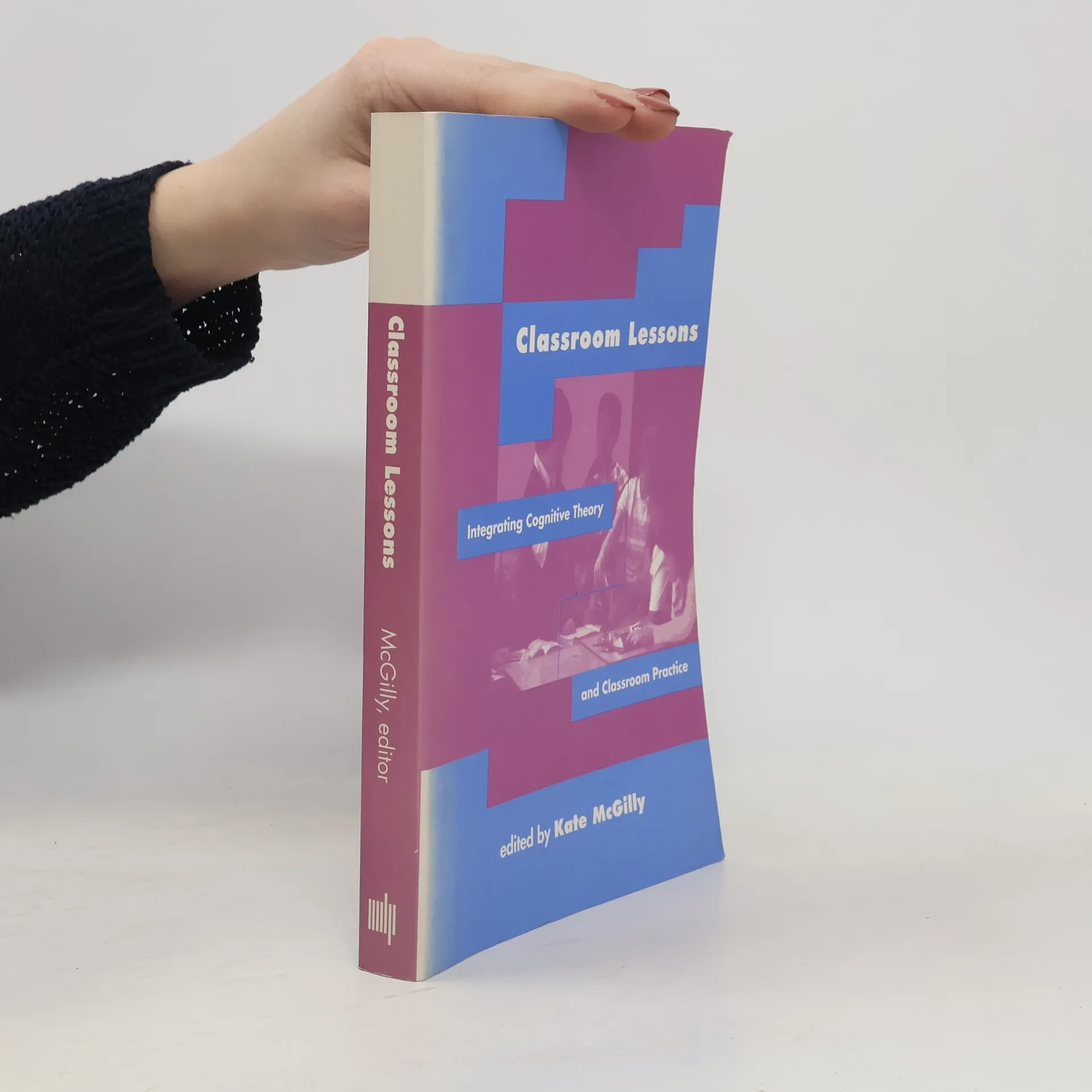
Classroom Lessons, Kate McGilly
- Langue

- Année de publication
- 1994
- Reliure
- (souple)
Modes de paiement
Il manque plus que ton avis ici.
- Titre
- Classroom Lessons
- Sous-titre
- Integrating Cognitive Theory and Classroom Practice
- Langue
- Anglais
- Auteurs
- Kate McGilly
- Éditeur
- MIT Press
- Publié
- 1994
- Format
- souple
- Pages
- 336
- ISBN10
- 0262631687
- ISBN13
- 9780262631686
- Séries
- Catégories
- Mots clés
- Thèmes psychologiques, Manuels et guides, États-Unis, Éducation, système scolaire, Littérature spécialisée, Psychologie de l'éducation
- Évaluation
- 5 sur 5
- Description
- A timely complement to John Bruer's Schools for Thought, this work documents eight projects that apply cognitive research to enhance classroom practice. The chapter authors, principal investigators in a significant research initiative on cognitive science and education, collaborate with teachers to improve K-12 learning. Covering subjects like writing, mathematics, history, social science, and physics, these projects illustrate how cognitive science principles can form a science of instruction applicable across the curriculum. The book is organized into three sections: applications of cognitive research to specific content areas; applications for learning across the curriculum; and applications that challenge traditional classroom learning concepts. Chapters explore explicit models of knowledge and corresponding instructional strategies that help learners build on their knowledge, the acquisition of specified knowledge, and the relevance of knowledge in contemporary curricula. Contributors include notable figures such as Kate McGilly, Sharon A. Griffin, Robbie Case, Robert S. Siegler, and Howard Gardner, among others. This collaborative work emphasizes the importance of integrating cognitive science into educational practices for improved teaching and learning outcomes.