

Paramètres
- 224pages
- 8 heures de lecture
En savoir plus sur le livre
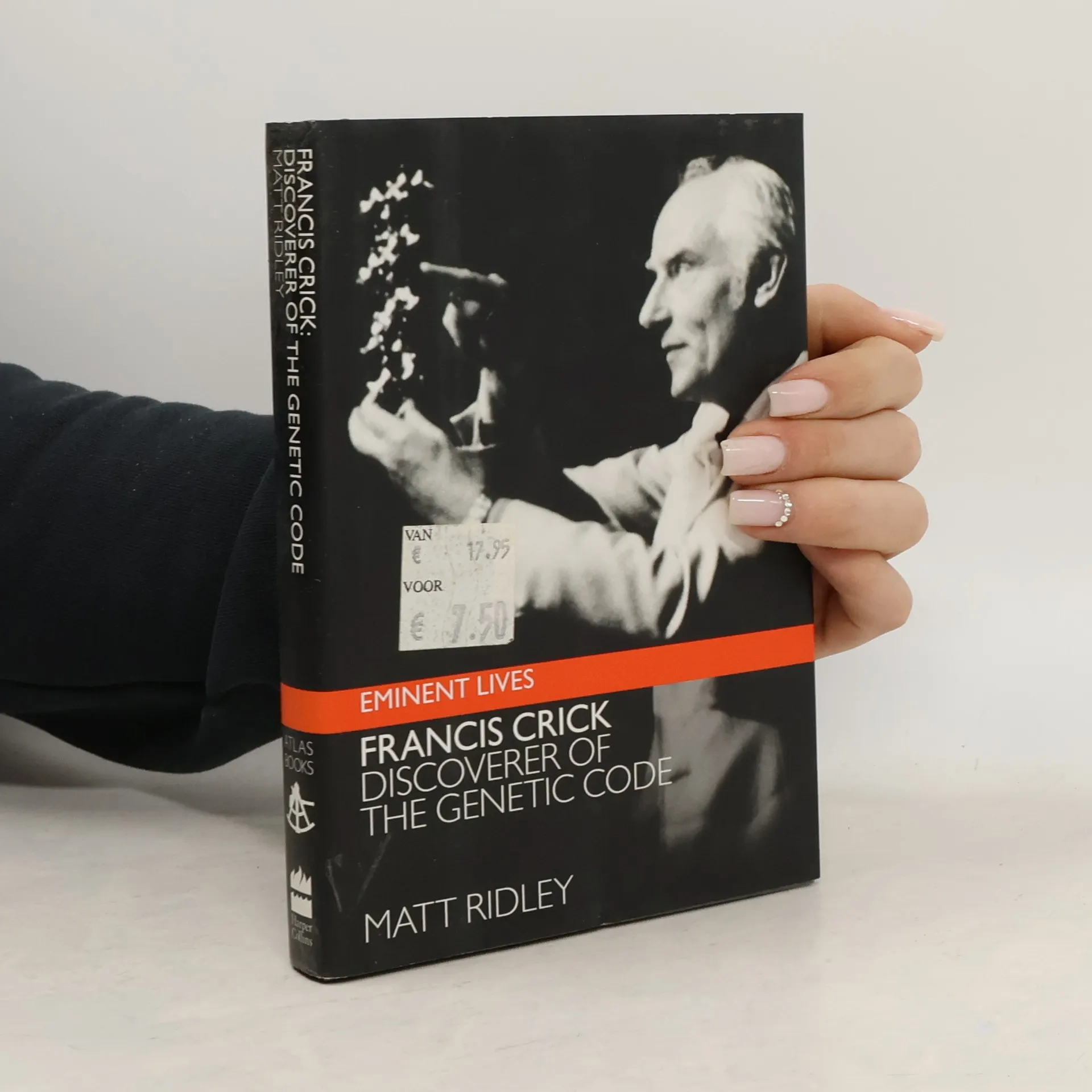
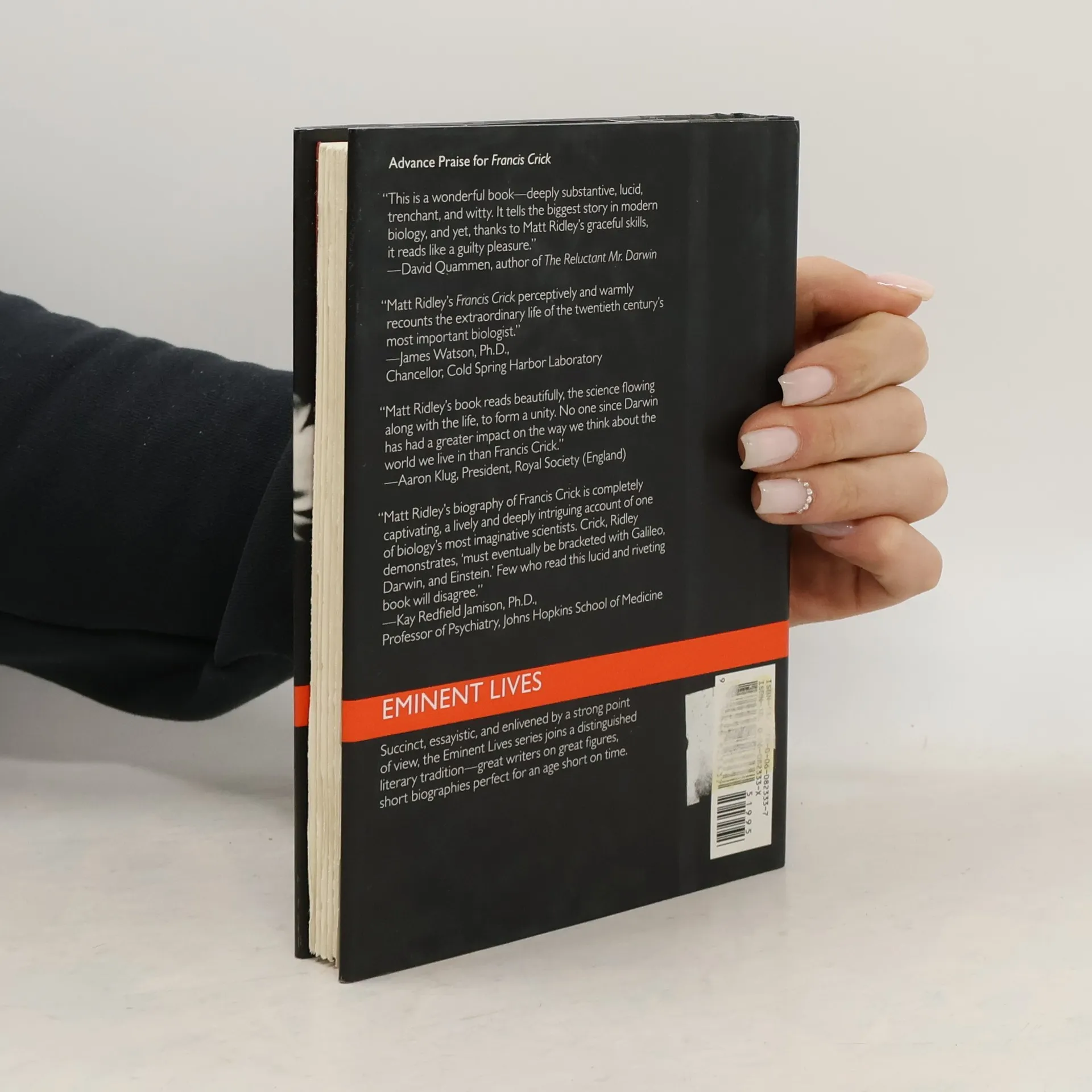
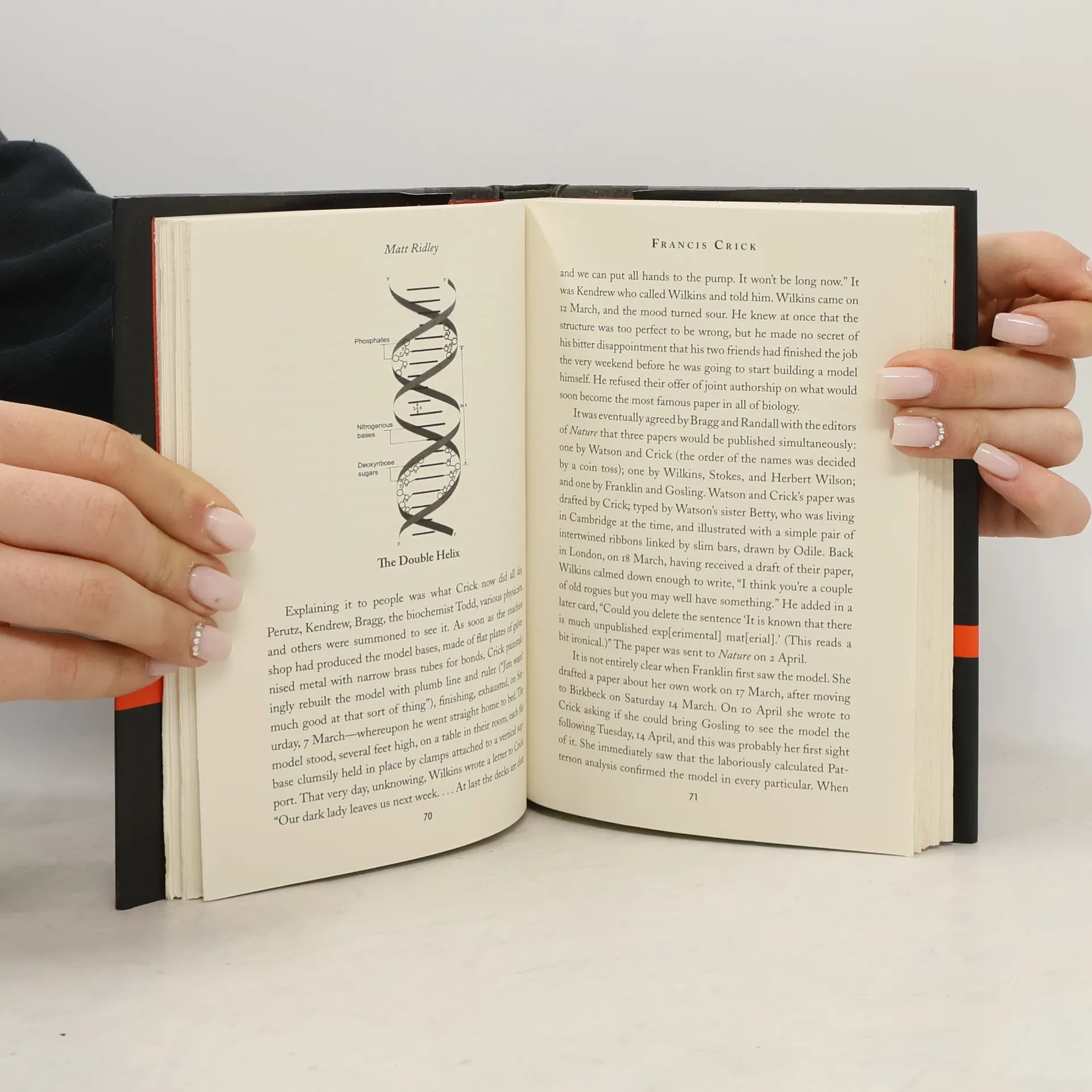
Francis Crick, who passed away in 2004 at eighty-eight, is recognized alongside Galileo, Darwin, and Einstein as one of history's greatest scientists. From 1953 to 1966, he led a revolution in biology by uncovering the genetic code, the essential digital cipher of heredity that differentiates living from non-living entities. His groundbreaking work, often done in collaboration, encompassed the discovery of the double helix, the mechanism of protein synthesis, and the three-letter nature of the genetic code. Matt Ridley's biography chronicles Crick's journey from a middle-class upbringing in the English Midlands and a lackluster education to a pivotal career shift into biology at thirty-one. At Cambridge, he showcased a unique visual imagination and remarkable tenacity, enabling him to solve significant scientific puzzles long before others recognized them. After achieving his goal of understanding what makes living beings alive, Crick moved to California at sixty to explore another lifelong question: the nature of consciousness. Unfortunately, he ran out of time before uncovering the answers he sought.
Achat du livre
Francis Crick, Matt Ridley
- Langue

- Année de publication
- 2006
- product-detail.submit-box.info.binding
- (rigide)
Modes de paiement
Il manque plus que ton avis ici.
- Titre
- Francis Crick
- Sous-titre
- Discoverer of the Genetic Code
- Langue
- Anglais
- Auteurs
- Matt Ridley
- Éditeur
- Eminent Lives
- Publié
- 2006
- Format
- rigide
- Pages
- 224
- ISBN10
- 006082333X
- ISBN13
- 9780060823337
- Séries
- Mots clés
- Nonfiction, Thème historique, Histoires vraies, Biographies, Science et Mathématiques, La nature, Sciences naturelles, Thèmes psychologiques, Manuels et guides, Biologie, Autobiographies et mémoires, Science, États-Unis, Biographies, Thématique écologique, Technologie, Écologie, Médecine, Littérature spécialisée, Grande-Bretagne, Souvenirs, Voyages, Livres, Théories scientifiques, Recherche, Université, Évolution, Neurosciences, Génétique, Animaux sauvages, Séjour en nature, Planète Terre, Histoire des sciences, Poisons, intoxications, Nature sauvage, Fondements, Scientifiques, Histoire de la médecine, Listes, Biologie moléculaire, Neuropsychologie, Biologie évolutive, Neurobiologie, Google, Psychologie évolutive, Biologistes, Code génétique
- Évaluation
- 3,95 sur 5
- Description
- Francis Crick, who passed away in 2004 at eighty-eight, is recognized alongside Galileo, Darwin, and Einstein as one of history's greatest scientists. From 1953 to 1966, he led a revolution in biology by uncovering the genetic code, the essential digital cipher of heredity that differentiates living from non-living entities. His groundbreaking work, often done in collaboration, encompassed the discovery of the double helix, the mechanism of protein synthesis, and the three-letter nature of the genetic code. Matt Ridley's biography chronicles Crick's journey from a middle-class upbringing in the English Midlands and a lackluster education to a pivotal career shift into biology at thirty-one. At Cambridge, he showcased a unique visual imagination and remarkable tenacity, enabling him to solve significant scientific puzzles long before others recognized them. After achieving his goal of understanding what makes living beings alive, Crick moved to California at sixty to explore another lifelong question: the nature of consciousness. Unfortunately, he ran out of time before uncovering the answers he sought.