

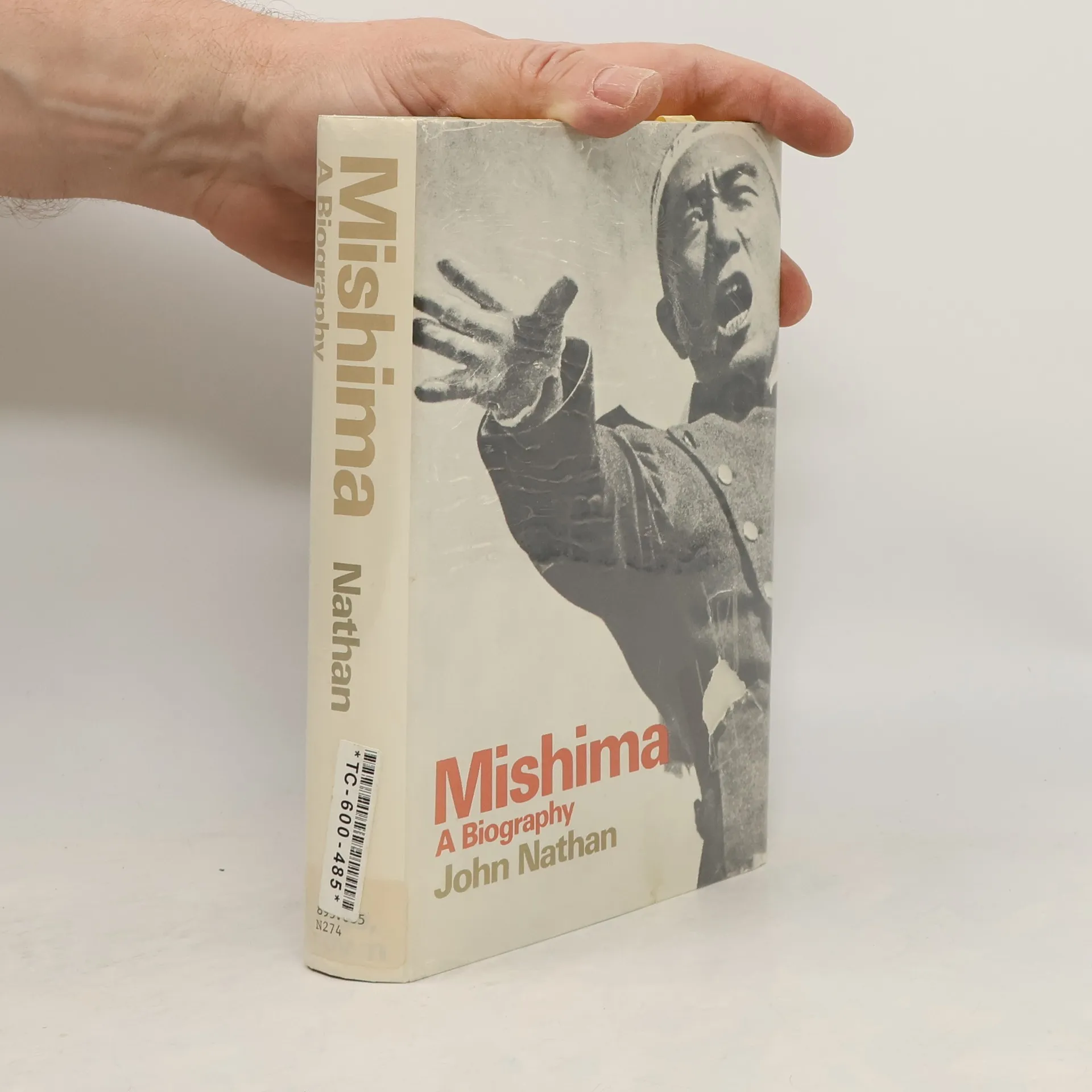
En savoir plus sur le livre
In 1970, at the age of forty-five, Kimitake Hiranka, known as Yukio Mishima, was a preeminent Japanese writer, having produced forty novels, eighteen plays, and numerous volumes of short stories and essays. That November, he executed a meticulously planned ritual suicide, marking a horrifying yet inevitable climax to his life—a life characterized by a relentless pursuit of beauty. John Nathan’s biography delves into Mishima’s troubled childhood, dominated by a sickly grandmother who instilled in him a longing for an irretrievable past, alongside a mother whose jealousy and a father’s opposition shaped his ambitions. It explores his early fixation on purity and beauty, leading to a later embrace of erotic nihilism, and the tension between his conventional life as a husband and father and his homosexual and sadomasochistic tendencies. Ultimately, it reveals his growing obsession with death as both a dramatic act and a form of ultimate beauty.


Achat du livre
Mishima: A Biography, John Nathan
- Langue

- Année de publication
- 1974
- Reliure
- (rigide)
Modes de paiement
Il manque plus que ton avis ici.
- Titre
- Mishima: A Biography
- Langue
- Anglais
- Auteurs
- John Nathan
- Éditeur
- Little, Brown
- Publié
- 1974
- Format
- rigide
- Séries
- Mots clés
- 20e siècle, Japon, Littérature japonaise
- Évaluation
- 4,25 sur 5
- Description
- In 1970, at the age of forty-five, Kimitake Hiranka, known as Yukio Mishima, was a preeminent Japanese writer, having produced forty novels, eighteen plays, and numerous volumes of short stories and essays. That November, he executed a meticulously planned ritual suicide, marking a horrifying yet inevitable climax to his life—a life characterized by a relentless pursuit of beauty. John Nathan’s biography delves into Mishima’s troubled childhood, dominated by a sickly grandmother who instilled in him a longing for an irretrievable past, alongside a mother whose jealousy and a father’s opposition shaped his ambitions. It explores his early fixation on purity and beauty, leading to a later embrace of erotic nihilism, and the tension between his conventional life as a husband and father and his homosexual and sadomasochistic tendencies. Ultimately, it reveals his growing obsession with death as both a dramatic act and a form of ultimate beauty.