

Paramètres
- 688pages
- 25 heures de lecture
En savoir plus sur le livre
All introductory textbooks aim to highlight the subject's significance, urging students to engage with it. While physical sciences and engineering are seen as the foundation of modern technology, and social sciences tackle governance issues, the humanities aim to rejuvenate the spirit dulled by these fields. So where does "games of strategy," or game theory, fit in, and why study it? Dixit and Skeath's work provides a personal motivation that resonates with your everyday experiences. You engage in strategic games constantly—with family, friends, and even professors. You likely possess instinctive skills in this area, and the authors aim to build on that foundation, systematizing your knowledge to enhance your strategic abilities. These skills will serve you throughout life, as you navigate interactions with employers, employees, spouses, and even strangers. Beyond personal relevance, the subject holds broader implications; similar strategic games occur in business, politics, diplomacy, and conflict resolution. Recognizing these dynamics will deepen your understanding of the world and enhance your effectiveness in various interactions.
Achat du livre
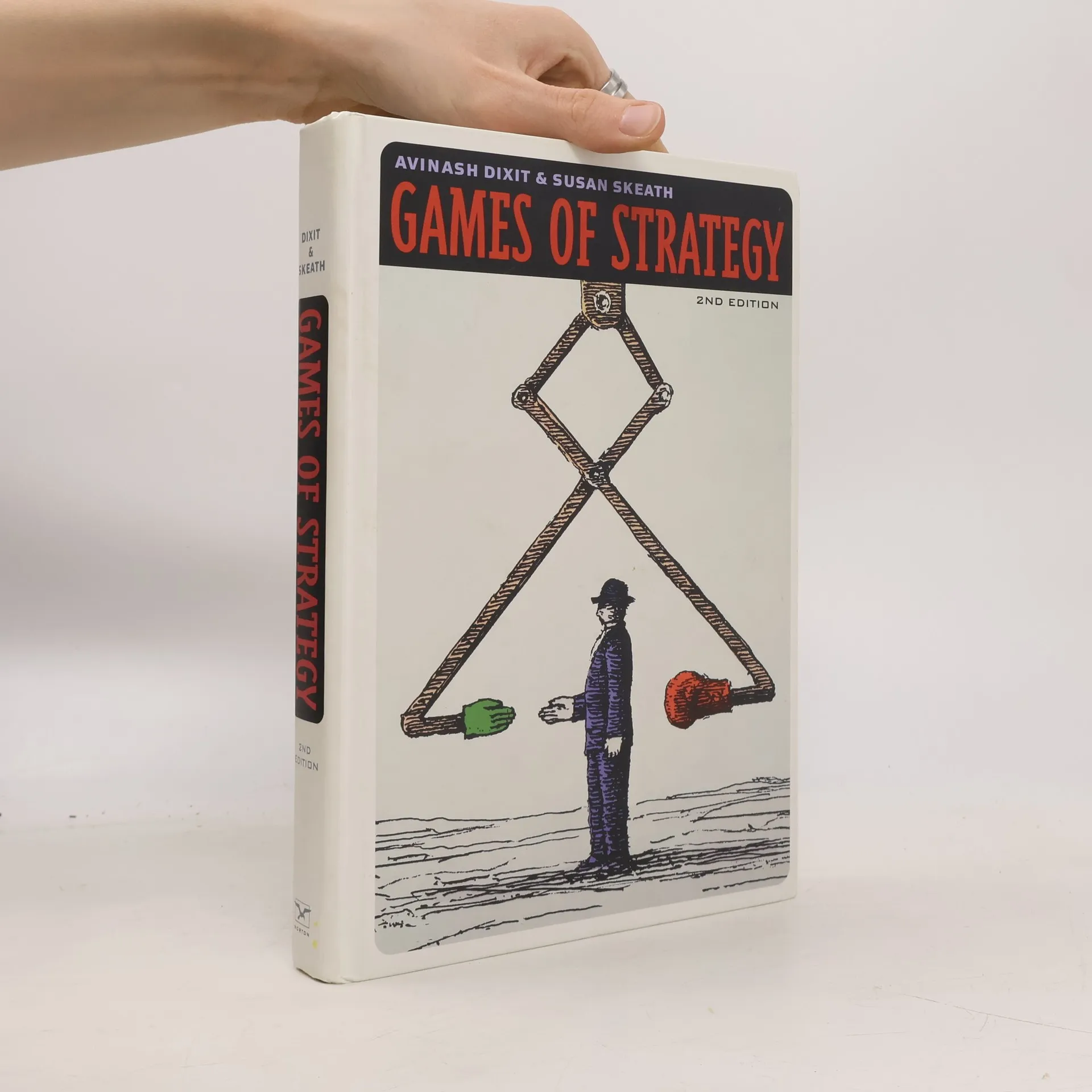
Games of Strategy, 2nd Edition, Avinash K. Dixit, Susan Skeath, David H. Reiley Jr.
- Langue

- Année de publication
- 2004
- Reliure
- (rigide)
Modes de paiement
Il manque plus que ton avis ici.
- Titre
- Games of Strategy, 2nd Edition
- Langue
- Anglais
- Éditeur
- W. W. Norton & Company
- Publié
- 2004
- Format
- rigide
- Pages
- 688
- ISBN10
- 0393924998
- ISBN13
- 9780393924992
- Séries
- Catégories
- Mots clés
- Commerce, Science, États-Unis, L'école, Prise de Décision, Théorie des jeux
- Évaluation
- 4,05 sur 5
- Description
- All introductory textbooks aim to highlight the subject's significance, urging students to engage with it. While physical sciences and engineering are seen as the foundation of modern technology, and social sciences tackle governance issues, the humanities aim to rejuvenate the spirit dulled by these fields. So where does "games of strategy," or game theory, fit in, and why study it? Dixit and Skeath's work provides a personal motivation that resonates with your everyday experiences. You engage in strategic games constantly—with family, friends, and even professors. You likely possess instinctive skills in this area, and the authors aim to build on that foundation, systematizing your knowledge to enhance your strategic abilities. These skills will serve you throughout life, as you navigate interactions with employers, employees, spouses, and even strangers. Beyond personal relevance, the subject holds broader implications; similar strategic games occur in business, politics, diplomacy, and conflict resolution. Recognizing these dynamics will deepen your understanding of the world and enhance your effectiveness in various interactions.