



En savoir plus sur le livre
This text is intended to help students of Russian and graduates considering employment to familiarise themselves with the Russian business environment, its concepts and practices. It assumes at least an A-level knowledge of Russian, but is self-explanatory after that. It will also introduce students to the vocabulary and register of language associated with this field. No prior knowledge of business practice or economic concepts is explanations, and in many cases, translations are provided. The return to a market system after a long period of centralised planning of the economy in Russia has revived some of the terminology and ideas current before 1917, but many Western attitudes, concepts and institutions, and much of the vocabulary, have been adopted in the last few years. The aim is to clarify what has emerged in the Russian business environment, and to activate the language associated with this process. It is not a phrase book or business letter-writing handbook. Its scope is the major developments that have underlain the post-perestroika economy, such as privatization, advertising, business organisation, small businesses, the labour market, banking and inflation.Each is covered in a 'Unit' including clear explanations, glossaries, activities and texts taken from Russian business periodicals.
Achat du livre
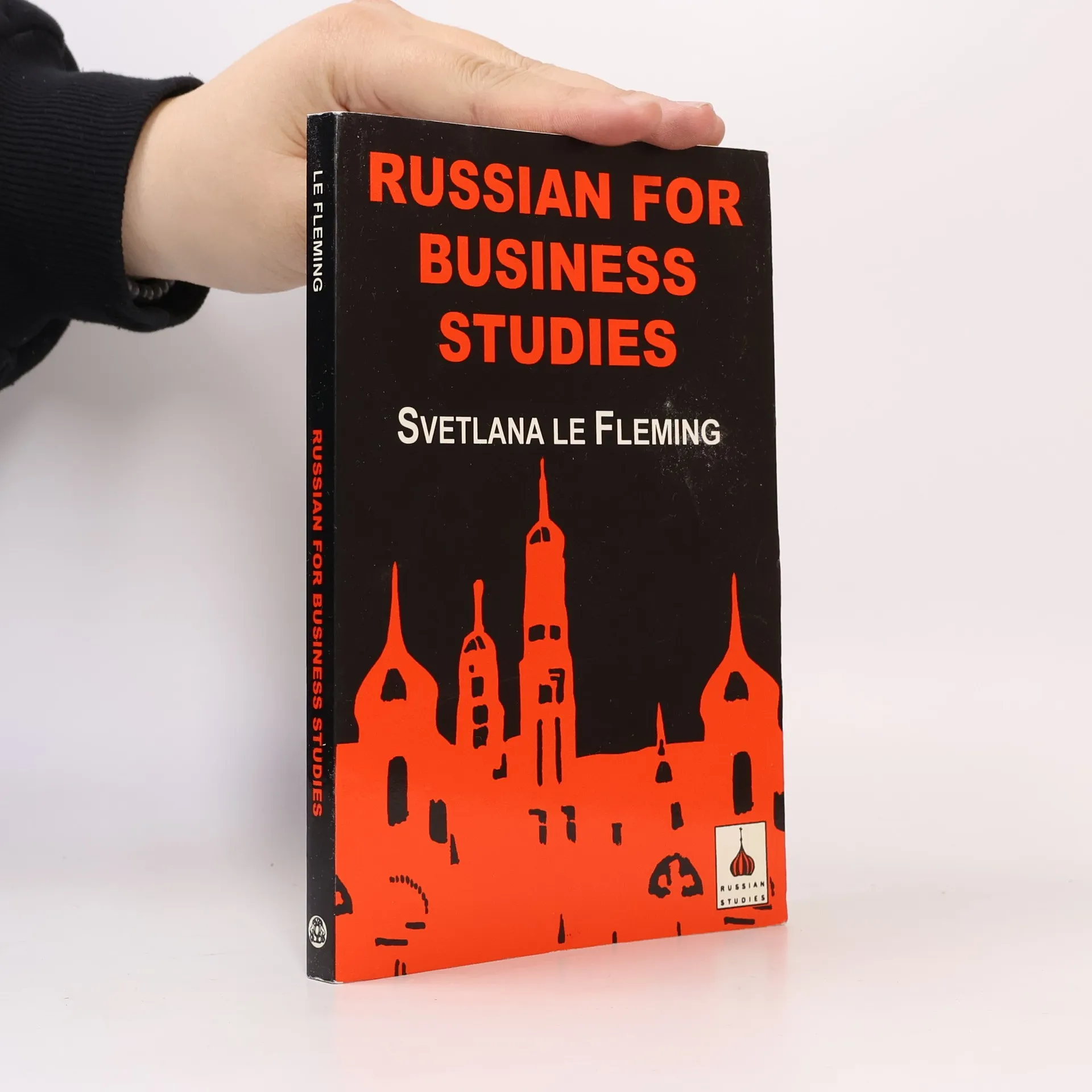
Russian for Business Studies, Svetlana Le Fleming
- Langue

- Année de publication
- 2000
- Reliure
- (souple)
Modes de paiement
Il manque plus que ton avis ici.
- Titre
- Russian for Business Studies
- Langue
- Anglais
- Auteurs
- Svetlana Le Fleming
- Éditeur
- Bristol Classical Press
- Publié
- 2000
- Format
- souple
- Pages
- 210
- ISBN10
- 1853996114
- ISBN13
- 9781853996115
- Séries
- Mots clés
- Manuels, Commerce, Dictionnaires et manuels de langue, Manuels universitaires, Manuels de langue
- Évaluation
- 4 sur 5
- Description
- This text is intended to help students of Russian and graduates considering employment to familiarise themselves with the Russian business environment, its concepts and practices. It assumes at least an A-level knowledge of Russian, but is self-explanatory after that. It will also introduce students to the vocabulary and register of language associated with this field. No prior knowledge of business practice or economic concepts is explanations, and in many cases, translations are provided. The return to a market system after a long period of centralised planning of the economy in Russia has revived some of the terminology and ideas current before 1917, but many Western attitudes, concepts and institutions, and much of the vocabulary, have been adopted in the last few years. The aim is to clarify what has emerged in the Russian business environment, and to activate the language associated with this process. It is not a phrase book or business letter-writing handbook. Its scope is the major developments that have underlain the post-perestroika economy, such as privatization, advertising, business organisation, small businesses, the labour market, banking and inflation.Each is covered in a 'Unit' including clear explanations, glossaries, activities and texts taken from Russian business periodicals.