



En savoir plus sur le livre
Memory is crucial for learning retention, and deficits can impair new learning and degrade previously acquired skills. The first chapter delves into the nature of memory, its brain location, and the biological events tied to memory formation and retrieval. While answers are evolving, significant insights into memory processes have emerged over recent decades. Memory is affected by various pathological conditions like infections, trauma, cerebrovascular disorders, and metabolic or degenerative diseases, with each disorder presenting unique patterns of impairment. Over fifty known conditions can lead to dementia, impacting millions of Americans. In Alzheimer's disease, memory issues are predominant for two to three years before affecting other cognitive functions. Neurological diseases such as Huntington's disease, Friedreich's ataxia, and multiple sclerosis also correlate with progressive memory decline. Forgetting intensifies with age, as individuals in their forties often notice difficulties in recalling past events. By age sixty, notable changes occur in memory registration, storage, and recall processes, leading to slower processing, less secure storage, and poorer recall of information.
Achat du livre
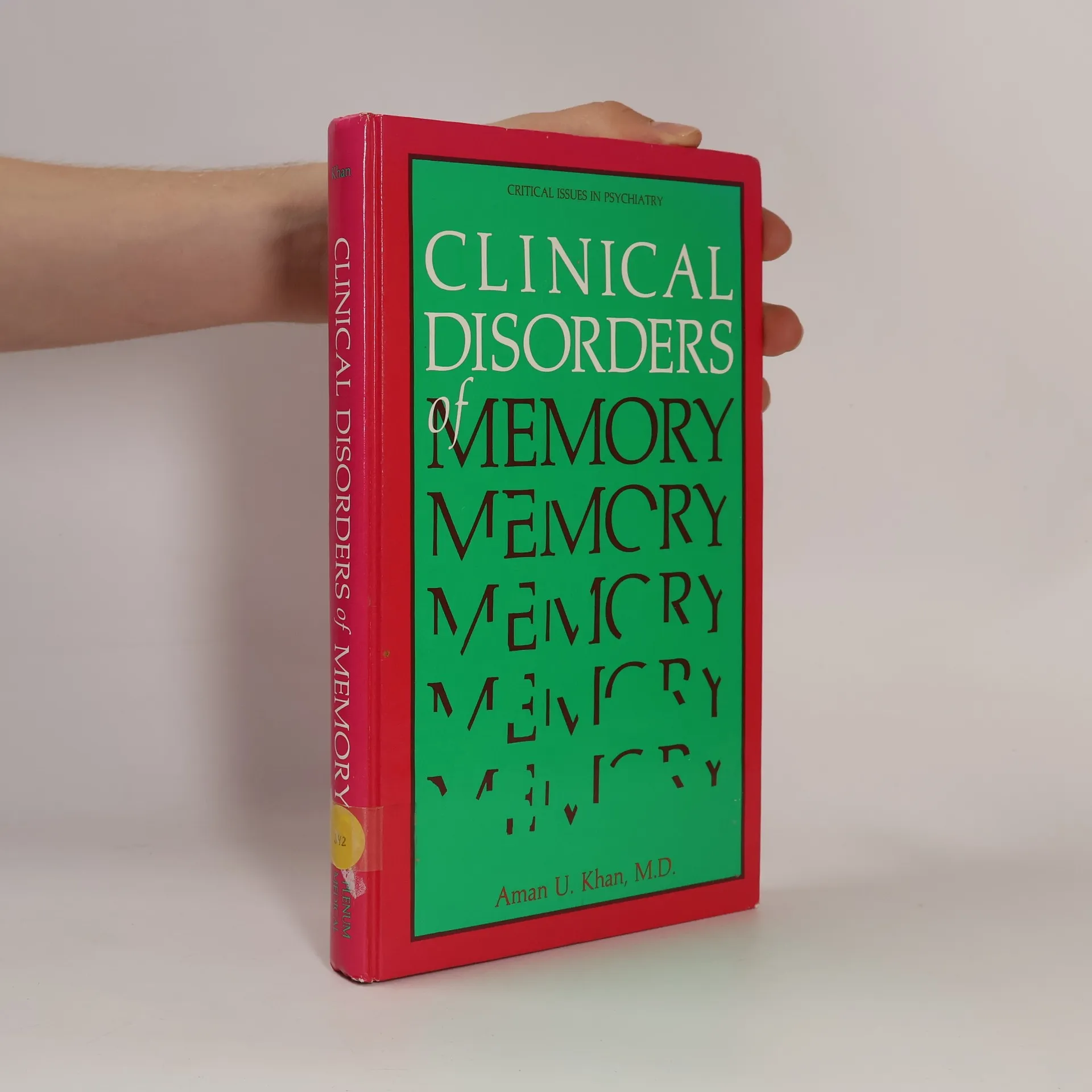
Clinical Disorders of Memory, Aman U. Khan
- Langue

- Année de publication
- 1986
- Reliure
- (rigide)
Modes de paiement
Personne n'a encore évalué .
- Titre
- Clinical Disorders of Memory
- Langue
- Anglais
- Auteurs
- Aman U. Khan
- Éditeur
- Plenum Medical Book Company
- Publié
- 1986
- Format
- rigide
- Pages
- 284
- ISBN10
- 030642259X
- ISBN13
- 9780306422591
- Séries
- Catégories
- Description
- Memory is crucial for learning retention, and deficits can impair new learning and degrade previously acquired skills. The first chapter delves into the nature of memory, its brain location, and the biological events tied to memory formation and retrieval. While answers are evolving, significant insights into memory processes have emerged over recent decades. Memory is affected by various pathological conditions like infections, trauma, cerebrovascular disorders, and metabolic or degenerative diseases, with each disorder presenting unique patterns of impairment. Over fifty known conditions can lead to dementia, impacting millions of Americans. In Alzheimer's disease, memory issues are predominant for two to three years before affecting other cognitive functions. Neurological diseases such as Huntington's disease, Friedreich's ataxia, and multiple sclerosis also correlate with progressive memory decline. Forgetting intensifies with age, as individuals in their forties often notice difficulties in recalling past events. By age sixty, notable changes occur in memory registration, storage, and recall processes, leading to slower processing, less secure storage, and poorer recall of information.