



Paramètres
- 442pages
- 16 heures de lecture
En savoir plus sur le livre
Although many studies have been devoted to Augustine's City of God and its most important theme, viz. the antithesis between the civitas Dei and the terrena civitas , until now no consensus has been reached concerning the sources of this doctrine. Was Augustine decisively influenced by Manichaeism, by (Neo)Platonism, the Stoa or Philo, by the Donatist Tyconius? Or should we look in another direction and refer to preceding Christian, Jewish, and especially to archaic Jewish-Christian traditions? This lucidly written books opens with a survey of the research carried out so far on the aim, structure and central theme of the City of God . Chapter 2 analyzes the essentials of Augustine's life, of his City of God , and of his doctrine of the two cities. While making use of one of the recently discovered letters of Augustine, in Chapter 3 the author describes the City of God as an apology and as a catechetical work. Chapter 4 provides an investigation into the possible sources of Augustine's doctrine of the two cities in Manichaeism, in (Neo)Platonism, the Stoa and Philo, and in the works of Tyconius. The idea of two antithetical cities proves to be present most clearly in writings in which, closely related to Jewish thinking, archaic Christian conceptsoccupy an important place. In a final chapter some pertinent remarks are made on Jewish and Jewish-Christian influences on pre-Augustinian Christianity in Africa.
Achat du livre
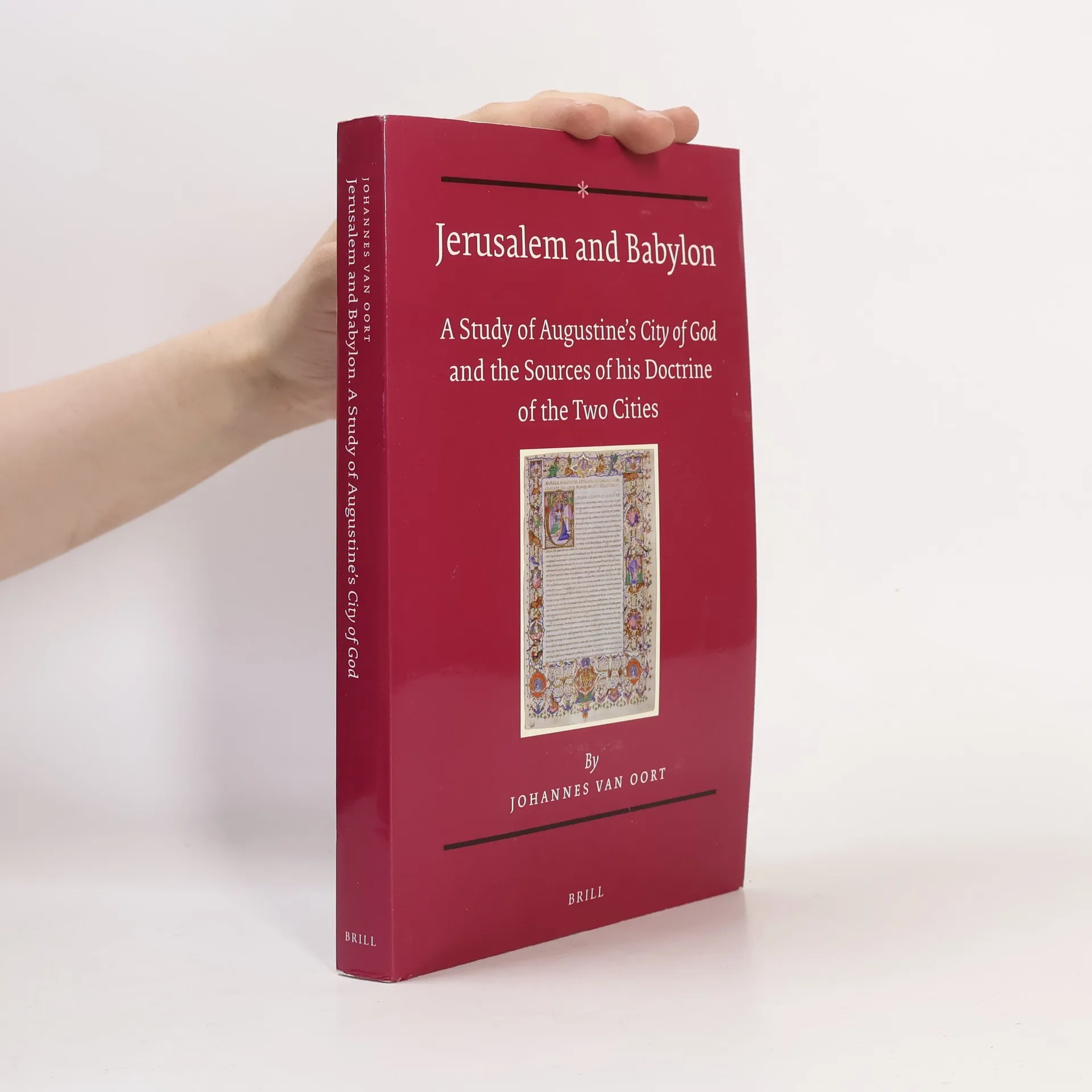
Jerusalem and Babylon, Johannes van Oort
- Langue

- Année de publication
- 2013
- Reliure
- (souple)
Modes de paiement
Personne n'a encore évalué .
- Titre
- Jerusalem and Babylon
- Sous-titre
- A Study of Augustine's City of God and the Sources of his Doctrine of the Two Cities
- Langue
- Anglais
- Auteurs
- Johannes van Oort
- Éditeur
- Brill
- Publié
- 2013
- Format
- souple
- Pages
- 442
- ISBN10
- 9004246282
- ISBN13
- 9789004246287
- Séries
- Mots clés
- Thème historique, Thèmes religieux, Thèmes chrétiens, Histoire de l'Église, Histoire des religions, Saint Augustin, 354-430
- Description
- Although many studies have been devoted to Augustine's City of God and its most important theme, viz. the antithesis between the civitas Dei and the terrena civitas , until now no consensus has been reached concerning the sources of this doctrine. Was Augustine decisively influenced by Manichaeism, by (Neo)Platonism, the Stoa or Philo, by the Donatist Tyconius? Or should we look in another direction and refer to preceding Christian, Jewish, and especially to archaic Jewish-Christian traditions? This lucidly written books opens with a survey of the research carried out so far on the aim, structure and central theme of the City of God . Chapter 2 analyzes the essentials of Augustine's life, of his City of God , and of his doctrine of the two cities. While making use of one of the recently discovered letters of Augustine, in Chapter 3 the author describes the City of God as an apology and as a catechetical work. Chapter 4 provides an investigation into the possible sources of Augustine's doctrine of the two cities in Manichaeism, in (Neo)Platonism, the Stoa and Philo, and in the works of Tyconius. The idea of two antithetical cities proves to be present most clearly in writings in which, closely related to Jewish thinking, archaic Christian conceptsoccupy an important place. In a final chapter some pertinent remarks are made on Jewish and Jewish-Christian influences on pre-Augustinian Christianity in Africa.