

En savoir plus sur le livre
According to literary humanism, imaginative literature possesses an objective meaning fixed at the time of its creation, remaining consistent for all readers across time. These works refer to the real world, making statements that hold both cognitive and aesthetic value, which are closely intertwined. Richard Gaskin defends this perspective against critiques from two fronts. Some analytic aestheticians argue that literature lacks referentiality and does not convey true statements about the world. Others contend that while literature may possess cognitive value, it does not rely on truth or reference. Conversely, reception-theorists and deconstructionists challenge the humanist view of literary meaning, adopting a pragmatist and anti-realist stance on truth and meaning, often leading to a politicized approach to literature. In countering these attacks, Gaskin illustrates that engaging with literature is a cognitive endeavor comparable to scientific inquiry. He argues for a disinterested appreciation of literature, emphasizing its potential to enhance our understanding of the world and our place within it.
Achat du livre
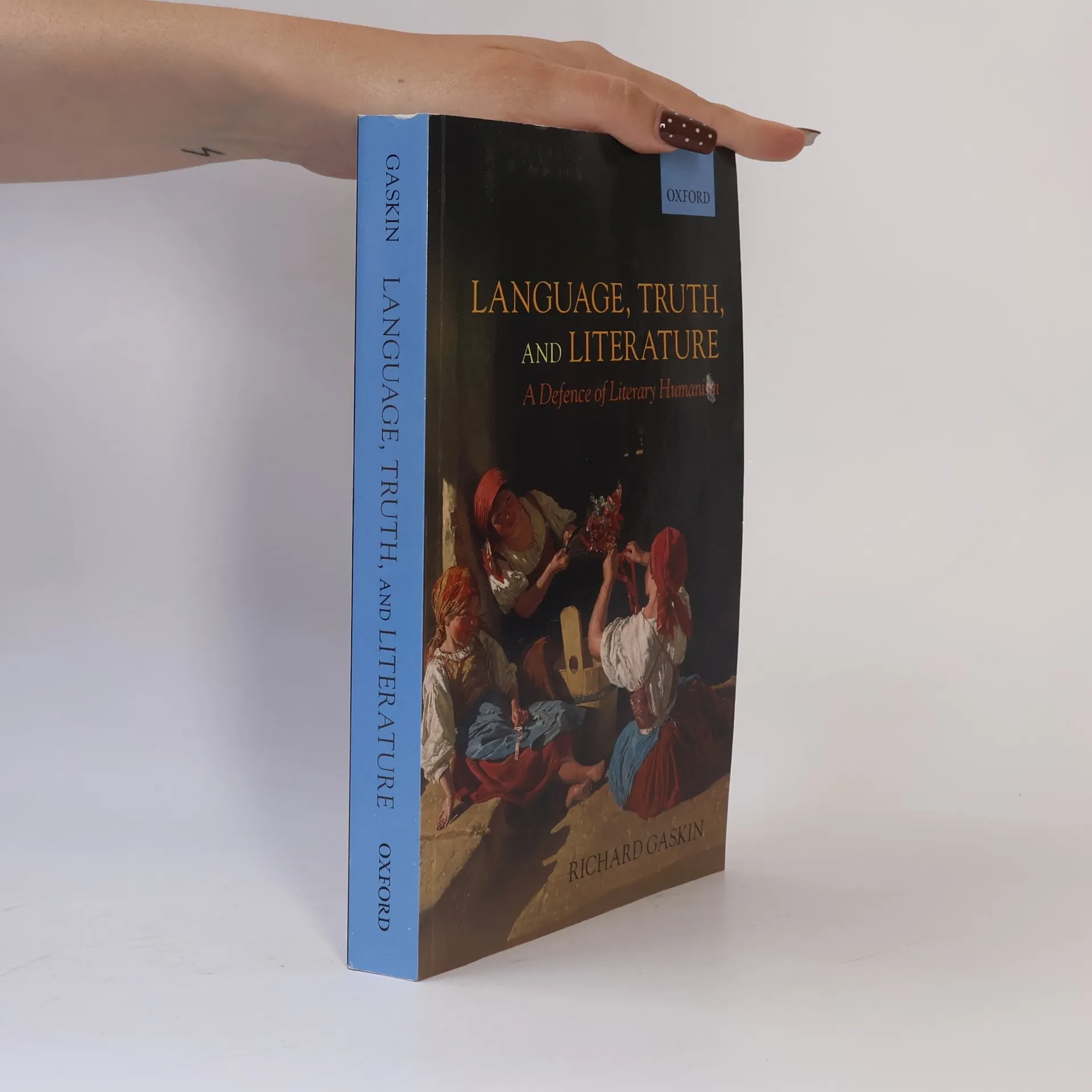
Language, Truth, and Literature, Richard Gaskin
- Langue

- Année de publication
- 2016
- Reliure
- (souple)
Modes de paiement
Personne n'a encore évalué .
- Titre
- Language, Truth, and Literature
- Sous-titre
- A Defence of Literary Humanism
- Langue
- Anglais
- Auteurs
- Richard Gaskin
- Éditeur
- Oxford University Press
- Publié
- 2016
- Format
- souple
- Pages
- 396
- ISBN10
- 0198776896
- ISBN13
- 9780198776895
- Séries
- Catégories
- Mots clés
- Description
- According to literary humanism, imaginative literature possesses an objective meaning fixed at the time of its creation, remaining consistent for all readers across time. These works refer to the real world, making statements that hold both cognitive and aesthetic value, which are closely intertwined. Richard Gaskin defends this perspective against critiques from two fronts. Some analytic aestheticians argue that literature lacks referentiality and does not convey true statements about the world. Others contend that while literature may possess cognitive value, it does not rely on truth or reference. Conversely, reception-theorists and deconstructionists challenge the humanist view of literary meaning, adopting a pragmatist and anti-realist stance on truth and meaning, often leading to a politicized approach to literature. In countering these attacks, Gaskin illustrates that engaging with literature is a cognitive endeavor comparable to scientific inquiry. He argues for a disinterested appreciation of literature, emphasizing its potential to enhance our understanding of the world and our place within it.