

En savoir plus sur le livre
James Mill (1773 - 1836), British philosopher, political theorist, historian and psychologist was largely responsible for organizing the influential group of Bentham followers that became known as the 'philosophical radicals', which included David Ricardo, Joseph Hume, J.R. McCulloch, George Grote and John Austin. A prolific writer, Mill is remembered mainly as Bentham's chief disciple; for his influence on the radicals and in particular his son John Stuart Mill , the prominent utilitarian thinker. Thoemmes Press are making available two key philosophical works by this eminent early nineteenth-century intellectual figure. Analysis of the Phenomena of the Human Mind is Mill's best-known work on associationist epistemology. Influenced by Hobbes, Locke, Hume, and Hartley, whose theory of association he applied and developed further, and other French writers such as Condillac, Helvétius, and Cabanis, the work clearly represents a distinct stage in the development of the empirical school. Analysis vividly illustrates Mill's attempt to explain all mental phenomena in terms of association and is an indispensable resource for scholars of both psychology and philosophy.
Achat du livre
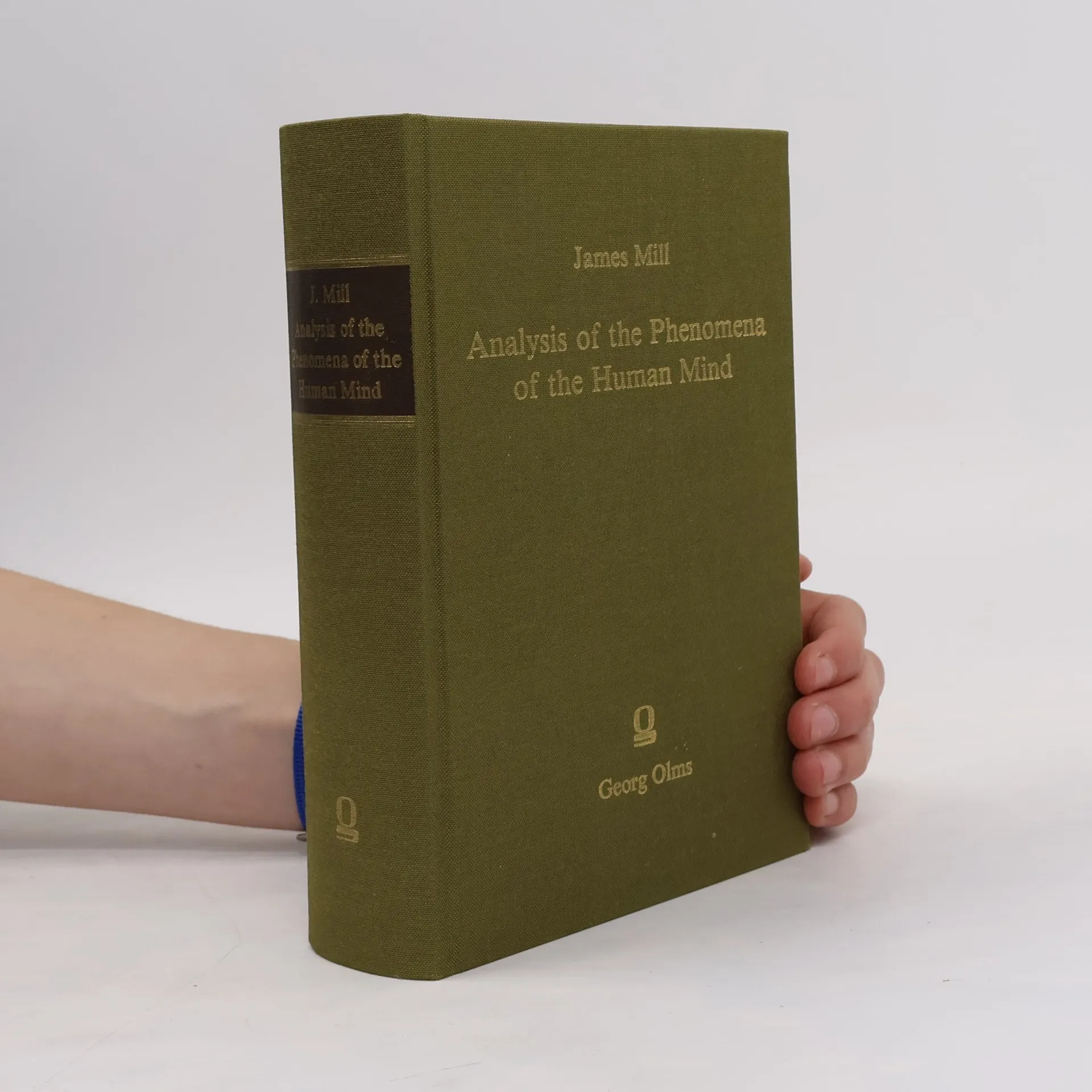
Analysis of the Phenomena of the Human Mind, James Mill
- Langue

- Année de publication
- 1982
- Reliure
- (rigide)
Modes de paiement
Personne n'a encore évalué .
- Titre
- Analysis of the Phenomena of the Human Mind
- Langue
- Anglais
- Auteurs
- James Mill
- Éditeur
- Georg Olms
- Publié
- 1982
- Format
- rigide
- Pages
- 856
- ISBN10
- 3487072432
- ISBN13
- 9783487072432
- Séries
- Catégories
- Mots clés
- Thématique philosophique
- Description
- James Mill (1773 - 1836), British philosopher, political theorist, historian and psychologist was largely responsible for organizing the influential group of Bentham followers that became known as the 'philosophical radicals', which included David Ricardo, Joseph Hume, J.R. McCulloch, George Grote and John Austin. A prolific writer, Mill is remembered mainly as Bentham's chief disciple; for his influence on the radicals and in particular his son John Stuart Mill , the prominent utilitarian thinker. Thoemmes Press are making available two key philosophical works by this eminent early nineteenth-century intellectual figure. Analysis of the Phenomena of the Human Mind is Mill's best-known work on associationist epistemology. Influenced by Hobbes, Locke, Hume, and Hartley, whose theory of association he applied and developed further, and other French writers such as Condillac, Helvétius, and Cabanis, the work clearly represents a distinct stage in the development of the empirical school. Analysis vividly illustrates Mill's attempt to explain all mental phenomena in terms of association and is an indispensable resource for scholars of both psychology and philosophy.