




Paramètres
- 288pages
- 11 heures de lecture
En savoir plus sur le livre
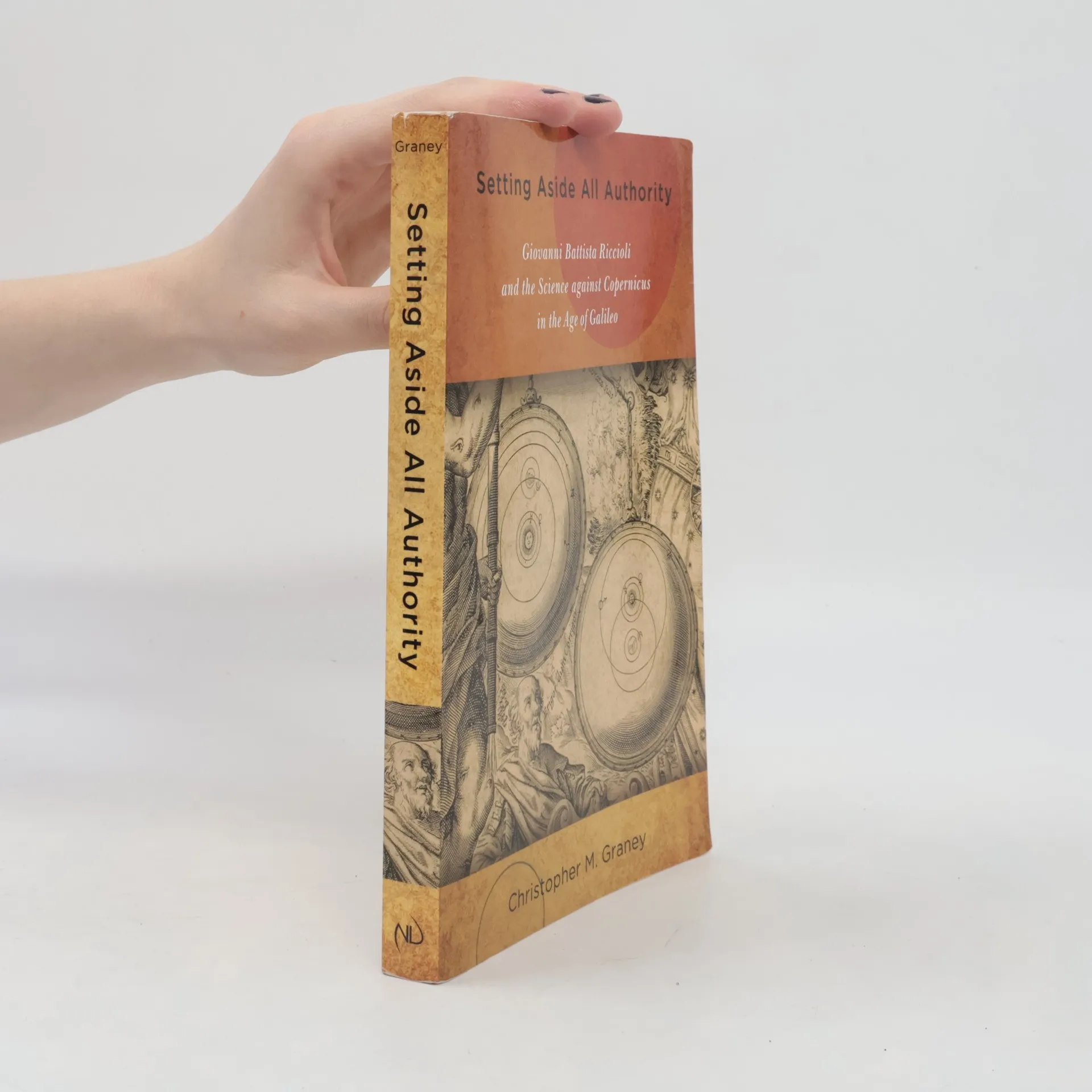
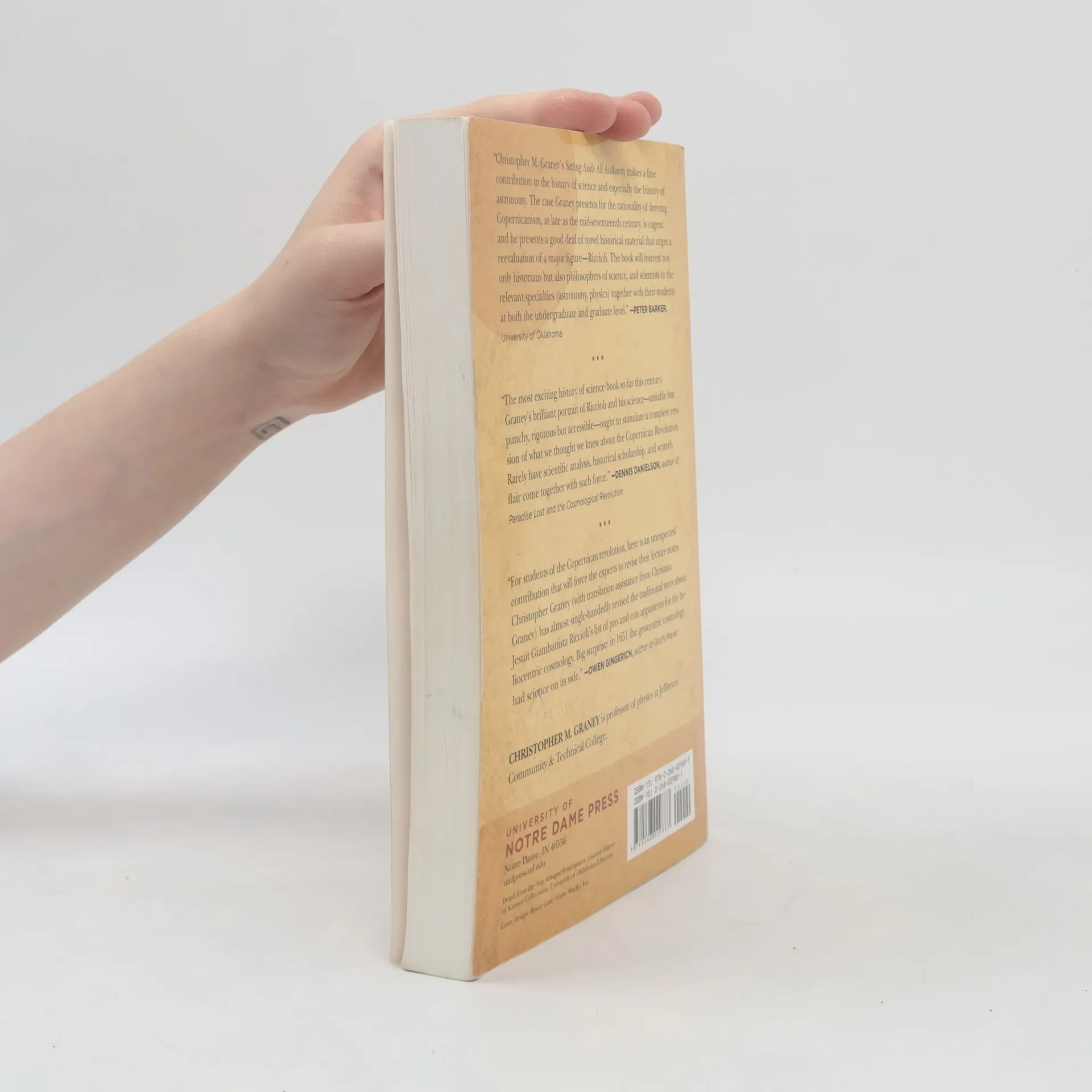
Setting Aside All Authority offers a critical analysis of seventeenth-century scientific arguments against the Copernican system. Christopher M. Graney challenges the notion that the opposition to heliocentrism was primarily driven by religious beliefs or adherence to outdated traditions. Instead, he argues that scientific reasoning played a significant role in this opposition. Utilizing newly translated works from anti-Copernican writers, Graney illustrates how these thinkers, building on Tycho Brahe's contributions, constructed a compelling scientific case against heliocentrism well into the mid-seventeenth century, even after the telescope's introduction. The pinnacle of this scientific argument is exemplified in Giovanni Battista Riccioli's 1651 New Almagest, where he employed meticulous telescopic observations to contest Copernicus. The book features the first English translation of Monsignor Francesco Ingoli’s essay to Galileo, which critiques the Copernican system prior to the Inquisition's condemnation in 1616, alongside excerpts from Riccioli's experiments on falling bodies. Graney’s work is a significant contribution to the history of science and astronomy, prompting a reevaluation of Riccioli’s role and the rationality of the geocentric perspective during this period. It appeals to historians, philosophers of science, and students in related fields.
Achat du livre
Setting Aside All Authority, Christopher M. Graney
- Langue

- Année de publication
- 2015
- product-detail.submit-box.info.binding
- (souple),
- État du livre
- Abîmé
- Prix
- 6,62 €
Modes de paiement
Personne n'a encore évalué .
- Sous-titre
- Giovanni Battista Riccioli and the Science against Copernicus in the Age of Galileo
- Langue
- Anglais
- Auteurs
- Christopher M. Graney
- Publié
- 2015
- Format
- souple
- Pages
- 288
- ISBN10
- 0268029881
- ISBN13
- 9780268029883
- Séries
- Mots clés
- Nonfiction, Thème historique, Science et Mathématiques, Thèmes religieux, Science, États-Unis, Biographies, Europe du Sud, Italie, Espace, Europe, Histoire de l'Europe, Théorie et histoire des sciences, 17e siècle, Europe de l'Ouest, Histoire des sciences, Philosophie des sciences, Astronomes
- Description
- Setting Aside All Authority offers a critical analysis of seventeenth-century scientific arguments against the Copernican system. Christopher M. Graney challenges the notion that the opposition to heliocentrism was primarily driven by religious beliefs or adherence to outdated traditions. Instead, he argues that scientific reasoning played a significant role in this opposition. Utilizing newly translated works from anti-Copernican writers, Graney illustrates how these thinkers, building on Tycho Brahe's contributions, constructed a compelling scientific case against heliocentrism well into the mid-seventeenth century, even after the telescope's introduction. The pinnacle of this scientific argument is exemplified in Giovanni Battista Riccioli's 1651 New Almagest, where he employed meticulous telescopic observations to contest Copernicus. The book features the first English translation of Monsignor Francesco Ingoli’s essay to Galileo, which critiques the Copernican system prior to the Inquisition's condemnation in 1616, alongside excerpts from Riccioli's experiments on falling bodies. Graney’s work is a significant contribution to the history of science and astronomy, prompting a reevaluation of Riccioli’s role and the rationality of the geocentric perspective during this period. It appeals to historians, philosophers of science, and students in related fields.