

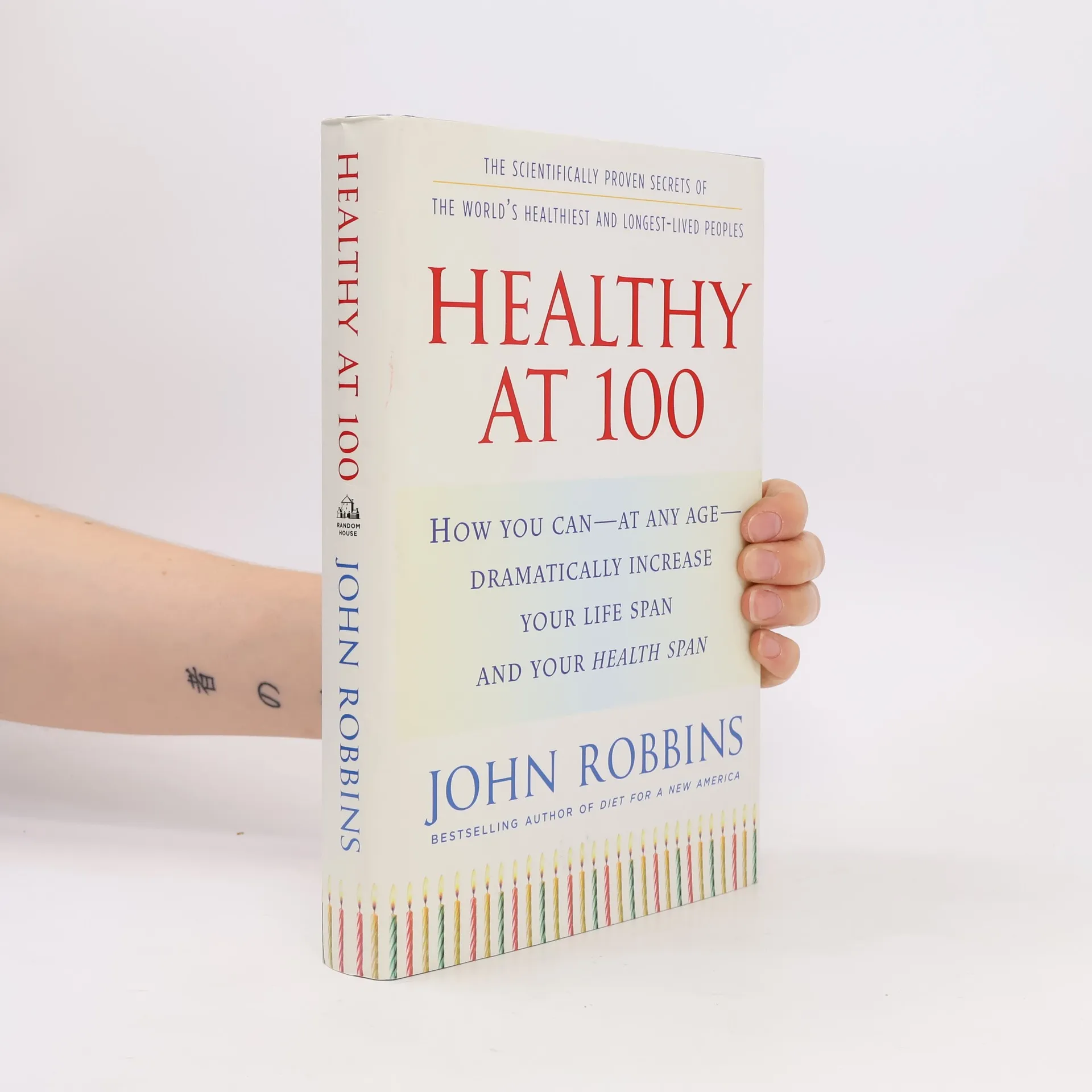


En savoir plus sur le livre
Why do some people age in failing health and sadness, while others grow old with vitality and joy? In this revolutionary book, bestselling author John Robbins presents us with a bold new paradigm of aging, showing us how we can increase not only our lifespan, but also our health span. Through the example of four very different cultures that have the distinction of producing some of the world's healthiest, oldest people, Robbins reveals the secrets for living an extended and fulfilling life in which our later years become a period of wisdom, vitality, and happiness. Bringing the traditions of these cultures together with the latest breakthroughs in medical science, Robbins reveals that, remarkably, they both point in the same direction.
Achat du livre
Healthy at 100, John Robbins
- Langue

- Année de publication
- 2006
- product-detail.submit-box.info.binding
- (rigide),
- État du livre
- Bon
- Prix
- 9,99 €
Modes de paiement
Personne n'a encore évalué .
- Titre
- Healthy at 100
- Sous-titre
- The Scientifically Proven Secrets of the World's Healthiest and Longest-Lived Peoples
- Langue
- Anglais
- Auteurs
- John Robbins
- Éditeur
- Random House
- Publié
- 2006
- Format
- rigide
- Pages
- 384
- ISBN10
- 1400065216
- ISBN13
- 9781400065219
- Séries
- Mots clés
- Nonfiction, Motivation & Bien-être, Science, Santé, Nourriture, Alimentation & Régimes, Végétalisme
- Description
- Why do some people age in failing health and sadness, while others grow old with vitality and joy? In this revolutionary book, bestselling author John Robbins presents us with a bold new paradigm of aging, showing us how we can increase not only our lifespan, but also our health span. Through the example of four very different cultures that have the distinction of producing some of the world's healthiest, oldest people, Robbins reveals the secrets for living an extended and fulfilling life in which our later years become a period of wisdom, vitality, and happiness. Bringing the traditions of these cultures together with the latest breakthroughs in medical science, Robbins reveals that, remarkably, they both point in the same direction.