

En savoir plus sur le livre
Discussion of the commercial treaties between Rome and Carthage includes examination of the evidence of Carthaginian trade-goods brought to Rome and of the probable residence of N. Africans in the city for purposes of trade conducted under terms of the treaties and under supervision of Roman aediles. Roman cultural borrowings from Carthaginians are treated. Roman awareness and adoption of Punic religious beliefs and practices during the first two wars between Carthage and Rome are argued. Roman attitudes to foreign gods are discussed. Through re-examination of the evidence of two Roman neighborhoods we learn about Vicus Sobrius and its cult of Mercurius Sobrius and Vicus Africus, two quarters of Rome which Carthaginians frequented and in one case had their market. Punic influence on Roman culture, especially in the realm of religion and agronomy. The sources of Roman acquaintance with Carthaginian commercial, agricultural and religious practices are rehabilitated. How Romans masked their cultural debt to Carthaginians is discussed.
Achat du livre
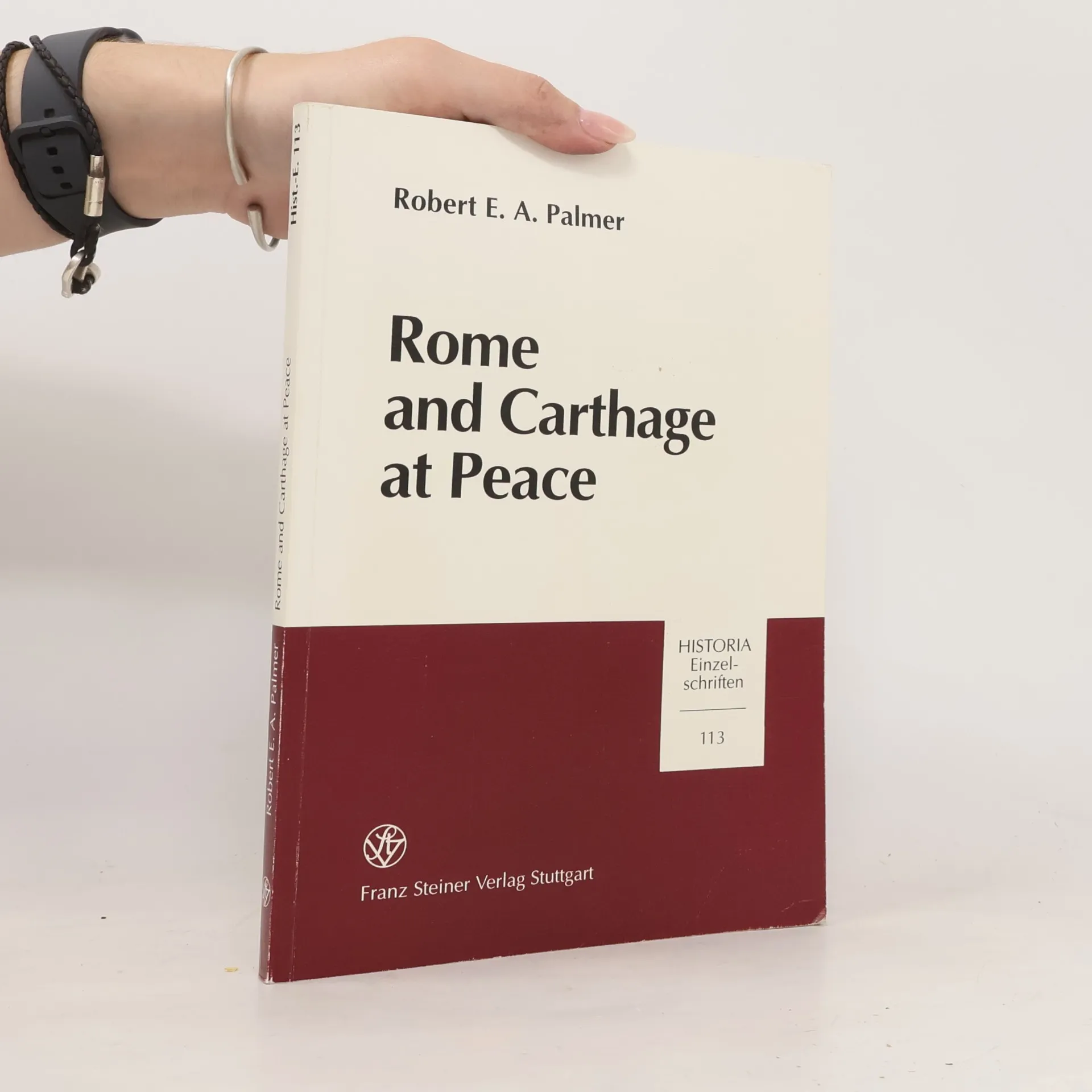
Historia-Einzelschriften - 113: Rome and Carthage at Peace, Robert E. A. Palmer
- Langue

- Année de publication
- 1997
- Reliure
- (souple)
Modes de paiement
Personne n'a encore évalué .
- Titre
- Historia-Einzelschriften - 113: Rome and Carthage at Peace
- Langue
- Anglais
- Auteurs
- Robert E. A. Palmer
- Éditeur
- Franz Steiner Verlag
- Publié
- 1997
- Format
- souple
- Pages
- 152
- ISBN10
- 3515070400
- ISBN13
- 9783515070409
- Séries
- Mots clés
- Thème historique, Époque antique, Rome, Carthage
- Description
- Discussion of the commercial treaties between Rome and Carthage includes examination of the evidence of Carthaginian trade-goods brought to Rome and of the probable residence of N. Africans in the city for purposes of trade conducted under terms of the treaties and under supervision of Roman aediles. Roman cultural borrowings from Carthaginians are treated. Roman awareness and adoption of Punic religious beliefs and practices during the first two wars between Carthage and Rome are argued. Roman attitudes to foreign gods are discussed. Through re-examination of the evidence of two Roman neighborhoods we learn about Vicus Sobrius and its cult of Mercurius Sobrius and Vicus Africus, two quarters of Rome which Carthaginians frequented and in one case had their market. Punic influence on Roman culture, especially in the realm of religion and agronomy. The sources of Roman acquaintance with Carthaginian commercial, agricultural and religious practices are rehabilitated. How Romans masked their cultural debt to Carthaginians is discussed.