



Paramètres
- 224pages
- 8 heures de lecture
En savoir plus sur le livre
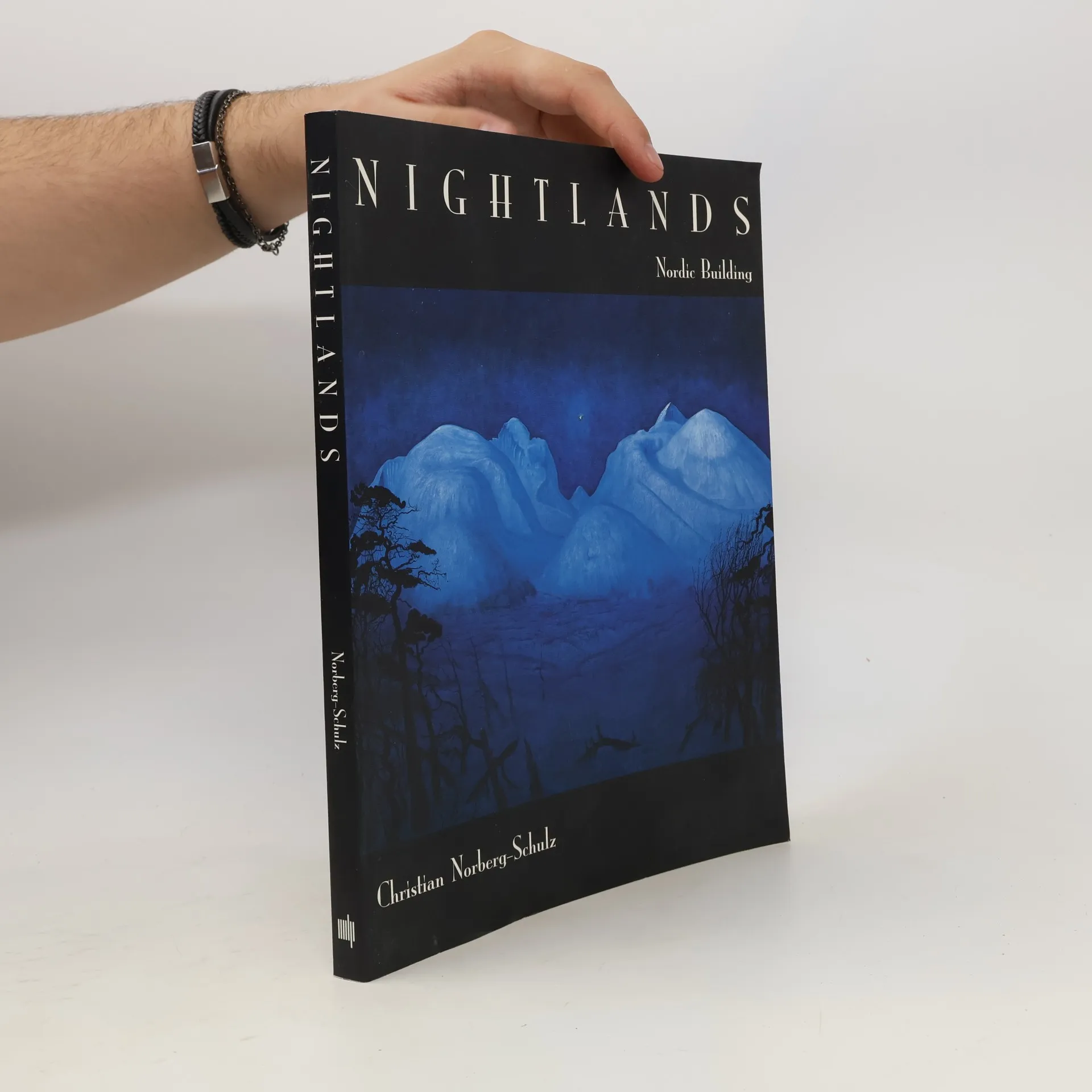
Translated by Thomas McQuillan Architecture is a manifestation of the environment in which it is placed, observes distinguished architect and theoretician Christian Norberg-Schulz. A simple enough observation, but one that becomes subtle and nuanced in this landmark book which attempts to define, for the first time, what Nordic building really is. Norberg-Schulz begins by contrasting the natural world of the North with that of the Mediterranean, the Nordic unendingness against the sun-saturated and homogeneous South. Using themes such as natural, domestic, universal, and foreign, he finds the architecture of both regions sensibly related to their environments; but whereas the South lends itself to abstraction, the North is marked by variation, openness, and dynamism--by low light, forests, and space. Exploring the ways built experience takes place, Norberg-Schulz charts the distinctive character of land and climate that distinguishes Denmark's, Sweden's, Finland's, and Norway's architectural traditions from each other and from those to the South. While each of these countries might be said to share regional traits, Norberg-Schulz identifies differences (the cultivated and closely detailed landscape and architecture of Denmark, the dramatic, structured forms of Norway) that allow him to account for the way individual Nordic architectures evolved.
Achat du livre
Nightlands, Christian Norberg-Schulz
- Langue

- Année de publication
- 1997
- product-detail.submit-box.info.binding
- (souple),
- État du livre
- Bon
- Prix
- 7,49 €
Modes de paiement
Personne n'a encore évalué .
- Titre
- Nightlands
- Sous-titre
- Nordic Building
- Langue
- Anglais
- Auteurs
- Christian Norberg-Schulz
- Éditeur
- The MIT Press
- Publié
- 1997
- Format
- souple
- Pages
- 224
- ISBN10
- 0262640368
- ISBN13
- 9780262640367
- Séries
- Mots clés
- Thème historique, Commerce, Motivation & Bien-être, Romans historiques, Géographie & Topographie, Thèmes psychologiques, Polars, Thématique philosophique, Art, Manuels et guides, Architecture, Économie, Photographie, Presse d'opinion & Essais, Nourriture, Design, Éducation, système scolaire, Sociologie, Thématique cinématographique, Culture et Société, Linguistique, Journalisme et Publication, Histoire de l'art, Anthropologie, Culture, Monnaie, 21e siècle, Rome, Villes, Europe de l'Ouest, Venise, Scandinavie, Histoire de l'architecture, Aspects Psychologiques
- Description
- Translated by Thomas McQuillan Architecture is a manifestation of the environment in which it is placed, observes distinguished architect and theoretician Christian Norberg-Schulz. A simple enough observation, but one that becomes subtle and nuanced in this landmark book which attempts to define, for the first time, what Nordic building really is. Norberg-Schulz begins by contrasting the natural world of the North with that of the Mediterranean, the Nordic unendingness against the sun-saturated and homogeneous South. Using themes such as natural, domestic, universal, and foreign, he finds the architecture of both regions sensibly related to their environments; but whereas the South lends itself to abstraction, the North is marked by variation, openness, and dynamism--by low light, forests, and space. Exploring the ways built experience takes place, Norberg-Schulz charts the distinctive character of land and climate that distinguishes Denmark's, Sweden's, Finland's, and Norway's architectural traditions from each other and from those to the South. While each of these countries might be said to share regional traits, Norberg-Schulz identifies differences (the cultivated and closely detailed landscape and architecture of Denmark, the dramatic, structured forms of Norway) that allow him to account for the way individual Nordic architectures evolved.