




En savoir plus sur le livre
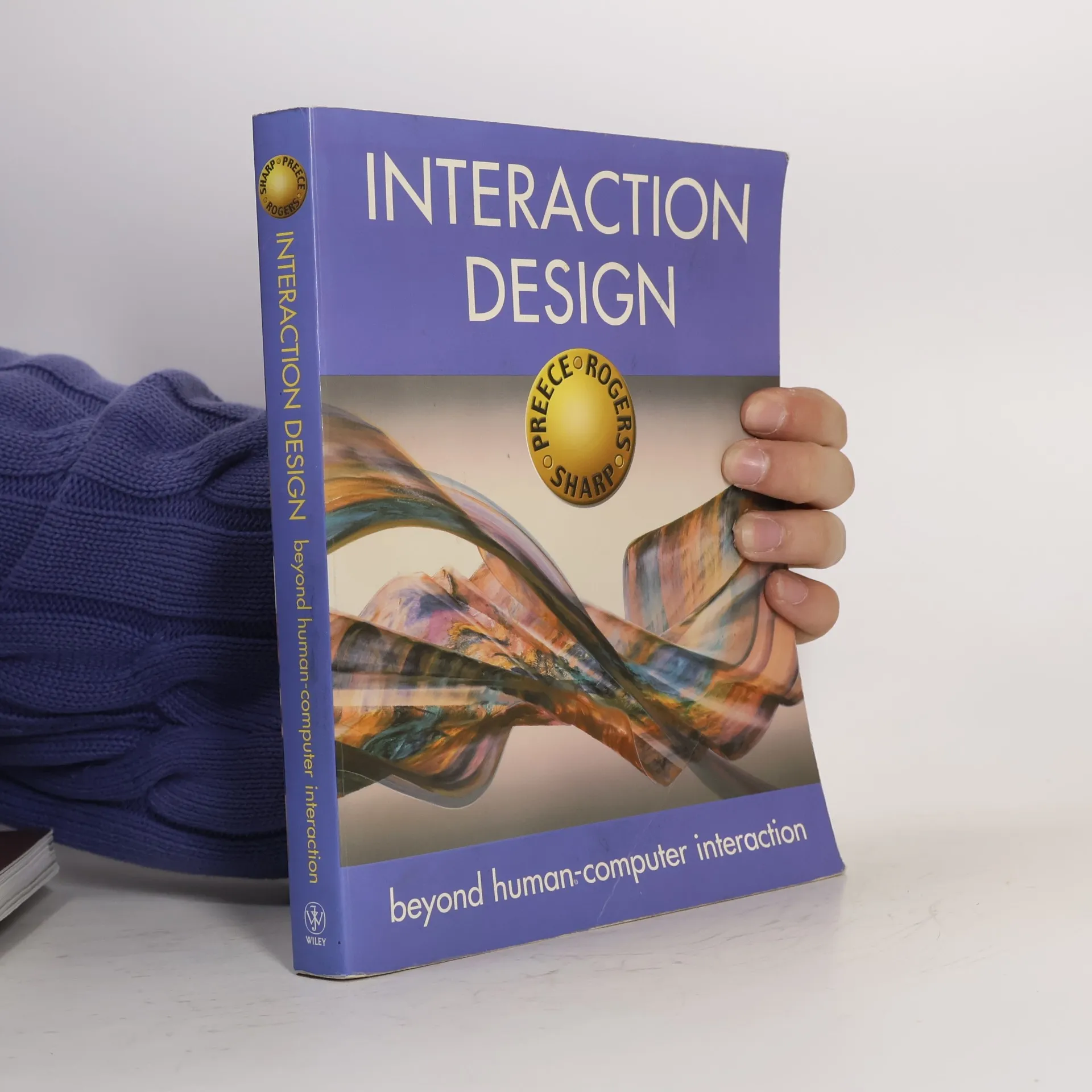
Accomplished authors, Preece, Rogers and Sharp, have written a key new textbook on this core subject area. Interaction Design deals with a broad scope of issues, topics and paradigms that has traditionally been the scope of Human-Computer Interaction (HCI) and Interaction Design (ID). The book covers psychological and social aspects of users, interaction styles, user requirements, design approaches, usability and evaluation, traditional and future interface paradigms and the role of theory in informing design. The topics will be grounded in the design process and the aim is to present relevant issues in an integrated and coherent way, rather than assembling a collection of chapters on individual HCI topics. KEY FEATURES: * This truly integrated approach to HCI provides students with background information from psychology, sociology, anthropology, information systems and computer science * Provides principles and skills for designing any technology through the use of many interesting and state of the art examples * The author supported, highly interactive Web Site provides resources that allow students to collaborate on experiments, participate in design competitions, collaborate on design, find resources and communicate with others * The accompanying Web Site also features examples, step-by-step exercises and templates for questionnaires CONTENTS: Preface 1. What is interaction design? Interview with Gitta Saloman 2. Understanding and conceptualizing interaction Interview with Terry Winograd 3. Understanding users 4. Understanding and designing for collaboration and communication Interview with Abigail Sellen 5. Understanding how interfaces affect users 6. The process of interaction design Interview with Gillian Crampton Smith 7. Identifying needs and establishing requirements Interview with Suzanne Robertson 8. Design, prototyping and construction 9. User-centered approaches to interaction design Interview with Karen Holtzblatt 10. Introducing evaluation 11. A framework for evaluation 12. Observing users Interview with Sara Bly 13. Asking users and experts Interview with Jakob Nielsen 14. Testing and modeling users Interview with Ben Shneiderman 15. Doing design and evaluation in the real world: communicators and advisory systems Epilogue Glossary
Achat du livre
Interaction Design, Jenny Preece, Helen Sharp, Yvonne Rogers
- Langue

- Année de publication
- 2002
- product-detail.submit-box.info.binding
- (souple),
- État du livre
- Abîmé
- Prix
- 2,40 €
Modes de paiement
Personne n'a encore évalué .
- Titre
- Interaction Design
- Sous-titre
- Beyond Human-Computer Interaction
- Langue
- Anglais
- Auteurs
- Jenny Preece, Helen Sharp, Yvonne Rogers
- Éditeur
- John Wiley & Sons
- Publié
- 2002
- Format
- souple
- Pages
- 519
- ISBN10
- 0471492787
- ISBN13
- 9780471492788
- Séries
- Mots clés
- Nonfiction, Manuels, Manuels et guides, Informatique & Internet, Technologie, Design
- Description
- Accomplished authors, Preece, Rogers and Sharp, have written a key new textbook on this core subject area. Interaction Design deals with a broad scope of issues, topics and paradigms that has traditionally been the scope of Human-Computer Interaction (HCI) and Interaction Design (ID). The book covers psychological and social aspects of users, interaction styles, user requirements, design approaches, usability and evaluation, traditional and future interface paradigms and the role of theory in informing design. The topics will be grounded in the design process and the aim is to present relevant issues in an integrated and coherent way, rather than assembling a collection of chapters on individual HCI topics. KEY FEATURES: * This truly integrated approach to HCI provides students with background information from psychology, sociology, anthropology, information systems and computer science * Provides principles and skills for designing any technology through the use of many interesting and state of the art examples * The author supported, highly interactive Web Site provides resources that allow students to collaborate on experiments, participate in design competitions, collaborate on design, find resources and communicate with others * The accompanying Web Site also features examples, step-by-step exercises and templates for questionnaires CONTENTS: Preface 1. What is interaction design? Interview with Gitta Saloman 2. Understanding and conceptualizing interaction Interview with Terry Winograd 3. Understanding users 4. Understanding and designing for collaboration and communication Interview with Abigail Sellen 5. Understanding how interfaces affect users 6. The process of interaction design Interview with Gillian Crampton Smith 7. Identifying needs and establishing requirements Interview with Suzanne Robertson 8. Design, prototyping and construction 9. User-centered approaches to interaction design Interview with Karen Holtzblatt 10. Introducing evaluation 11. A framework for evaluation 12. Observing users Interview with Sara Bly 13. Asking users and experts Interview with Jakob Nielsen 14. Testing and modeling users Interview with Ben Shneiderman 15. Doing design and evaluation in the real world: communicators and advisory systems Epilogue Glossary