



Paramètres
- 252pages
- 9 heures de lecture
En savoir plus sur le livre
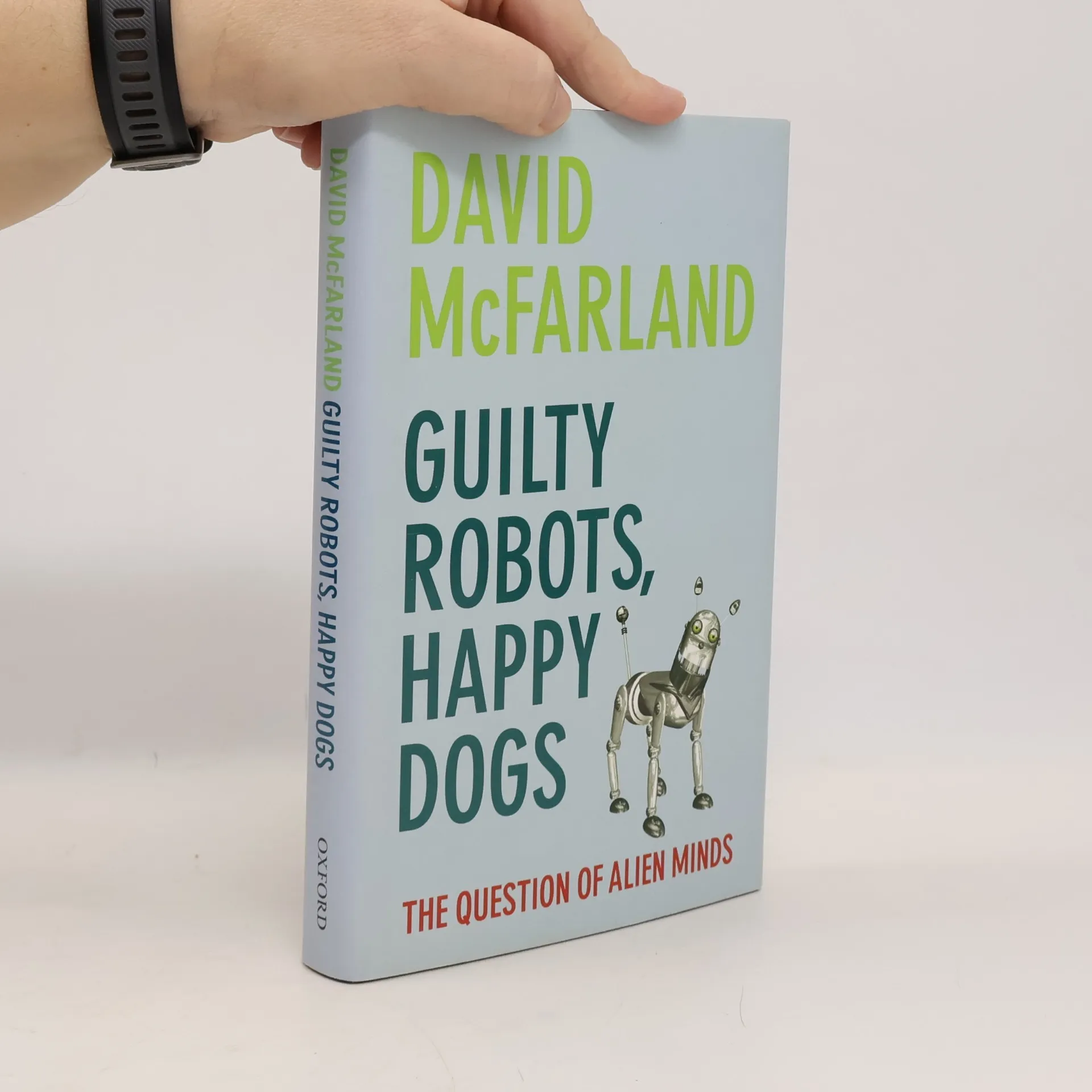
When we interact with animals, we intuitively read thoughts and feelings into their expressions and actions. It is easy--often irresistible--to suppose that they have minds like ours. And as technology grows more sophisticated, we might soon find ourselves interpreting the behavior even ofrobots in human terms.But is our natural tendency to humanize other beings philosophically or scientifically justifiable? Can we ever know what non-human minds are really like? How different are human minds from the minds of animals or robots? In Guilty Robots and Happy Dogs , David McFarland offers an accessibleexploration of these and many other intriguing questions, questions that illuminate our understanding the human mind and its limits in knowing and imagining other minds. In exploring these issues, McFarland looks not only at philosophy, but also examines new evidence from the science of animalbehavior, plus the latest developments in robotics and artificial intelligence, to show how many different--and often quite surprising--conclusions we can draw about the nature of minds "alien" to our own. Can robots ever feel guilty? Can dogs feel happy? Answering these questions is not simply anabstract exercise but has real implications for such increasingly relevant topics as animal welfare, artificial intelligence, and cybernetics.Engagingly and accessibly written, and thought-provoking from start to finish, Guilty Robots and Happy Dogs touches on the very nature of mind and its evolution. It is essential reading for anyone curious about animal behavior, robotics, artificial intelligence, or the nature of the humanmind.
Achat du livre
Guilty Robots, Happy Dogs, David McFarland
- Langue

- Année de publication
- 2008
- product-detail.submit-box.info.binding
- (rigide),
- État du livre
- Bon
- Prix
- 12,99 €
Modes de paiement
Personne n'a encore évalué .
- Titre
- Guilty Robots, Happy Dogs
- Sous-titre
- The Question of Alien Minds
- Langue
- Anglais
- Auteurs
- David McFarland
- Éditeur
- Oxford University Press
- Publié
- 2008
- Format
- rigide
- Pages
- 252
- ISBN10
- 019921929X
- ISBN13
- 9780199219292
- Séries
- Mots clés
- Nonfiction, Psychologie, Informatique & Internet, Science, Intelligence Artificielle, Zoologie, Robotique
- Description
- When we interact with animals, we intuitively read thoughts and feelings into their expressions and actions. It is easy--often irresistible--to suppose that they have minds like ours. And as technology grows more sophisticated, we might soon find ourselves interpreting the behavior even ofrobots in human terms.But is our natural tendency to humanize other beings philosophically or scientifically justifiable? Can we ever know what non-human minds are really like? How different are human minds from the minds of animals or robots? In Guilty Robots and Happy Dogs , David McFarland offers an accessibleexploration of these and many other intriguing questions, questions that illuminate our understanding the human mind and its limits in knowing and imagining other minds. In exploring these issues, McFarland looks not only at philosophy, but also examines new evidence from the science of animalbehavior, plus the latest developments in robotics and artificial intelligence, to show how many different--and often quite surprising--conclusions we can draw about the nature of minds "alien" to our own. Can robots ever feel guilty? Can dogs feel happy? Answering these questions is not simply anabstract exercise but has real implications for such increasingly relevant topics as animal welfare, artificial intelligence, and cybernetics.Engagingly and accessibly written, and thought-provoking from start to finish, Guilty Robots and Happy Dogs touches on the very nature of mind and its evolution. It is essential reading for anyone curious about animal behavior, robotics, artificial intelligence, or the nature of the humanmind.