

Paramètres
- 964pages
- 34 heures de lecture
En savoir plus sur le livre
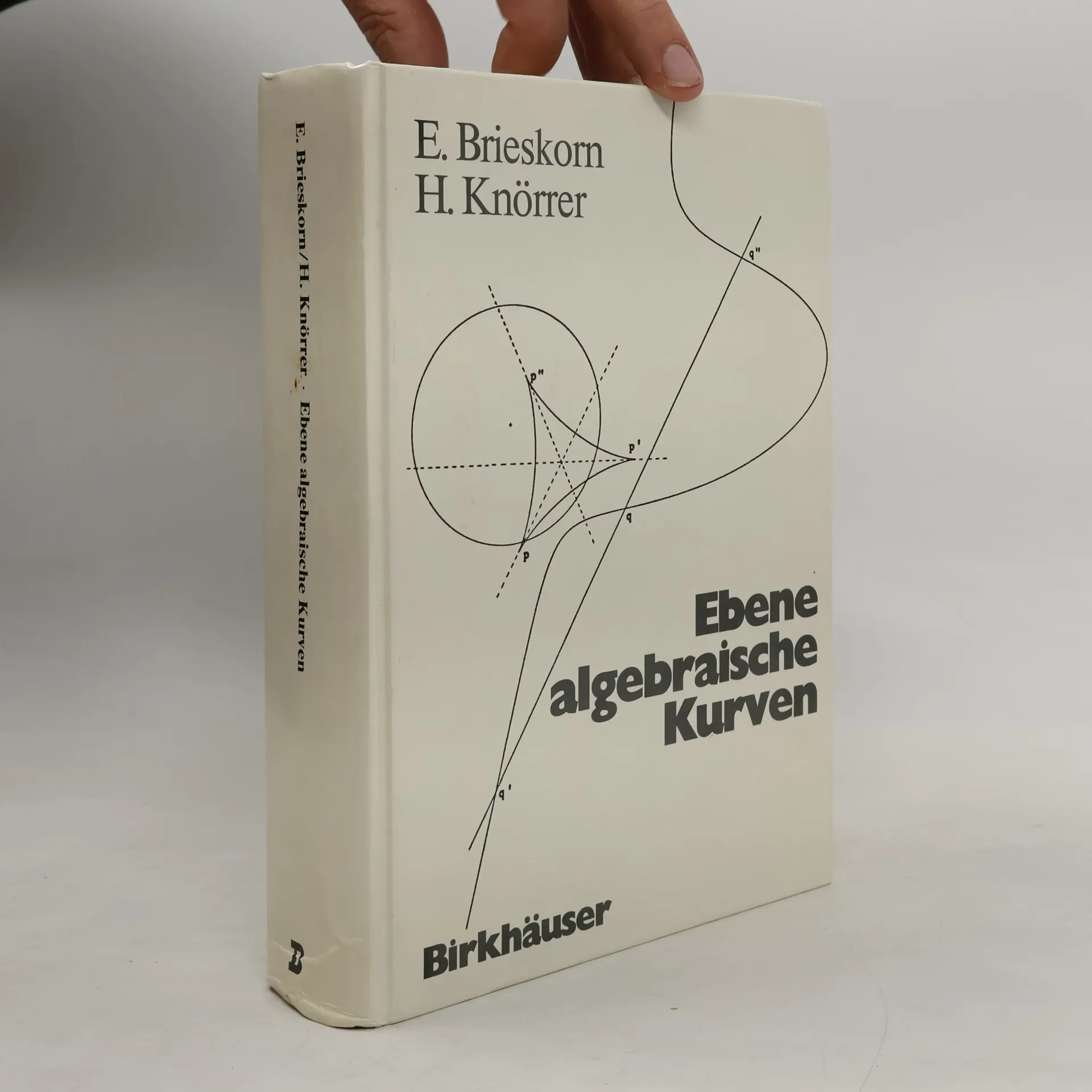
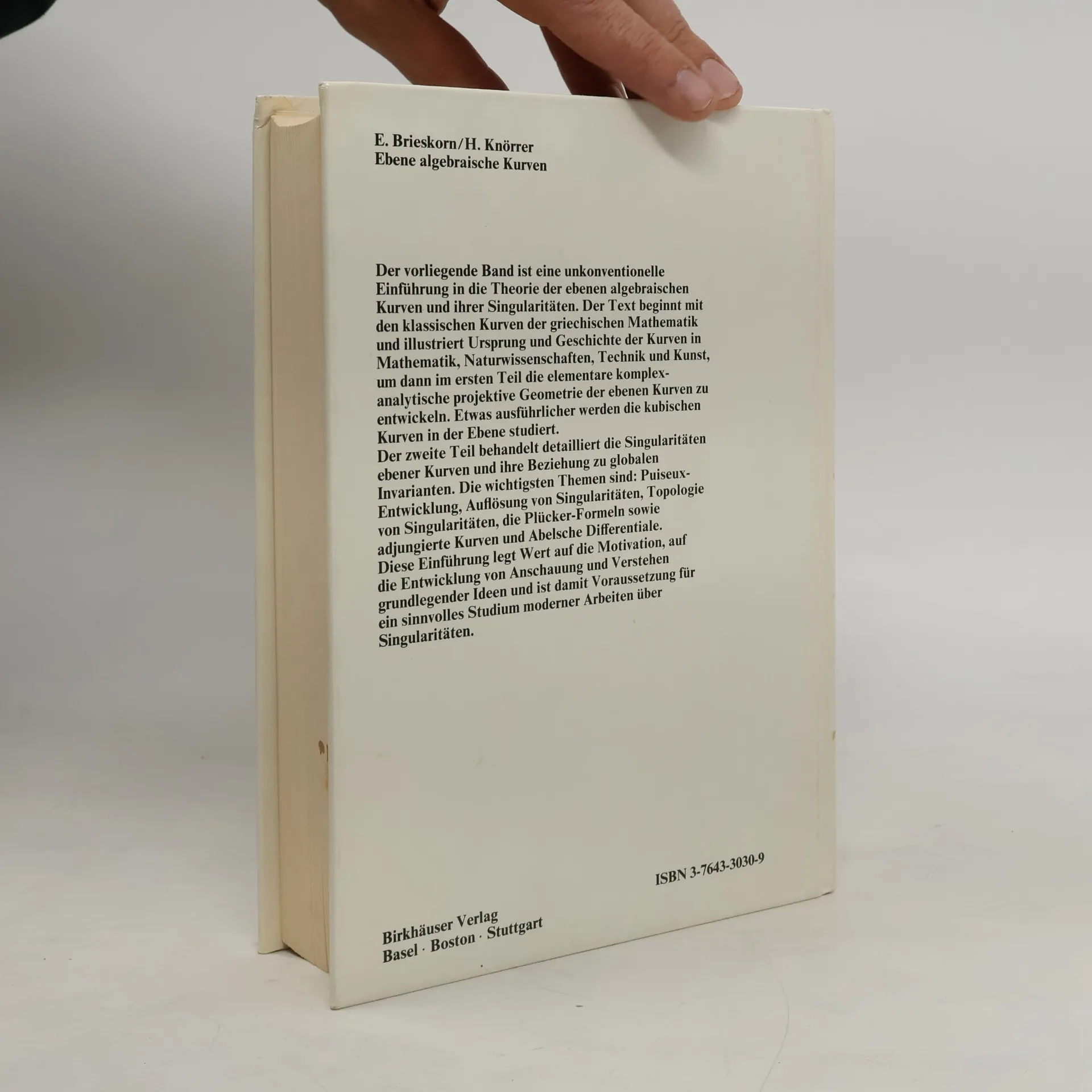
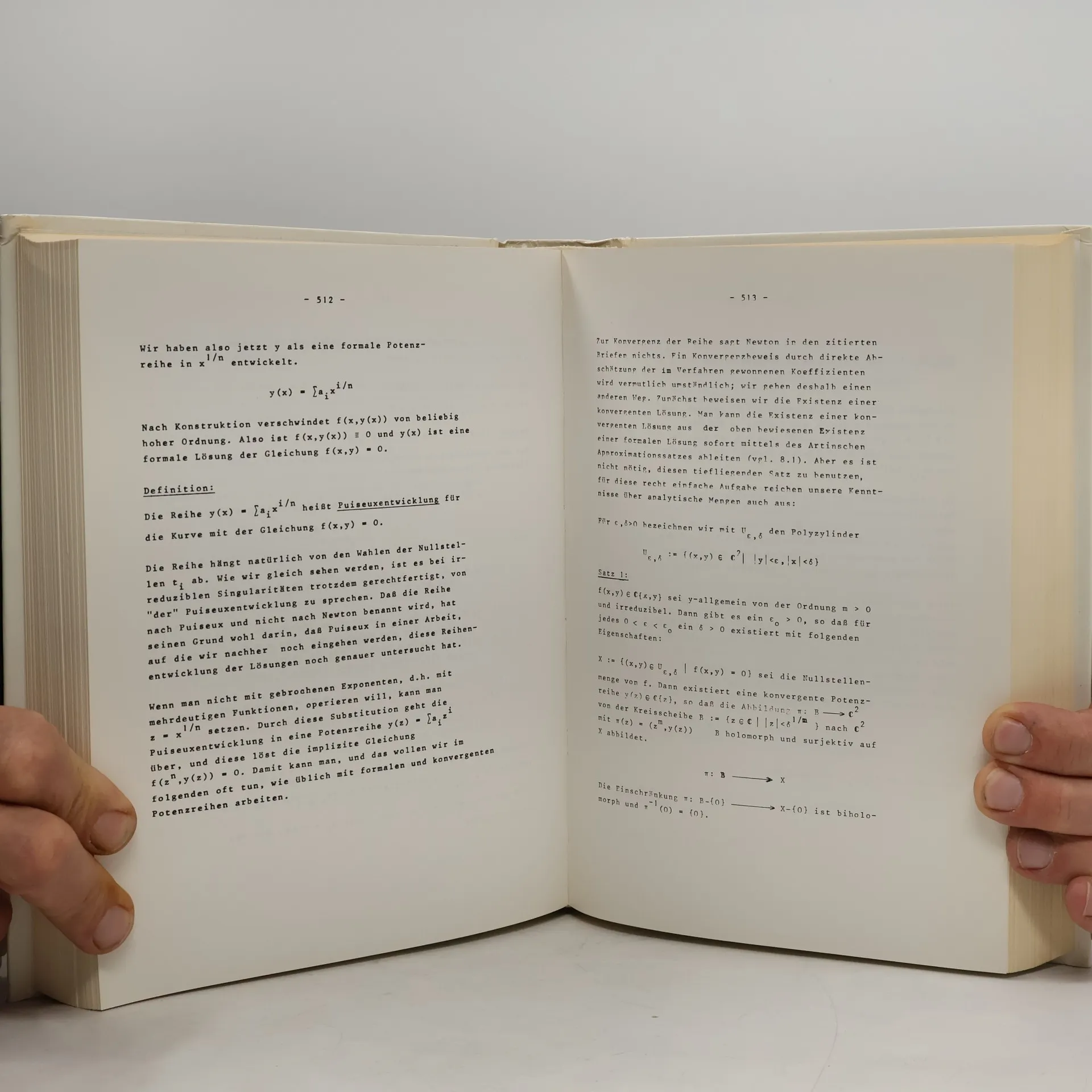
In a comprehensive introduction to the theory of plane algebraic curves, the authors explore this classical area of mathematics, which has roots in ancient Greek studies and continues to inspire research today. Originating from course notes at the University of Bonn, the text emphasizes motivation, imagination, and understanding for students. Curves, as classical objects, are examined from various perspectives, providing a foundation for modern explorations of singularities. The first chapter features many special curves with appealing geometric presentations, complemented by a wealth of illustrations. It also introduces projective geometry over the complex numbers. The second chapter presents a straightforward proof of Bezout’s theorem alongside an in-depth discussion of cubics. Central to the text is the chapter on the resolution of singularities, focusing on complex numbers. Notably, the book offers insights into further research on the topics covered, with numerous references to the literature. A variety of examples enriches this successful representation of a classical yet vibrant subject.
Achat du livre
Ebene algebraische Kurven, Egbert Brieskorn, Horst Knörrer
- Langue

- Année de publication
- 1981
- Reliure
- (rigide),
- État du livre
- Bon
- Prix
- 99,99 €
Modes de paiement
Personne n'a encore évalué .
- Titre
- Ebene algebraische Kurven
- Langue
- Allemand
- Auteurs
- Egbert Brieskorn, Horst Knörrer
- Éditeur
- Birkhäuser
- Publié
- 1981
- Format
- rigide
- Pages
- 964
- ISBN10
- 3764330309
- ISBN13
- 9783764330309
- Séries
- Mots clés
- Description
- In a comprehensive introduction to the theory of plane algebraic curves, the authors explore this classical area of mathematics, which has roots in ancient Greek studies and continues to inspire research today. Originating from course notes at the University of Bonn, the text emphasizes motivation, imagination, and understanding for students. Curves, as classical objects, are examined from various perspectives, providing a foundation for modern explorations of singularities. The first chapter features many special curves with appealing geometric presentations, complemented by a wealth of illustrations. It also introduces projective geometry over the complex numbers. The second chapter presents a straightforward proof of Bezout’s theorem alongside an in-depth discussion of cubics. Central to the text is the chapter on the resolution of singularities, focusing on complex numbers. Notably, the book offers insights into further research on the topics covered, with numerous references to the literature. A variety of examples enriches this successful representation of a classical yet vibrant subject.