
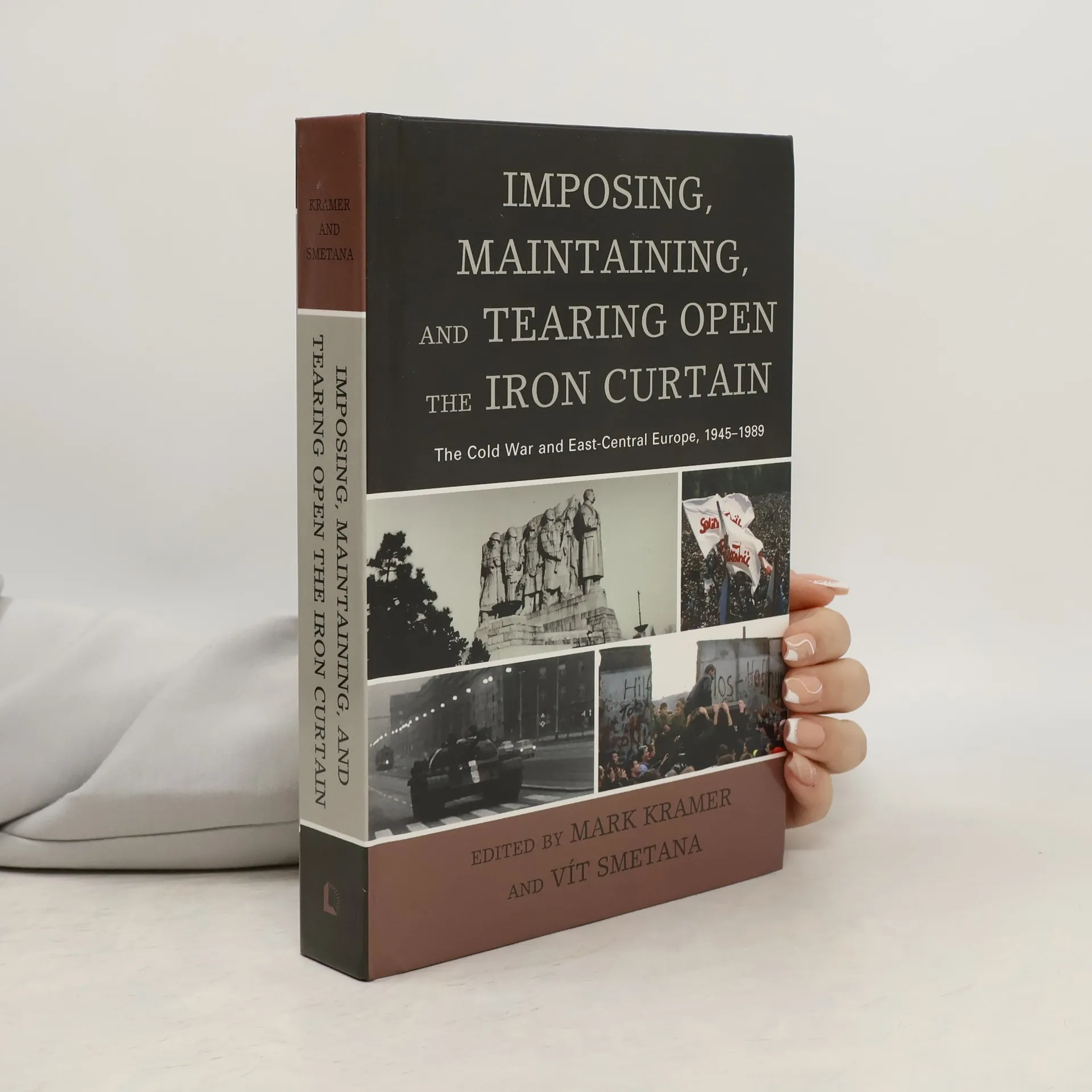

Cette série explore l'histoire complexe et les conséquences de la Guerre Froide. Les auteurs examinent méticuleusement de nouvelles preuves d'archives pour réévaluer les théories établies et découvrir les nuances de cette ère charnière. Elle vise à favoriser une compréhension plus approfondie des relations internationales et de la politique intérieure qui ont façonné le paysage mondial. Offrant des analyses perspicaces et des perspectives innovantes, cette collection s'adresse aussi bien aux universitaires qu'aux étudiants.
This book explores the aftermath of World War II, detailing the forced migration of millions of Germans, Poles, Ukrainians, and Hungarians. Utilizing extensive archival materials from multiple countries, contributors offer a comprehensive account of the upheaval and challenges faced during this turbulent period of the early Cold War.
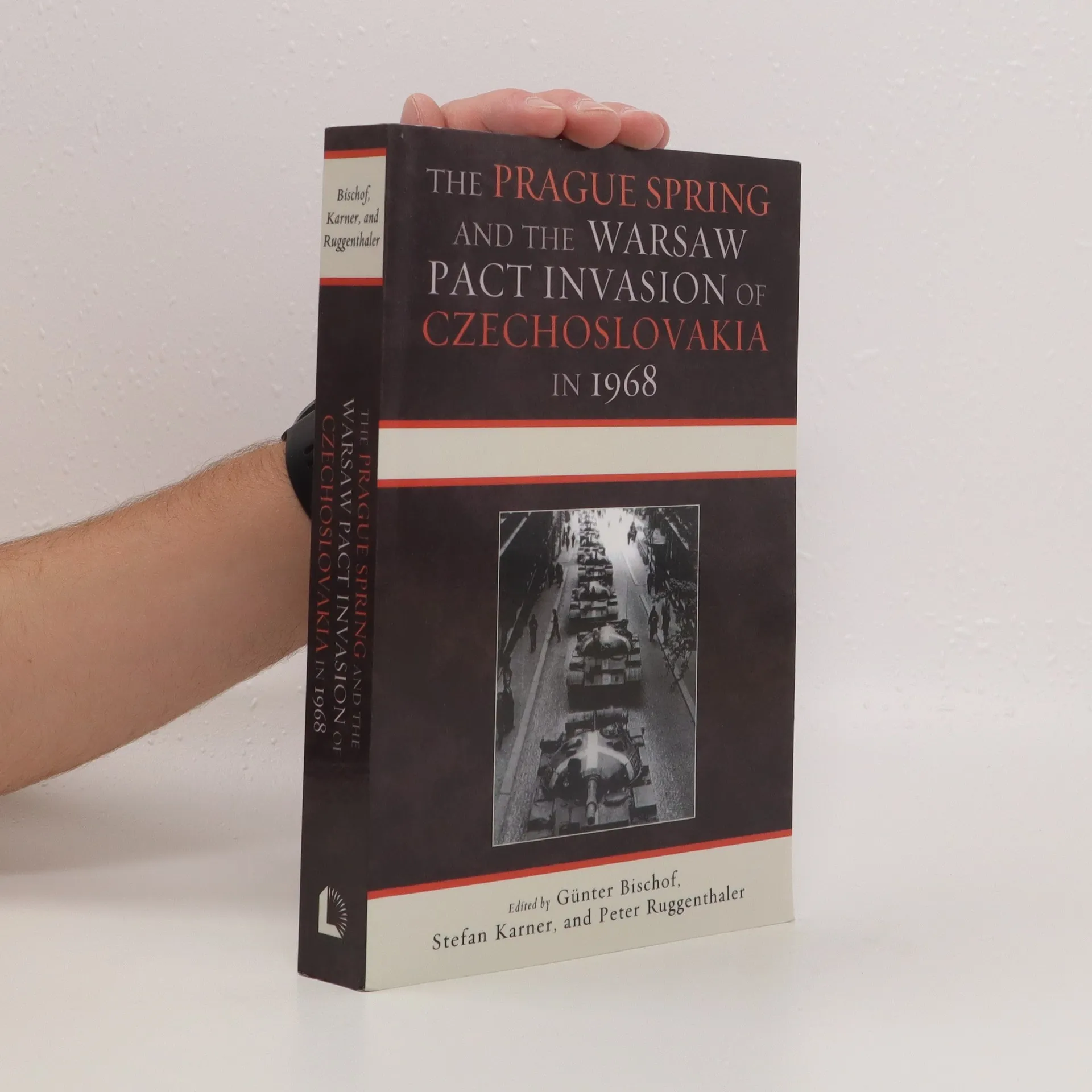
On August 20, 1968, a massive deployment of Soviet and East European forces invaded Czechoslovakia to quash the 'Prague Spring' reforms and restore a strict Communist regime. Initially hesitant, Soviet leader Leonid Brezhnev ultimately decided that military intervention was necessary after months of deliberation. Within 24 hours of the invasion, troops from the Soviet Union, Poland, Hungary, and Bulgaria established complete control, effectively ending the hopes for 'socialism with a human face.' Although Alexander Dubcek and other reformers were briefly reinstated, their main task from late August 1968 to April 1969 was to reverse the reforms. By April 1969, Dubcek was ousted permanently, marking the definitive end of the Prague Spring. Soviet leaders defended the invasion by claiming it was their 'right' and 'sacred duty' to protect socialism in Czechoslovakia. While the invasion caused some rifts within the Communist bloc, it largely succeeded in achieving Soviet objectives. The United States and NATO allies protested but did not take direct military action, leading historians to analyze this critical moment in the Cold War using new archival evidence. They also explore the U.S. response and whether Washington inadvertently signaled approval to the Soviet Union before the invasion.
In the years following WW II, East Germans faced a Communist regime that systematically violated their rights, including freedom of speech and legal security. Many resisted these changes, demanding an end to Communism in East Germany. This resistance was notably evident among members of non-Marxist parties like the Christian Democratic Union, the Liberal Democratic Party, and the Social Democratic Party, culminating in a massive uprising in the summer of 1953. In June of that year, East Germans from diverse backgrounds rose up, breaking through prison gates, dragging judges and lawyers through the streets, and toppling Stalin statues. However, their efforts were met with brutal force as Soviet tanks moved in to suppress the rebellion.
By analyzing previously untapped documents from the East German Ministry for State Security, police, and Communist Party, the author provides a detailed account of the underground efforts of political opponents and the secret police's attempts to quell dissent. The narrative challenges the notion that the June 1953 uprising was merely a reaction to labor issues, arguing instead that it was a revolution driven by the government's abuse of fundamental rights. This work serves as a crucial resource for students and scholars interested in the political resistance of East Germans against their Communist regime during the Cold War.
Focusing on the collapse of Poland's communist state, the book delves into the underlying causes and far-reaching consequences of this significant historical shift. Through extensive research and interviews, it also analyzes how contemporary leaders navigate the enduring legacies of this transition, providing insight into the political and social challenges that remain.
Focusing on Soviet policy-making, this book offers a fresh perspective on the Cold War's origins and evolution during Stalin's era, utilizing newly available Soviet primary sources. It emphasizes the often-overlooked societal aspects of Soviet foreign policy, highlighting their significance in the Cold War's development. Gerhard Wettig reveals Stalin's strategic approach to provoking crises with the West while skillfully sidestepping military confrontation, providing readers with valuable insights into this complex historical period.
After World War II, 154,000 Germans were arrested by the Soviet secret police and held incommunicado in so-called special camps in the Soviet occupation zone. One third of the inmates did not survive captivity. Based on Russian and German sources, Displaced Terror: History and Perception of Soviet Special Camps in Germany offers a multi-layered account of this chapter of Stalinist persecution and mass violence, which has largely been suppressed to this day. The reasons for this gap in German memory culture are also addressed.
The material effects of World War II and Eastern Europe's undemocratic interwar history propelled radical social change onto the postwar agenda in the region, shaping debates in immediate postwar Czech society. These discussions took on cultural and political forms, focusing on the recent past and the nation's position on the East-West continuum, as well as the meaning of socialism. The examination of historical and cultural debates in Czech society after WWII reveals that communist leaders effectively controlled narratives surrounding the interwar First Republic, Munich, and WWII, influencing perceptions of the nation’s alignment. This control was reflected in the political struggles of the time, particularly regarding socialism. The communists engaged with opponents from the democratic socialist and Roman Catholic camps, and notably garnered support from a significant Protestant church. Through a careful analysis of major publications, the author reconstructs a postwar atmosphere that was open to radical social change, challenging the conventional understanding of the communists' ascent to power. This work not only enhances the literature on Czech history but also prompts broader inquiries into the connections between war and social transformation, the communist takeover, and the role of intellectuals in public discourse.
The book offers a fresh perspective on how communist parties in East Central Europe established control over security organizations post-1945, utilizing newly available archival material from Berlin and Bucharest. It examines the purges and personnel policies that shaped this control, arguing that the transition was less radical than commonly perceived. Through a lens of transitional justice, the author reveals the continuity and complexities within the security apparatus during this transformative period.