

Since the popularisation of the internet, low-income Brazilians have received little government support to help them access it. In response, they have largely self-financed their digital migration. Internet cafés became prosperous businesses in working-class neighbourhoods and rural settlements, and, more recently, families have aspired to buy their own home computer with hire purchase agreements. As low-income Brazilians began to access popular social media sites in the mid-2000s, affluent Brazilians ridiculed their limited technological skills, different tastes and poor schooling, but this did not deter them from expanding their online presence. Young people created profiles for barely literate older relatives and taught them to navigate platforms such as Facebook and WhatsApp
Pourquoi nous postons Séries
Cette série d'études anthropologiques plonge dans le monde complexe des médias sociaux, explorant les motivations derrière la publication en ligne et son impact profond sur la vie humaine. Grâce à une recherche ethnographique approfondie dans diverses communautés mondiales, les auteurs révèlent comment ces plateformes ont remodelé les relations, l'identité et l'existence quotidienne. La collection offre des perspectives nuancées sur la manière dont nos vies virtuelles s'entremêlent avec nos réalités physiques, présentant une vision révolutionnaire du paysage numérique en évolution de l'humanité.

Social Media in an English Village
- 220pages
- 8 heures de lecture
Daniel Miller spent 18 months undertaking an ethnographic study with the residents of an English village, tracking their use of the different social media platforms. Following his study, he argues that a focus on platforms such as Facebook, Twitter and Instagram does little to explain what we post on social media. Instead, the key to understanding how people in an English village use social media is to appreciate just how ‘English’ their usage has become. He introduces the ‘Goldilocks Strategy’: how villagers use social media to calibrate precise levels of interaction ensuring that each relationship is neither too cold nor too hot, but ‘just right’.
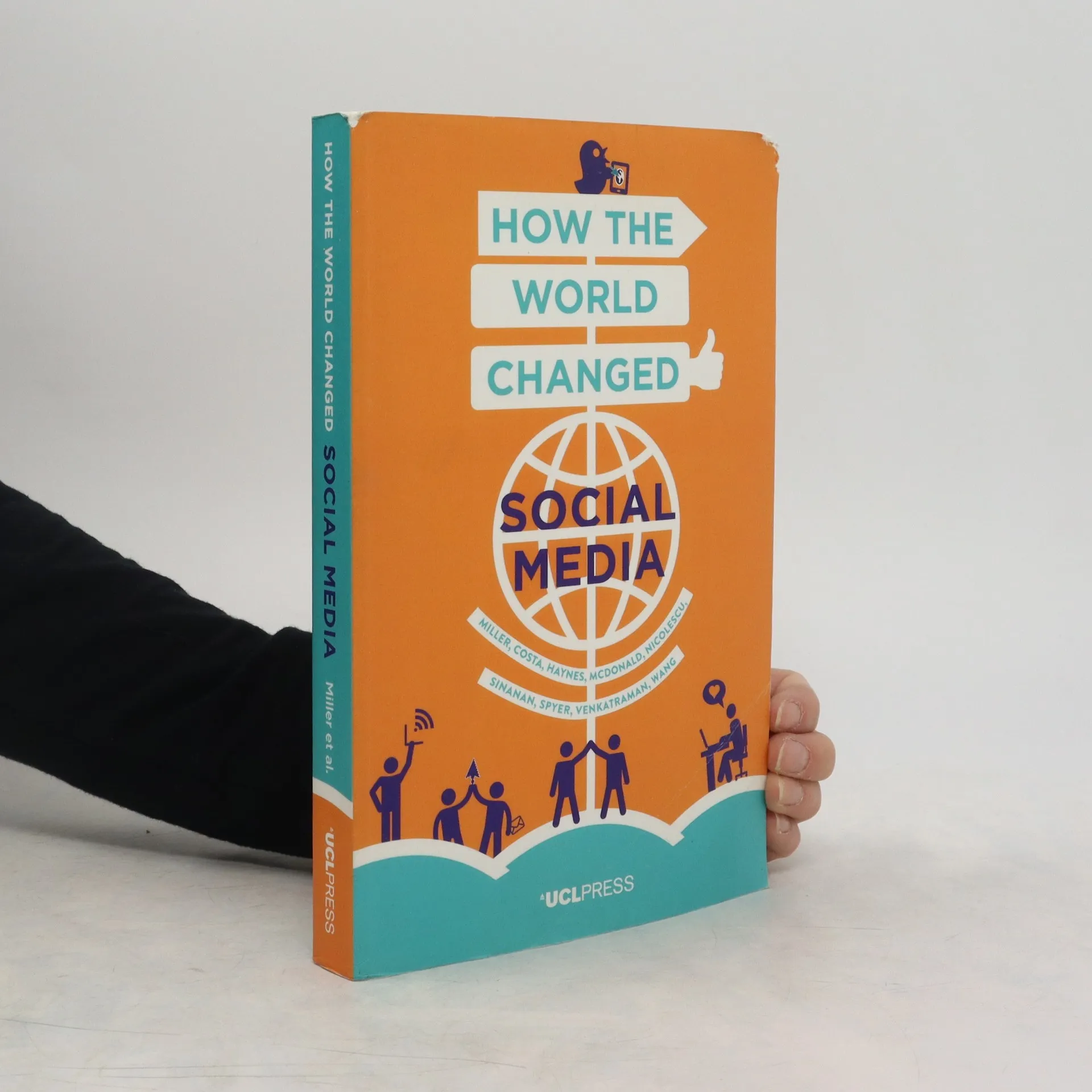
How the World Changed Social Media
- 286pages
- 11 heures de lecture
How the World Changed Social Media is the first book in Why We Post, a book series that investigates the findings of anthropologists who each spent 15 months living in communities across the world. This book offers a comparative analysis summarising the results of the research and explores the impact of social media on politics and gender, education and commerce. What is the result of the increased emphasis on visual communication? Are we becoming more individual or more social? Why is public social media so conservative? Why does equality online fail to shift inequality offline? How did memes become the moral police of the internet? Supported by an introduction to the project’s academic framework and theoretical terms that help to account for the findings, the book argues that the only way to appreciate and understand something as intimate and ubiquitous as social media is to be immersed in the lives of the people who post. Only then can we discover how people all around the world have already transformed social media in such unexpected ways and assess the consequences