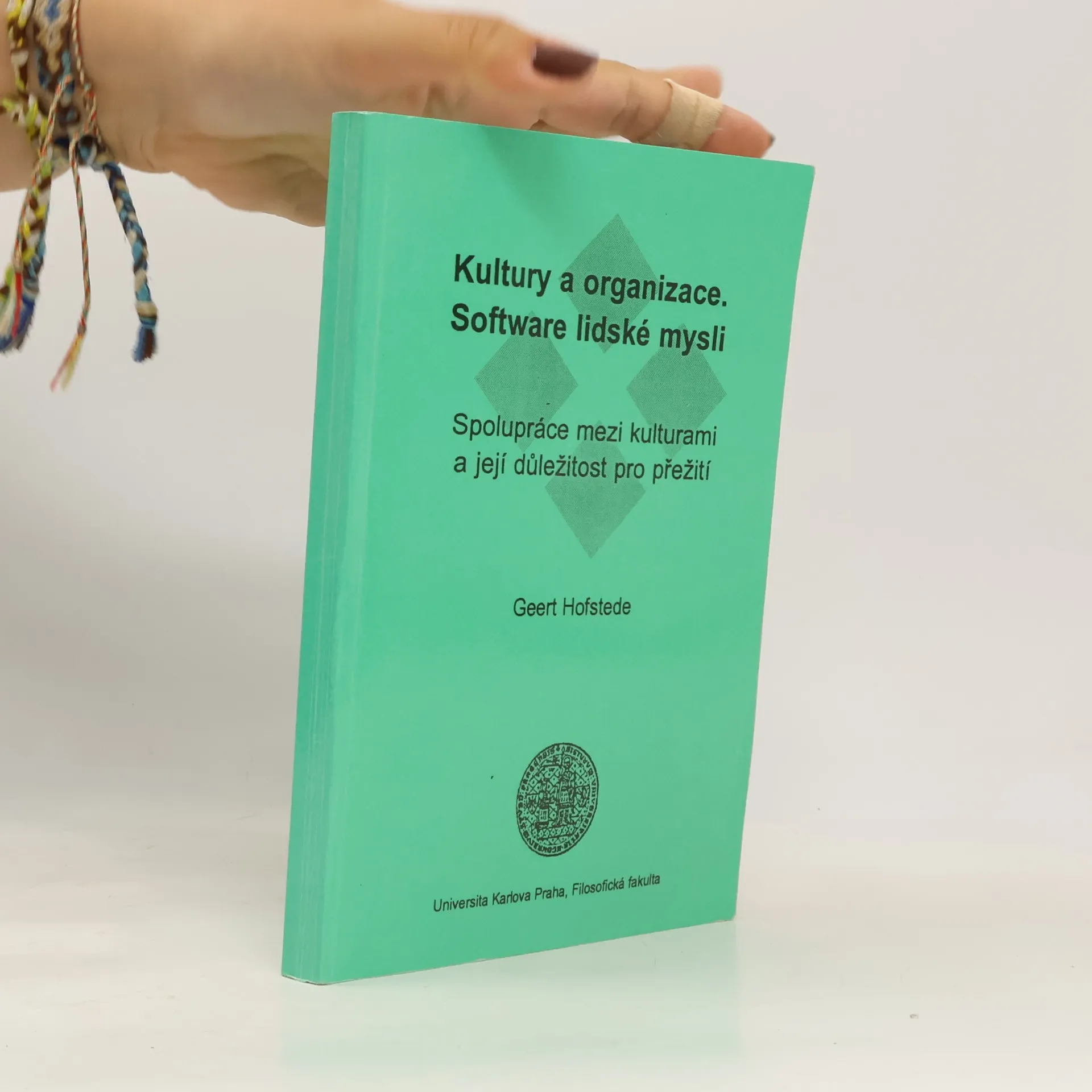
Gerard Hendrik Hofstede est un auteur néerlandais influent qui explore les interactions complexes entre les cultures nationales et organisationnelles. Son œuvre fondamentale enquête sur la manière dont les regroupements culturels nationaux et régionaux affectent profondément les comportements sociétaux et organisationnels, démontrant leur remarquable persistance dans le temps. L'étude de Hofstede offre des perspectives approfondies sur la manière dont ces distinctions culturelles façonnent nos mondes sociaux et professionnels. Son approche fournit aux lecteurs une clé pour comprendre les dynamiques culturelles complexes qui influencent à la fois les organisations et les communautés entières.
Interkulturelle Zusammenarbeit und globales Management - 6. Auflage
557pages
20 heures de lecture
Wie unsere Herkunft das Denken, Fühlen und Handeln beeinflusst: Brandaktuell in Zeiten großer Migrationsbewegungen erhält der Leser auf gut verständliche und anregende Weise Einsichten darüber, wie der Ort, an dem wir aufgewachsen sind, unsere Art zu denken, zu fühlen und zu handeln formt.
A guidebook book to Hofstede's five dimensions of culture (power distance, collectivism versus individualism, femininity versus masculinity, uncertainty avoidance and long term versus short term orientation) and derivative synthetic cultures. It provides more than 75 exercises, dialogues, stories and simulations for trainers, educators, and students.
Geert Hofstede, author of the classic Culture's Consequences , brings together 17 articles and case studies in this book. The work is grouped around three main themes: the impact of jobs on people; power and control in organizations; and studies in training settings. Throughout, there is a concern with exploring and uncovering hidden organizational realities, whilst moving across the boundaries of psychology, sociology and anthropology.
The revolutionary study of how the place where we grew up shapes the way we think, feel, and act-- with new dimensions and perspectivesBased on research conducted in more than seventy countries over a forty-year span, "Cultures and Organizations" examines what drives people apart--when cooperation is so clearly in everyone's interest. With major new contributions from Michael Minkov's analysis of data from the World Values Survey, as well as an account of the evolution of cultures by Gert Jan Hofstede, this revised and expanded edition: Reveals the "moral circles" from which national societies are built and the unexamined rules by which people think, feel, and act Explores how national cultures differ in the areas of inequality, assertiveness versus modesty, and tolerance for ambiguity Explains how organizational cultures differ from national cultures--and how they can be managed Analyzes stereotyping, differences in language, cultural roots of the 2008 economic crisis, and other intercultural dynamics