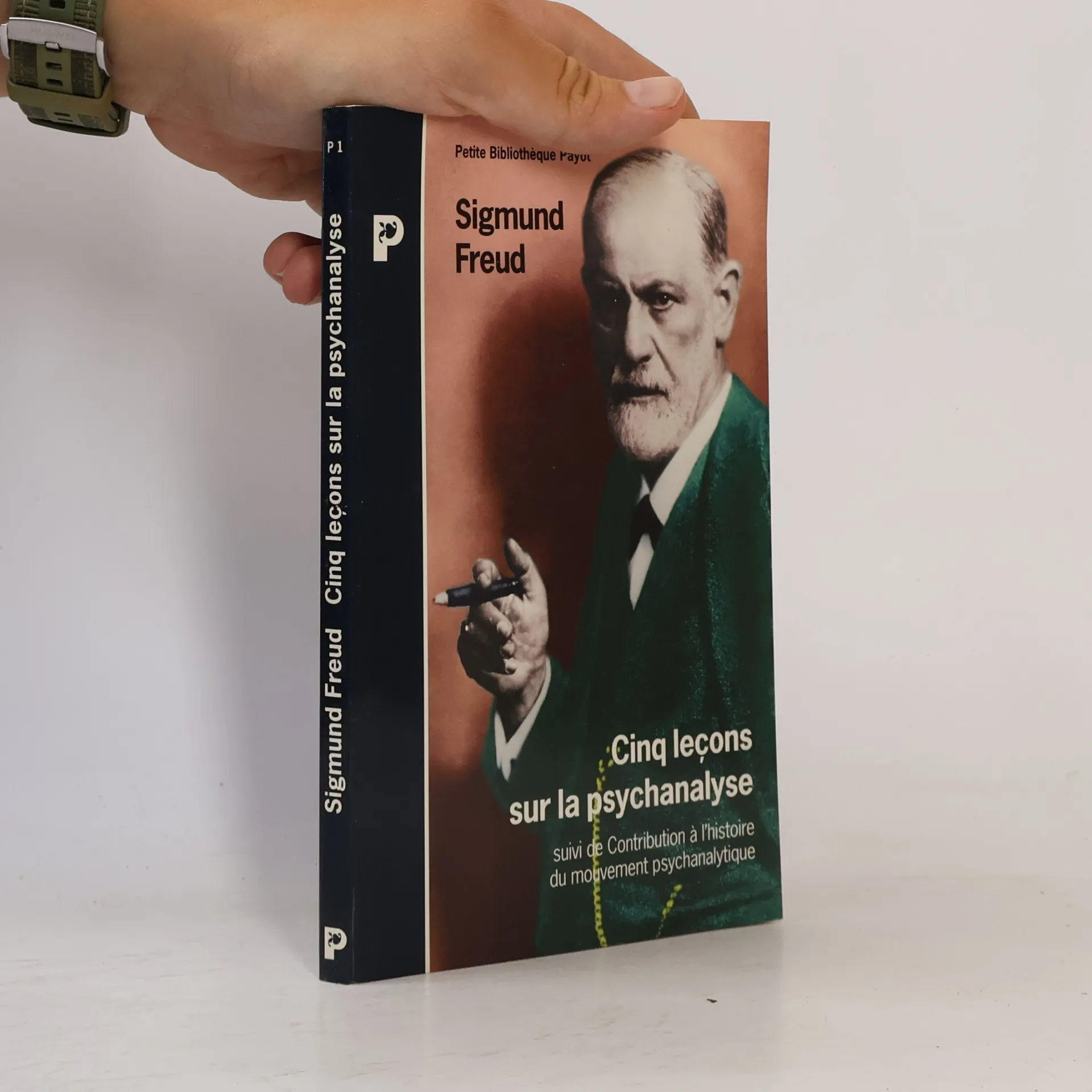
Cinq leçons sur la psychanalyse
suivi de Contribution à l'histoire du mouvement psychanalytique
Conférences prononcées par Freud en 1909 aux Etats-Unis afin de présenter la psychanalyse aux non-spécialistes






suivi de Contribution à l'histoire du mouvement psychanalytique
Conférences prononcées par Freud en 1909 aux Etats-Unis afin de présenter la psychanalyse aux non-spécialistes
Très tôt, Freud se soucia de montrer que l'inconscient était à l'oeuvre chez tout un chacun et pas seulement chez les névrosés. Ce sont ces phénomènes marginaux mais normaux, infimes et intimes, de la vie psychique que Freud analyse ici dans le détail, multipliant les exemples comme autant de preuves de la manifestation d'un désir refoulé venant contredire l'intention consciente.
Nel 1901, un anno dopo la pubblicazione de L’interpretazione dei sogni, Freud decise di riadattare le sue teorie sui meccanismi della vita onirica per una fruizione più estesa e indifferenziata: Il sogno fu concepito proprio per divulgare anche tra i non specialisti gli esiti dei suoi studi. Freud rinunciava agli aspetti scientifici più complessi e ai modelli teorici più astratti per adottare un’impostazione semplice e schematica. Grazie a un linguaggio chiaro ed esaustivo riuscì a creare un’opera agile, immediata, adatta a tutti. Completano il volume i saggi L’impiego dell’interpretazione dei sogni in psicoanalisi (1911), Sogno e telepatia (1922), Osservazioni sulla teoria e pratica dell’interpretazione dei sogni (1923).
Trois essais
This volume contains Freud's speculations on various aspects of religion, on the basis of which he explains certain characteristics of the Jewish people in their relations with the Christians. From an intensive study of the Moses legend, Freud comes to the startling conclusion that Moses himself was an Egyptian who brought from his native country the religion he gave to the Jews. He accepts the hypothesis that Moses was murdered in the wilderness, but that his memory was cherished by the people & that his religious doctrine ultimately triumphed. Freud develops his general theory of monotheism, which enables him to throw light on the development of Judaism & Christianity.