

Séries
En savoir plus sur le livre
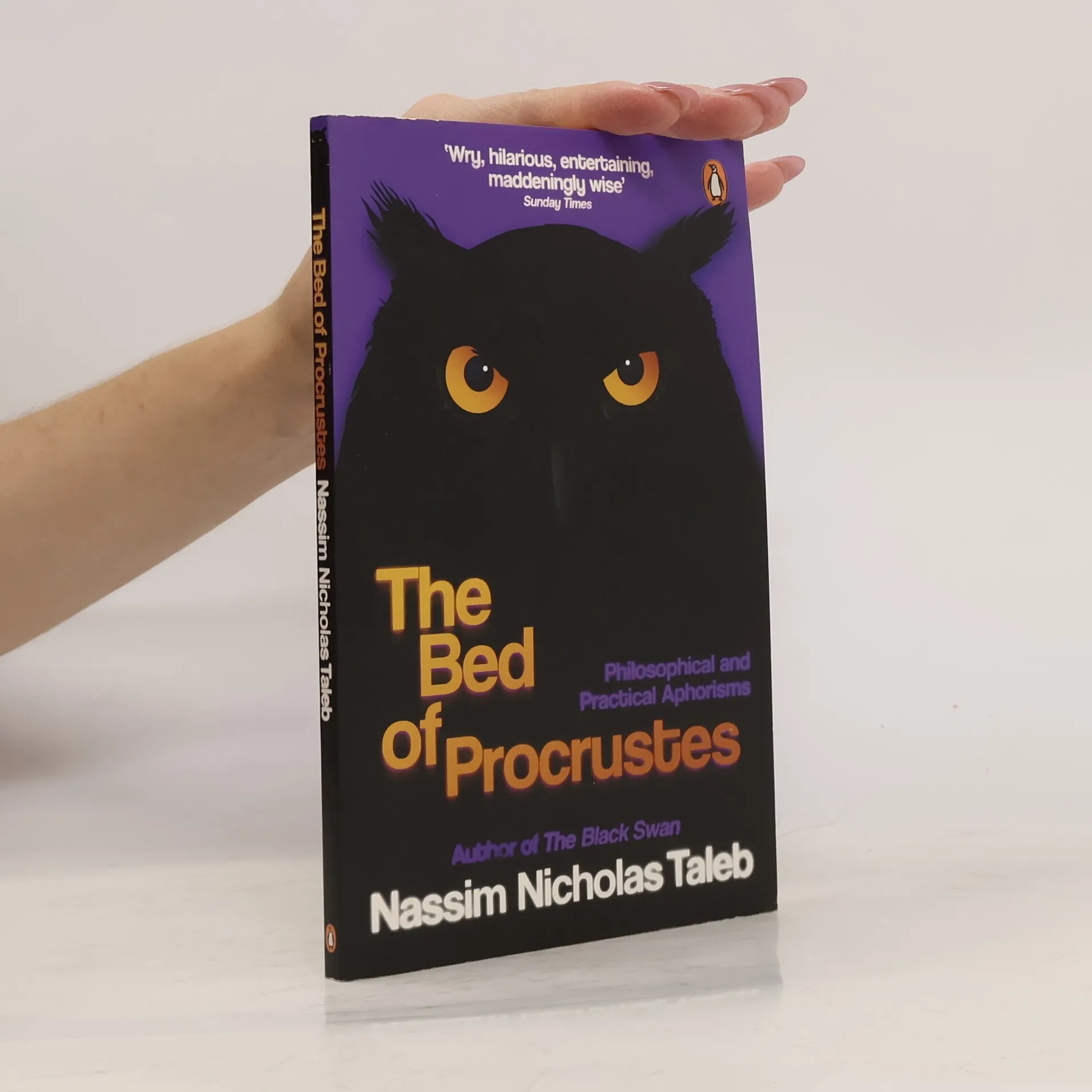
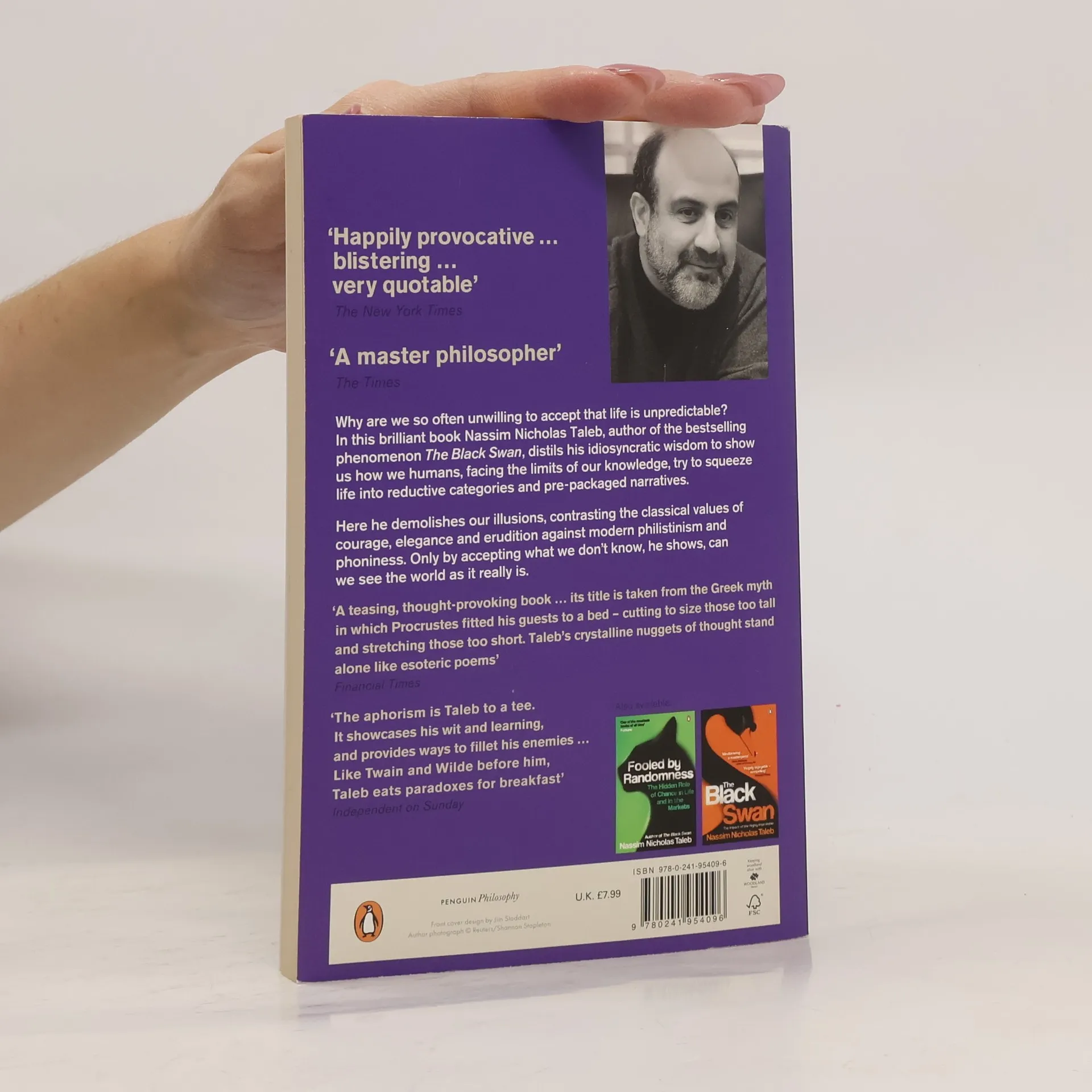
In this profound and playful book, Nassim Nicholas Taleb presents his ideas about life in the form of aphorisms, the world’s earliest - and most memorable - literary form. Procrustes was a character from Greek mythology who abducted travellers and invited them to spend the night in a special bed, which they had to fit to perfection. They never did. Those who were too tall had their legs chopped off; those who were too short were stretched. Every aphorism here is about a Procrustean bed of sorts – we humans, facing the limits of our knowledge, the unseen and the unknown, resolve the tension by squeezing life and the world into crisp commoditized ideas, reductive categories, specific vocabularies and pre-packaged narratives. Only by embracing the unexpected – and accepting what we don’t know – can we see the world as it really is.




Achat du livre
The Bed of Procrustes, Nassim Nicholas Taleb
- Langue

- Année de publication
- 2011
- Reliure
- (souple)
Modes de paiement
Il manque plus que ton avis ici.
- Langue
- Anglais
- Auteurs
- Nassim Nicholas Taleb
- Éditeur
- Penguin Books
- Publié
- 2011
- Format
- souple
- Pages
- 128
- ISBN10
- 0241954096
- ISBN13
- 9780241954096
- Séries
- Incerto
- Mots clés
- Nonfiction, Sciences sociales, Histoires vraies, Commerce, Affaires & Gestion, Thèmes psychologiques, Thématique philosophique, Philosophie, Psychologie, Science, Économie, Presse d'opinion & Essais, Finance, Aphorismes
- Première publication
- 2010
- Titre original
- The Bed of Procrustes: Philosophical and Practical Aphorisms
- Évaluation
- 3,75 sur 5
- Description
- In this profound and playful book, Nassim Nicholas Taleb presents his ideas about life in the form of aphorisms, the world’s earliest - and most memorable - literary form. Procrustes was a character from Greek mythology who abducted travellers and invited them to spend the night in a special bed, which they had to fit to perfection. They never did. Those who were too tall had their legs chopped off; those who were too short were stretched. Every aphorism here is about a Procrustean bed of sorts – we humans, facing the limits of our knowledge, the unseen and the unknown, resolve the tension by squeezing life and the world into crisp commoditized ideas, reductive categories, specific vocabularies and pre-packaged narratives. Only by embracing the unexpected – and accepting what we don’t know – can we see the world as it really is.