




En savoir plus sur le livre
Whether we love or hate Sigmund Freud, we all have to admit that he revolutionized the way we think about ourselves. Much of this revolution can be traced to <i>The Interpretation of Dreams</i>, the turn-of-the-century tour de force that outlined his theory of unconscious forces in the context of dream analysis. Introducing the id, the superego, and their problem child, the ego, Freud advanced scientific understanding of the mind immeasurably by exposing motivations normally invisible to our consciousness. While there's no question that his own biases and neuroses influenced his observations, the details are less important than the paradigm shift as a whole. After Freud, our interior lives became richer and vastly more mysterious.<p> These mysteries clearly bothered him--he went to great (often absurd) lengths to explain dream imagery in terms of childhood sexual trauma, a component of his theory jettisoned mid-century, though now popular among recovered-memory therapists. His dispassionate analyses of his own dreams are excellent studies for cognitive scientists wishing to learn how to sacrifice their vanities for the cause of learning. Freud said of the work contained in <i>The Interpretation of Dreams</i>, "Insight such as this falls to one's lot but once in a lifetime." One would have to feel quite fortunate to shake the world even once. <i>--Rob Lightner</i> </p>
Achat du livre
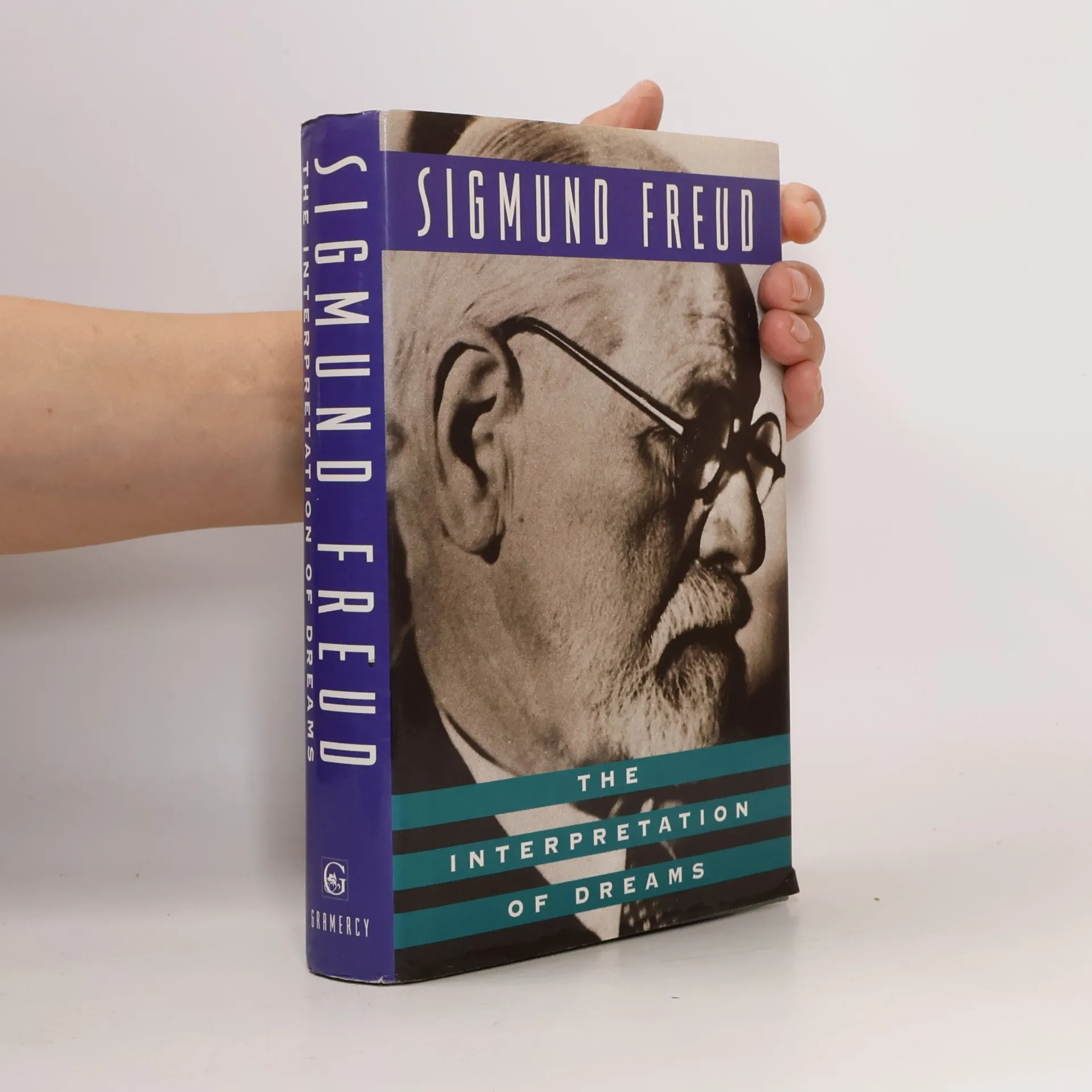
The Interpretation of Dreams, Sigmund Freud
- Langue

- Année de publication
- 1996
- Reliure
- (rigide),
- État du livre
- Bon
- Prix
- 6,49 €
Modes de paiement
Personne n'a encore évalué .
- Titre
- The Interpretation of Dreams
- Langue
- Anglais
- Auteurs
- Sigmund Freud
- Éditeur
- Gramercy
- Publié
- 1996
- Format
- rigide
- Pages
- 438
- ISBN10
- 0517149737
- ISBN13
- 9780517149737
- Séries
- Mots clés
- Thèmes psychologiques, Manuels et guides, Littérature allemande, États-Unis, 20e siècle, Littérature spécialisée, Santé mentale, Autriche, Théories scientifiques, Psychothérapie, Rêves, Psychoanalyse, Hypnose
- Description
- Whether we love or hate Sigmund Freud, we all have to admit that he revolutionized the way we think about ourselves. Much of this revolution can be traced to <i>The Interpretation of Dreams</i>, the turn-of-the-century tour de force that outlined his theory of unconscious forces in the context of dream analysis. Introducing the id, the superego, and their problem child, the ego, Freud advanced scientific understanding of the mind immeasurably by exposing motivations normally invisible to our consciousness. While there's no question that his own biases and neuroses influenced his observations, the details are less important than the paradigm shift as a whole. After Freud, our interior lives became richer and vastly more mysterious.<p> These mysteries clearly bothered him--he went to great (often absurd) lengths to explain dream imagery in terms of childhood sexual trauma, a component of his theory jettisoned mid-century, though now popular among recovered-memory therapists. His dispassionate analyses of his own dreams are excellent studies for cognitive scientists wishing to learn how to sacrifice their vanities for the cause of learning. Freud said of the work contained in <i>The Interpretation of Dreams</i>, "Insight such as this falls to one's lot but once in a lifetime." One would have to feel quite fortunate to shake the world even once. <i>--Rob Lightner</i> </p>